.png)
Artificial intelligence has changed how marketers understand audiences. Instead of building personas manually through surveys and assumptions, AI can now analyze thousands of data points in seconds to create detailed audience profiles. These AI-generated personas promise better targeting, personalized content, and more efficient campaigns.
But relying on AI for persona development also brings new risks. When data, models, or oversight are flawed, the personas they produce can lead teams in the wrong direction. For B2B marketers, where long sales cycles and complex buying groups are common, accuracy and trust matter even more.
Before applying AI persona best practices, teams need to understand the pitfalls and plan for them.
Quick Takeaways
- Low-quality data can make AI personas unreliable and misleading.
- Algorithmic bias can distort audience representation and damage brand perception.
- Without human oversight, AI personas can lose context and relevance.
- Integration, maintenance, and validation often take more time than expected.
- Ethical and privacy risks require strong governance and review processes.
Why AI Personas Appeal to Marketers
AI-driven personas are appealing because they promise scale and precision. Instead of manually grouping customers by age or title, machine learning can analyze digital behavior, buying patterns, and intent signals to build dynamic profiles. AI can even update these personas automatically as markets change, helping teams stay aligned with real-world behavior.
For B2B marketers, this means faster segmentation and better targeting. Campaigns can reach decision-makers based on behavior and stage of the buying journey, rather than just company size or industry. When done right, AI personas reduce guesswork and improve efficiency.
Still, they come with serious challenges. Understanding these issues helps marketers use AI responsibly and effectively.
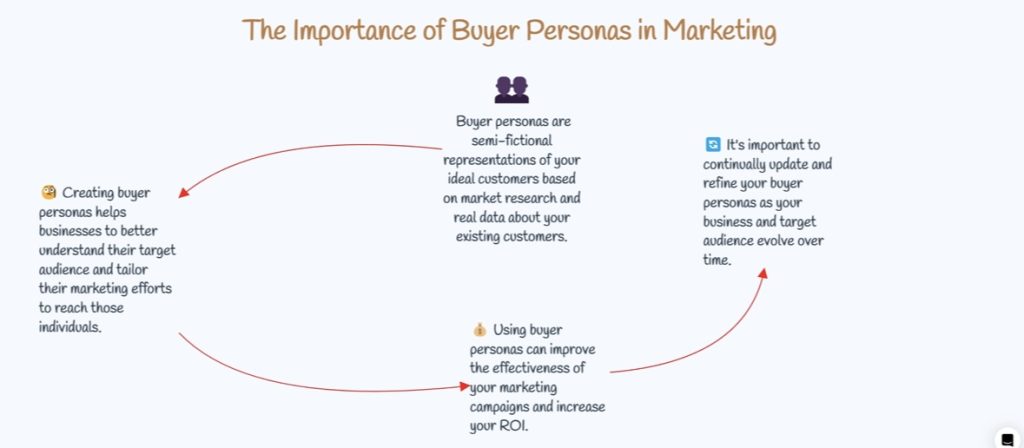
Image source
1. Poor Data Quality Produces Inaccurate Personas
AI personas are only as strong as the data behind them. When that data is outdated, incomplete, or unrepresentative, the resulting personas won’t reflect real buyers. Many companies still rely on CRM data or past campaign metrics that don’t include current customer behavior.
If your AI model learns from bad data, it amplifies those flaws. It might prioritize the wrong customer segments or misunderstand what motivates buyers. The result is wasted ad spend and missed opportunities.
Best practice: Audit your data before using it. Combine behavioral, transactional, and firmographic sources. Remove duplicates, update missing fields, and verify that your audience data represents your target market today – not three years ago.
2. Algorithmic Bias Skews Audience Insights
AI models learn patterns from data. If that data reflects bias – such as over-representation of certain demographics or industries – the personas will repeat those patterns. In marketing, this can mean unintentionally excluding key decision-makers or making incorrect assumptions about what influences purchase behavior.
For example, if past data mostly reflects male buyers in a specific sector, AI could under-represent female or non-traditional decision-makers. That hurts targeting accuracy and can lead to tone-deaf messaging.
Best practice: Include diverse data sources, run fairness checks, and have humans review persona outputs for bias. AI should assist with pattern recognition, not define your entire strategy.
3. Over-Reliance on Automation Reduces Human Insight
AI excels at identifying correlations, but it doesn’t understand emotion, motivation, or context the way humans do. When marketers depend solely on AI personas, they risk losing the human judgment needed to interpret results and craft effective messaging.
Many teams make the mistake of treating AI personas as final rather than directional. Without human review, the output can feel generic or disconnected from real customer stories.
Best practice: Treat AI personas as a foundation. Use human expertise to refine the insights and add qualitative context from interviews, sales feedback, and customer conversations. The best personas combine machine precision with human understanding.
4. Integration and Maintenance Are More Complex Than Expected
Integrating AI persona tools into existing marketing systems isn’t as simple as plugging in a new app. Data needs to flow between CRM platforms, analytics tools, and automation systems. Ensuring accuracy across those connections takes time and technical skill.
Maintenance is another hidden cost. AI models need retraining as new data arrives or markets shift. Without regular updates, personas can quickly become irrelevant.
Best practice: Start small with pilot integrations before full deployment. Assign data owners to monitor quality, and schedule periodic model reviews to keep personas accurate.
5. Static Personas Don’t Reflect a Dynamic Market
Markets evolve fast. Buyer priorities, budgets, and challenges change, especially in B2B sectors influenced by technology and regulation. AI personas promise adaptability, but only if teams continuously refresh their inputs.
When marketers treat AI personas as static profiles, they fall behind. Outdated personas lead to messaging that feels irrelevant or tone-deaf.
Best practice: Set quarterly or semi-annual reviews for persona accuracy. Use real-time analytics – such as engagement trends or sales feedback – to make small, consistent updates rather than complete overhauls.
6. Limited Transparency Creates Trust Issues
One of the biggest challenges with AI personas is the “black box” problem. Many marketers don’t fully understand how their AI systems generate insights or which variables drive persona creation. When decisions aren’t explainable, confidence drops.
A lack of transparency can also create problems with compliance and internal alignment. Sales teams may question persona accuracy or ignore them altogether.
Best practice: Work with vendors or internal teams that offer model transparency. Document how personas are built, which data sources are used, and how outputs are validated. This transparency improves trust across departments.
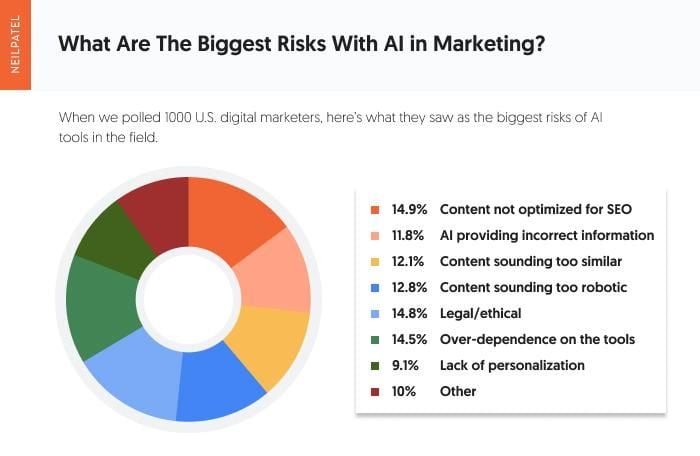
Image source
7. Privacy and Ethical Concerns
AI systems often process large amounts of user data to generate insights. Without proper governance, this can raise ethical or legal issues – especially in regions with strict data protection laws. Collecting or inferring personal details without consent can damage trust and reputation.
Best practice: Use anonymized or aggregated data whenever possible. Follow all data privacy regulations and clearly communicate how user data informs marketing strategies. Ethics should be built into every AI workflow, not added as an afterthought.
8. Measuring ROI from AI Personas
It’s not always easy to connect AI persona insights to measurable outcomes. While teams may see improved engagement or lead quality, isolating the impact of AI personas can be tricky. Without clear metrics, stakeholders may question the investment.
Best practice: Define success before launching AI persona projects. Track conversion rates, engagement metrics, and campaign performance across segments. Compare results against control groups to quantify improvements.
9. Cross-Functional Alignment Is Often Missing
AI personas work best when used across marketing, sales, and product teams. But in many organizations, different departments use different tools or data, leading to inconsistent audience definitions. When sales and marketing operate from separate persona models, messaging loses consistency.
Best practice: Create shared governance for persona development. Involve all relevant teams early, align data sources, and define shared performance goals. Unified personas help create a consistent customer experience.
How to Apply AI Persona Best Practices
Getting AI personas right requires balance – between automation and human input, speed and accuracy, innovation and oversight. Marketers who adopt structured best practices can capture AI’s value without falling into common traps.
- Start with clear objectives for using AI in persona creation.
- Validate all data sources for completeness and diversity.
- Keep humans in the loop for oversight and interpretation.
- Establish review cycles to refresh personas regularly.
- Prioritize transparency, fairness, and data protection.
When teams view AI personas as living systems – always learning and improving – they’ll drive stronger campaigns and better decision-making.
Video source
What’s Next for AI Persona Development
AI will continue to shape how B2B marketers understand their audiences. But success won’t come from automation alone. It’ll depend on how responsibly and intelligently teams use these tools.
The most effective organizations will combine AI efficiency with human empathy and strategic insight. They’ll treat personas as a shared resource across departments, grounded in data but guided by real-world context.
Having trouble leveraging AI for your benefit? Set up a quick consultation with our team, and we’ll help you gain the tools to adapt and grow with AI.
Read More
By: Lauren Basiura
Title: What Are the Challenges in Using AI for Marketing Personas?
Sourced From: marketinginsidergroup.com/artificial-intelligence/what-are-the-challenges-in-using-ai-for-marketing-personas/
Published Date: Mon, 02 Mar 2026 11:00:03 +0000
Did you miss our previous article...
https://trendinginbusiness.business/business/why-expense-policies-fail-a-deep-dive-into-workplace-psychology