.png)
Since what feels like the beginning of time, most businesses have focused their marketing outward – toward customers, prospects, and partners. Campaigns were designed to attract new buyers, win attention, and grow market share.
That focus certainly made sense. But inside many organizations, employees received little actual communication about what the brand stood for. Values, goals, and culture were left to trickle down unevenly.
Today, more companies are recognizing that their people are just as important as their customers. Building brand culture through content gives employees clarity, consistency, and pride in the work they do. An internal content marketing strategy makes that possible.
Quick Takeaways
- Internal content marketing creates alignment between employees and brand values.
- Consistent communication strengthens trust and reduces organizational silos.
- Storytelling makes culture visible and actionable in daily work.
- Clear internal content supports retention and employee engagement.
- Strong culture inside the business leads to stronger customer experiences.
Why Internal Content Marketing Deserves Focus
Internal content marketing is more than newsletters or memos. It’s a structured way of communicating that connects employees with the same energy, clarity, and vision a company projects externally.
When businesses invest in internal content, they set a foundation for culture. Employees understand not just what the brand says, but what it means. Shared language creates consistency across departments. That consistency carries through to customers.
Without an intentional strategy, culture becomes fragmented. Different teams interpret the brand in different ways. Over time, that weakens both communication and engagement.
Brand Culture Through Content
Culture exists whether or not it’s documented. But without communication, it risks becoming unclear or inconsistent. Internal content gives structure to culture by putting values, stories, and priorities into formats employees can access and understand.
Examples include:
- Internal newsletters highlighting company progress.
- Playbooks that describe tone, voice, and messaging.
- Video updates from leadership with clear explanations of goals.
- Employee spotlights showing how values appear in practice.
Content creates a record. Employees see culture not as abstract words on a wall but as an active part of daily communication.
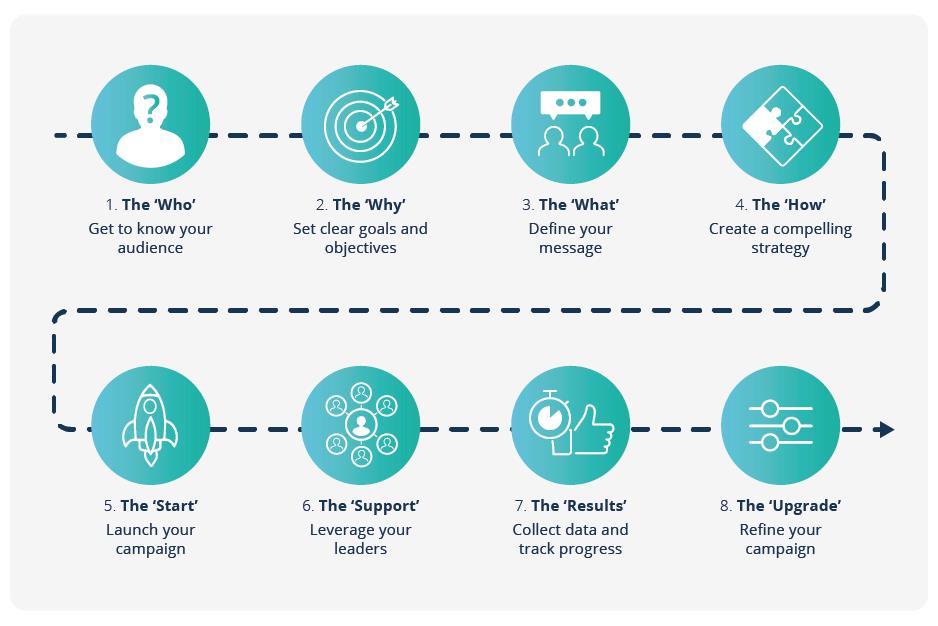
Image source
Brand Culture and Communication
Communication defines how culture is experienced. Values written in a handbook won’t mean much if they aren’t reinforced regularly. That’s why structured internal content is so powerful.
Employees learn how leadership defines priorities. They understand how their work connects to long-term goals. They see recognition of their peers living those values. Communication becomes the engine that carries culture forward.
When communication is absent or inconsistent, gaps form. Employees make assumptions. Different departments build their own versions of what the brand stands for. Structured internal content prevents those gaps.
Building Alignment Across Departments
Alignment means employees across teams describe the brand in the same way. Internal content creates that alignment.
A consistent publishing rhythm builds shared understanding. A style guide gives teams the same vocabulary. Video spotlights show real examples of culture in action.
When every department uses the same reference points, culture strengthens. When they don’t, confusion spreads. Internal content prevents that by providing a shared baseline.
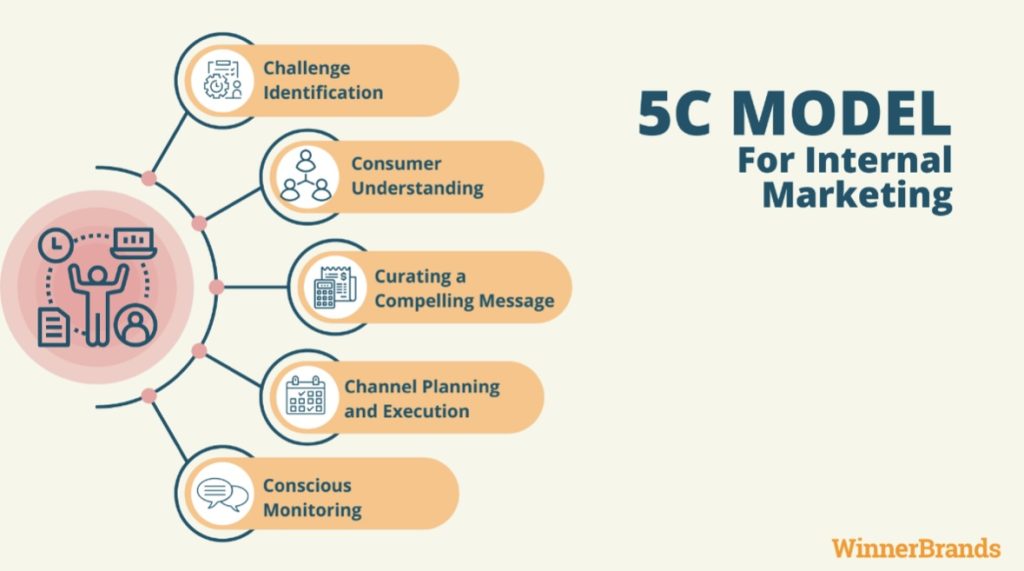
Image source
How Internal Content Influences Daily Work
Values only matter when employees know how to apply them. Internal content shows what that looks like.
For example, if innovation is a company value, internal content might highlight stories of employees who tested new approaches. If customer service is a priority, content could showcase examples of support teams solving problems with care and creativity.
Those examples serve as guidance. They help employees see not just what the company values, but how those values are applied in practice.
The People Want Storytelling
Facts and figures are necessary, but they don’t carry the same weight as stories. Storytelling connects employees to culture in ways data cannot.
A story about a team collaborating to launch a product communicates teamwork more clearly than a bulleted list of values. A story about a customer who benefited from an employee’s effort illustrates service more powerfully than a policy memo.
Internal content that uses storytelling creates memory. Employees remember narratives long after they forget statistics.
Using Internal Content for Transparency
Transparency strengthens trust. Employees want to understand why decisions are made, not just the outcomes.
Internal blogs, video Q&A sessions, or town hall recaps give leadership a way to explain choices directly. That transparency reduces uncertainty and shows respect for employees.
Without communication, employees often learn about changes through rumors. Structured internal content eliminates that problem by providing a clear and reliable source.
How Internal Content Makes or Breaks Retention
Retention isn’t driven by salary alone. Employees leave when they feel disconnected or undervalued. Internal content addresses that by creating consistent recognition and shared understanding.
Highlighting employee contributions in newsletters or videos makes people feel seen. Sharing updates regularly reduces the anxiety that comes from silence. Creating stories that connect individual work to the larger mission gives employees purpose.
Those connections matter. Employees who feel aligned with brand culture are more likely to stay and contribute.
Practical Applications of Internal Content
Internal content marketing can take many forms. Some practical formats include:
Newsletters
Concise updates delivered weekly or monthly. Focus on progress, recognition, and clarity.
Video Updates
Short recordings from leaders explaining priorities or celebrating milestones.
Playbooks and Wikis
Centralized libraries describing tone, values, and workflows. Easy to reference.
Employee Spotlights
Profiles or interviews showing how values are applied in real situations.
Internal Podcasts
Audio updates employees can listen to on their own time.
These tools don’t just deliver information. They create rhythm and consistency in how culture is communicated.
Balancing Content Without Overload
Employees need communication, but too much can overwhelm. Internal content works best when it’s structured, consistent, and concise.
Too many messages dilute attention. Too few create confusion. A steady cadence builds trust and predictability.
The rule of thumb: say what needs to be said, clearly and in formats employees prefer.
Aligning Content With Business Values
Every piece of internal content should reflect brand values. If teamwork is a priority, highlight collaboration stories. If innovation is a focus, share updates on new projects and creative problem-solving.
Alignment reinforces culture. It creates consistency across messages and strengthens the connection between employees and the brand.
Measuring the Impact of Internal Content
Measurement shows whether content is effective. Engagement metrics like open rates or video views provide one layer of data. Feedback surveys offer another.
Beyond numbers, qualitative observation matters. Listen to how employees describe the company in conversations with customers or each other. When their language aligns with brand values, internal content is working.
Anticipating Potential Challenges
Building an internal content marketing strategy comes with challenges. Content creation requires time. Employees may ignore updates if they feel irrelevant. Impact can be hard to quantify.
These challenges aren’t reasons to avoid internal content. They’re factors to manage. Start small, listen to feedback, and adjust. Over time, consistency builds results.
Connecting Internal Culture to Customer Experience
Culture inside an organization shapes experiences outside it. Employees who understand brand values communicate them more consistently to customers.
That consistency builds stronger relationships. Customers notice when every interaction reflects the same culture. Internal content lays the groundwork for that alignment.
Video source
What Should Your Next Step Be?
So, where does your business stand? Are employees connected to your brand culture through clear communication, or are they left to interpret it on their own? An internal content marketing strategy bridges that gap. It turns values into daily practices. It builds consistency across teams. It strengthens trust, retention, and customer experience.
Your employees are not just part of your company. They carry your brand culture every day. Investing in internal content gives them the clarity and connection they need to carry it forward.
Need help with your internal strategy? Marketing Insider Group is ready to help you achieve the business success you thought was only possible in your dreams. Contact us for a free consultation!
Read More
By: Lauren Basiura
Title: Why Your Business Needs an Internal Content Marketing Strategy to Strengthen Brand Culture
Sourced From: marketinginsidergroup.com/content-marketing/why-your-business-needs-an-internal-content-marketing-strategy-to-strengthen-brand-culture/
Published Date: Tue, 17 Feb 2026 11:00:34 +0000
Did you miss our previous article...
https://trendinginbusiness.business/business/record-profit-for-sir-gerald-ronsons-forecourt-empire