.png)
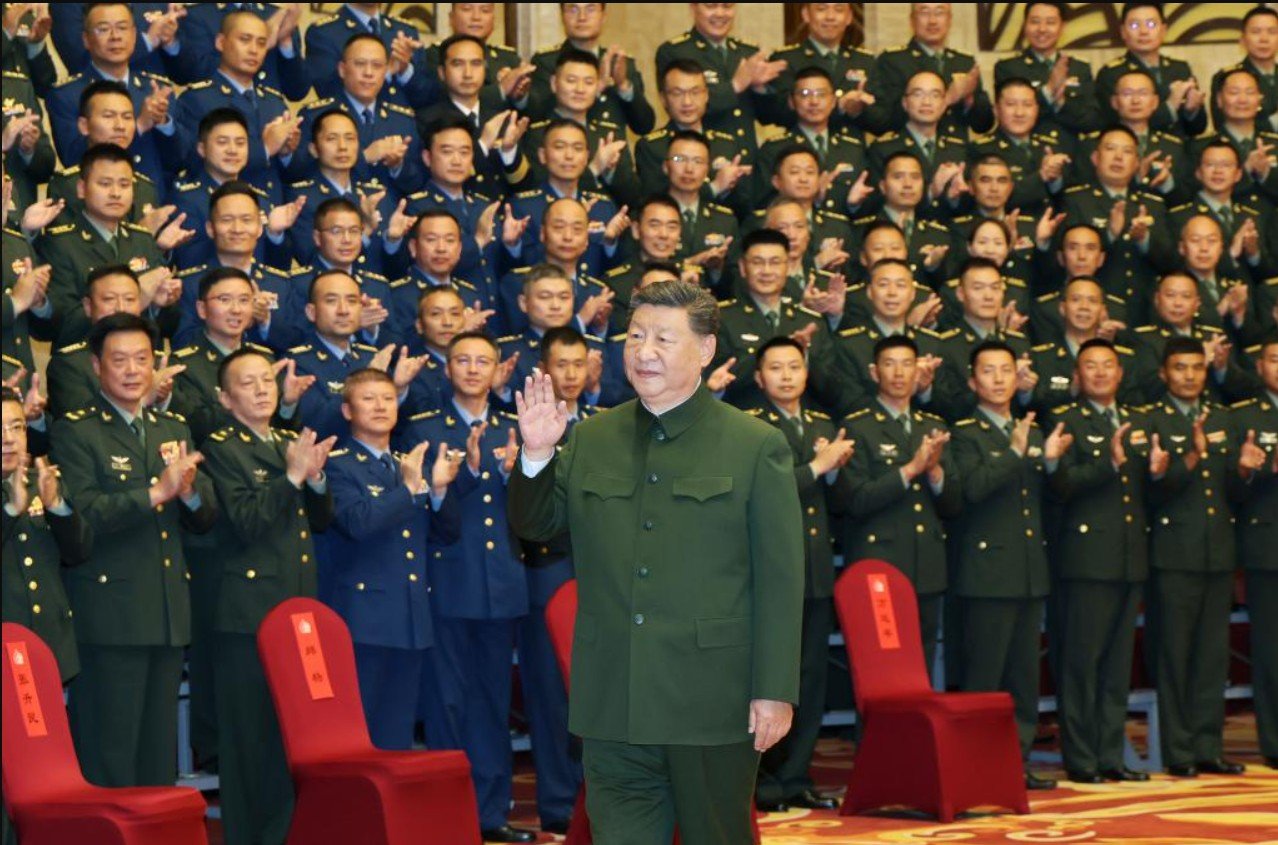
China announced investigations on January 24–25, 2026, into two of the highest-ranking military leaders in the country: General Zhang Youxia, vice chairman of the Central Military Commission and the highest-ranking uniformed officer below Xi Jinping, and General Liu Zhenli, chief of the CMC’s Joint Staff Department. In China, once a cadre is placed under investigation, guilt is almost inevitable, with punishments ranging from lengthy imprisonment to life sentences or execution in severe cases.
The move reduced the Central Military Commission, the Chinese Communist Party’s supreme military leadership body, from its usual seven members to just Xi and General Zhang Shengmin. This represents the highest proportion of vacancies on the CMC since the Mao period.
Zhang Youxia, 75, was widely regarded as politically untouchable. A longtime confidant of Xi with family ties dating back to the revolutionary era, he was also one of the few senior People’s Liberation Army (PLA) commanders with real combat experience from China’s 1979 war with Vietnam.
Previous purges, including those carried out by Xi earlier in his career, typically targeted cadres loyal to rival factions or to former leaders and were formally framed as corruption cases. Charges usually involved bribery, embezzlement, or “serious violations of discipline and law,” the CCP’s standard euphemism for corruption.
In some cases, financial misconduct overlapped with politics through accusations of building patronage networks or independent power bases, but the public justification remained rooted in economic wrongdoing.
This case is different. Zhang Youxia is the highest-ranking figure purged so far and was widely viewed as personally loyal to Xi. The current wave targets Xi’s own appointees, figures long regarded as politically untouchable. Unlike earlier purges, there have been no direct public accusations of financial corruption. Instead, state media and PLA Daily editorials accuse Zhang of political betrayal and of undermining Xi’s authority over the armed forces.
Xi Jinping’s rise to power has been closely tied to his anti-corruption campaign. Xi assumed the post of General Secretary of the Chinese Communist Party and Chairman of the Central Military Commission on November 15, 2012, at the 18th Party Congress, and was elected President of the People’s Republic of China on March 14, 2013. He succeeded Hu Jintao, who warned at the same Party Congress that systemic corruption could lead to the downfall of both the CCP and the Chinese state.
Xi launched the anti-corruption campaign immediately after taking office. In one of his first speeches as Party General Secretary on November 15, 2012, he described corruption as an existential threat to Party rule. Within days, he pledged to crack down on both “tigers and flies,” referring to senior officials and low-level cadres alike, stating that the Party must pursue violations of discipline and law by leading officials as well as corruption that directly harmed the people’s interests.
The campaign became the most extensive and systematic anti-corruption effort in the history of CCP governance. Between 2013 and the present, the Central Discipline Inspection Commission and its successor, the National Supervisory Commission, have punished more than 6.27 million Party members and approximately 2.3 million government officials. Those punished include 65 high-ranking officials classified as “tigers” and nearly a dozen vice-ministerial-level officials.
The campaign also extended deeply into the People’s Liberation Army. More than 200,000 military personnel, including at least 17 generals, have been investigated, with nearly all cases resulting in guilty findings and severe punishment. The purge has reached the very top of the military establishment, with three consecutive defense ministers removed or placed under investigation: General Wei Fenghe, expelled in June 2024; General Li Shangfu, expelled in June 2024 after serving only seven months; and the current defense minister, General Dong Jun, who has recently been placed under investigation.
According to official statements, Zhang is accused of having “seriously trampled on and undermined the system of ultimate responsibility resting with the CMC chairman,” language that directly references Xi’s personal authority. Additional accusations claim that his actions “severely fueled political and corruption problems that threaten the Communist Party’s absolute leadership over the armed forces and undermine the Party’s governance foundation,” and that he “gravely betrayed the trust placed in them by the CPC Central Committee and the CMC.”
Further statements allege that Zhang “severely damaged the political and ideological foundation of unity and progress among all military personnel” and “inflicted grave harm on efforts to strengthen political loyalty in the military.”
The political rhetoric used to justify these purges suggests two possibilities. Either Xi Jinping fears an internal challenge and is preemptively eliminating potential rivals, or he has become so powerful that he can remove anyone without fear of reprisal. What remains unclear is whether Xi will appoint replacements in the near term or wait until 2027, when a new Communist Party Central Committee is scheduled to be selected.
Some analysts argue there is no immediate pressure to fill the vacant positions and that the Central Military Commission can continue operating under Xi’s direct control for the foreseeable future. Regardless of timing, the removal of top military leaders has consolidated Xi’s authority by reducing layers of command between himself and the officers responsible for launching missiles or deploying ships.
The post China Arrests Top General, Why This Purge Is Different appeared first on The Gateway Pundit.
------------Read More
By: Antonio Graceffo
Title: China Arrests Top General, Why This Purge Is Different
Sourced From: www.thegatewaypundit.com/2026/01/china-arrests-top-general-why-this-purge-is/
Published Date: Thu, 29 Jan 2026 14:00:24 +0000
Did you miss our previous article...
https://trendinginbusiness.business/politcal/poll-finds-new-england-women-feel-misled-about-climate-policies