.png)
President Trump’s recent executive order, Ending Crime and Disorder on America’s Streets, has reopened a long-standing debate over involuntary civil commitment of adults into psychiatric care facilities. The executive order frames homelessness as a public safety crisis driven primarily by drug addiction and serious mental illness, citing record levels of street homelessness during the previous administration and arguing that existing federal and state programs have failed because they do not address root causes.
It asserts that widespread vagrancy, open drug use, and disorder have made cities unsafe and that shifting homeless individuals into long-term institutional settings through civil commitment is both humane and necessary to restore public order.
Support for President Trump’s approach comes from numerous high-profile cases involving individuals with documented mental illness and extensive criminal histories who were repeatedly released back onto the streets before committing violent crimes.
In California in 2025, Jordan Murray committed a fatal stabbing in Fair Oaks. Murray had previously been diagnosed with a mental disorder and had committed multiple robberies in 2024. He was released through California’s Mental Health Diversion program with no oversight or accountability. Sacramento County Sheriff Jim Cooper later stated that jail would have been the safest option.
In August 2025 in North Carolina, Decarlos Dejuan Brown Jr. fatally stabbed Iryna Zarutska, a 23-year-old Ukrainian refugee, on a Charlotte light rail train. Brown had been diagnosed with schizophrenia, had a lengthy criminal history, and had previously been denied extended involuntary commitment despite family requests. He was released with no ongoing supervision. The case led to the passage of House Bill 307, known as Iryna’s Law.
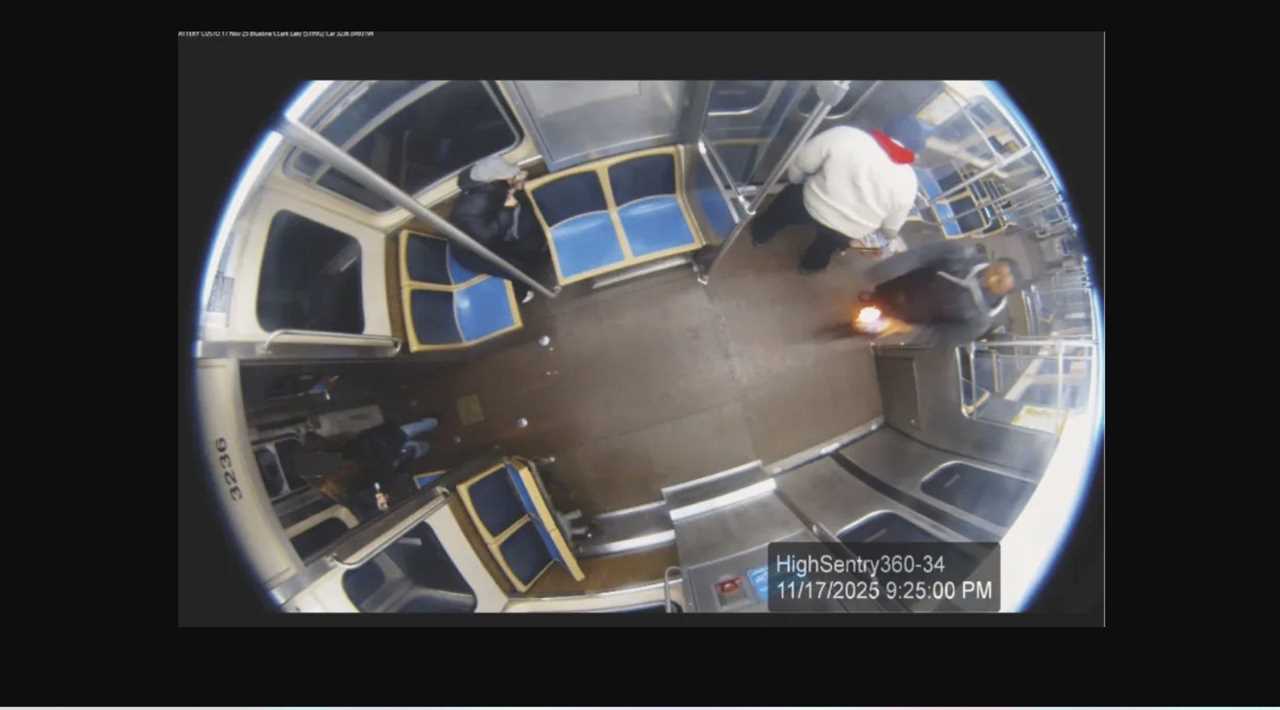
In November 2025 in Chicago, Illinois, Lawrence Reed set Bethany MaGee, a 26-year-old woman, on fire on a CTA Blue Line train. Reed had more than 70 prior arrests, multiple felony convictions, and a long history of mental illness. He had violated probation and electronic monitoring conditions before the attack and had been released after earlier violent incidents. Chicago Mayor Brandon Johnson later stated that Reed was a danger to himself and others and that the system had failed to intervene. Reed was charged with federal terrorism on a mass transportation system and faces life in prison.
These cases share clear patterns. The perpetrators had extensive criminal histories, documented mental illness often combined with substance abuse, and were repeatedly released despite escalating violence. System failures occurred at multiple points, including premature hospital discharges, courts declining involuntary commitment absent proof of immediate dangerousness, ignored probation violations, and ineffective electronic monitoring. The result was a revolving door of arrest, brief hospitalization, release, and reoffense.
The victims were strangers targeted in random public attacks. After each incident, officials acknowledged that the system had failed, that the individuals involved should not have been on the streets, and that the tragedies could have been prevented.
Aggregated data from the stage of Oregon illustrates the problem. Following 2022 policy decision to release mentally ill criminal defendants early from Oregon State Hospital to reduce waitlist, new data showed number of new felony cases filed against defendants who had been discharged in past six months increased 46% since policy was implemented. For misdemeanors the increase was 90%. More than 500 people now face new charges including murder, burglary, assault, and harassment.
Critics argue the order signals a return to forced institutionalization by directing the attorney general and HHS secretary to push for broader civil commitment, challenge court precedents and consent decrees limiting involuntary commitment. They contend this undermines civil rights protections that emerged after abuse in pre-1960s psychiatric institutions, citing Olmstead v. L.C. as a safeguard against unnecessary confinement.
Two risks are emphasized. First, the order lacks clarity on who decides commitment and under what criteria, raising concerns about bias and non-clinical decision-making. Second, the nationwide shortage of mental health beds remains unaddressed, leaving unclear where people would be placed.
Civil commitment remains governed by state law. The federal government cannot order states to commit people but can reshape funding and program requirements. The order also ties federal funding to enforcement actions by prioritizing grants for states and cities that crack down on open drug use, urban camping, loitering, and squatting, and that actively move homeless individuals into treatment or institutional settings.
It authorizes federal support for encampment removals, expanded use of drug and mental health courts, evaluation and civil commitment of sexually dangerous offenders, and measures to prevent the release of detainees with serious mental illness due to a lack of psychiatric bed capacity.
Constitutional constraints require that commitment be based on dangerousness or grave disability, not merely mental illness, and must meet due process standards including clear and convincing evidence. Most states require showing that mental illness makes someone dangerous to self or others or unable to meet basic needs.
The order also ties federal funding to enforcement actions by prioritizing grants for states and cities that crack down on open drug use, urban camping, loitering, and squatting, and that actively move homeless individuals into treatment or institutional settings. It authorizes federal support for encampment removals, expanded use of drug and mental health courts, evaluation and civil commitment of sexually dangerous offenders, and measures to prevent the release of detainees with serious mental illness due to a lack of psychiatric bed capacity.
The post Crime and Homelessness, the Debate over Involuntary Civil Commitment appeared first on The Gateway Pundit.
------------Read More
By: Antonio Graceffo
Title: Crime and Homelessness, the Debate over Involuntary Civil Commitment
Sourced From: www.thegatewaypundit.com/2026/01/crime-homelessness-debate-involuntary-civil-commitment/
Published Date: Wed, 07 Jan 2026 01:40:45 +0000
Did you miss our previous article...
https://trendinginbusiness.business/politcal/just-in-ronald-reagans-son-michael-reagan-dead-at-80