.png)
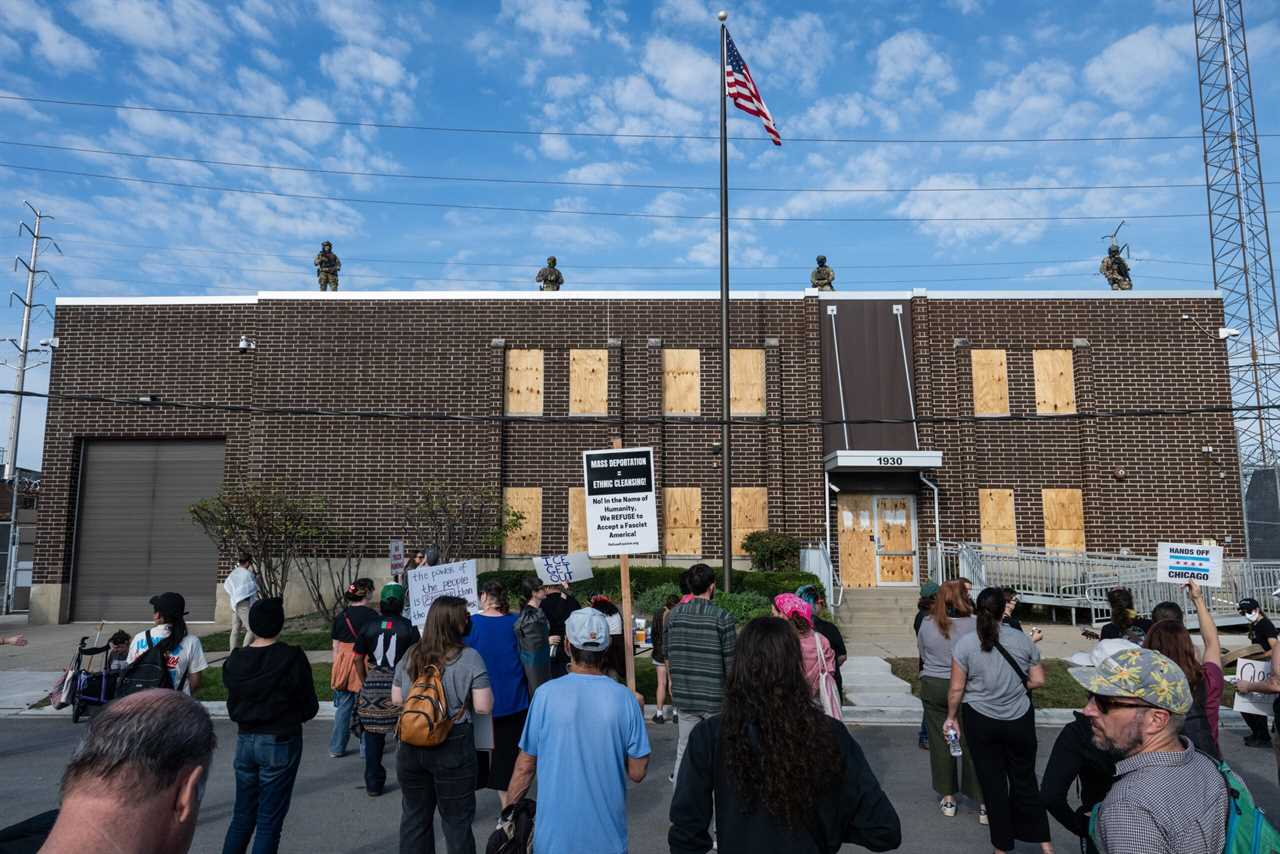
Across the country, anti-ICE training programs are emerging, in some cases with explicit or implicit support from local Democratic governments. At first glance, training designed to help people avoid law enforcement and help criminals escape would appear illegal. In practice, however, the legal landscape is more complex.
In Oregon, parents and teachers have formed neighborhood networks to monitor Immigration and Customs Enforcement activity near schools.
Participants position themselves around school zones and neighborhoods and use text chains, whistles, and social media to alert communities when ICE agents are nearby.
Some groups maintain online accounts that post the locations of ICE operations and track vehicles believed to be used by federal agents. Similar organizing has expanded in Democratic-led cities nationwide.
In Chicago, residents organized corner-watch initiatives near schools during drop-off and pickup times, distributing “Know Your Rights” materials and escorting students after ICE operations detained more than 1,000 people in late 2025.
Los Angeles has the most developed monitoring infrastructure, with long-running patrols, rapid-response networks, and coordinated documentation of ICE activity across multiple organizations.
Comparable efforts have appeared in Oakland, Nashville, Minneapolis, New York City, and other urban centers, often focused on school areas or neighborhoods targeted during enforcement operations.
Several local and state governments have provided direct or indirect support for anti-ICE activity. In Chicago, Mayor Brandon Johnson signed executive orders in August and October 2025 creating the “Protecting Chicago Initiative” and establishing “ICE Free Zones.”
The orders direct city departments to make information readily available on residents’ rights during immigration encounters.
The city distributes official ICE Free Zone signage to private property owners, coordinated through the Office of Immigrant, Migrant, and Refugee Rights, which also facilitates access to legal aid and submits FOIA requests to DHS and ICE to track enforcement activity. The initiative states it will use “every lever” to mitigate the impact of federal enforcement.
Portland City Council unanimously passed the “Protect Portland Initiative” in 2025, requiring ongoing sanctuary policy training for city staff and directing the designation of non-public areas in city buildings to limit ICE access. The council also passed an ordinance penalizing landlords who lease to ICE detention facilities and issued a land-use violation notice against Portland’s ICE facility in September 2025.
Council offices work with groups such as the Portland Immigrant Rights Coalition and the ACLU. In Illinois, Cook County prohibited civil immigration arrests at or near courthouses, while Governor Pritzker and the state attorney general filed lawsuits against DHS and ICE. Evanston is considering ordinance changes requiring weekly public reporting of ICE activity.
Public-sector unions and nonprofit groups have also played a role. The Oregon Education Association has hosted multi-hour anti-ICE training sessions focused on preparing families for enforcement near schools. Groups such as the Illinois Coalition for Immigrant and Refugee Rights and Portland Immigrant Rights Coalition conduct ICE monitoring and rapid-response training while coordinating with local officials.
City and state leaders argue these efforts protect constitutional rights and promote legal observation, while federal officials counter that such policies obstruct lawful enforcement.
In practice, standing watch and then alerting illegal aliens so they can run away is not protecting rights but inhibiting enforcement.
If liberals were genuinely concerned about how arrests were being carried out, they would encourage illegal aliens to self-deport. The reality is that they oppose deportations outright.
The White House criticized Chicago’s ICE-Free Zone policy in October 2025, and the House Oversight Committee opened investigations into multiple sanctuary jurisdictions in early 2025.
These policies have fueled protests, clashes near ICE facilities, and ongoing political conflict over immigration enforcement and local resistance.
These programs generally emphasize observation and documentation rather than direct interference. Common tactics include real-time text alerts, whistle signals, social media reporting, vehicle identification tracking, school escort programs, community hotlines, and training in constitutional observation of law enforcement activity.
Their legality turns on whether they remain within protected observation or cross into physical obstruction, concealment, or interference with federal law enforcement.
Federal courts have consistently held that observing, documenting, and reporting ICE activity in public spaces is protected by the First Amendment.
This includes recording ICE and CBP agents performing official duties, livestreaming enforcement actions, alerting communities about ICE presence, and engaging in peaceful protest near operations.
Courts in Los Angeles, Chicago, and Portland have issued orders protecting these activities after attempts to suppress recording and protest.
Legal exposure arises when conduct moves beyond observation. Federal law prohibits assaulting, resisting, or impeding federal officers, including blocking vehicles, creating roadblocks, or physically restricting agent movement.
Arrests and convictions have followed such actions, including cases involving roadblocks in California and mass arrests outside ICE facilities in San Francisco.
Additional statutes apply to knowingly harboring or shielding illegal aliens, providing transportation or shelter to evade arrest, or making false statements, with penalties ranging from five to ten years in prison.
The Trump administration has argued that real-time alerting and identification of ICE agents may constitute obstruction of justice, though no successful prosecutions have been based solely on observation or alerting.
Courts and grand juries have declined to uphold charges absent physical obstruction or violence. Organizations conducting anti-ICE training emphasize this distinction, framing their work as monitoring rather than interference.
Unresolved legal questions remain over whether real-time alerts intended to enable evasion cross the line into obstruction, whether intent alone alters the legal analysis, and where monitoring ends and interference begins.
What is settled is that documenting ICE activity in public is protected, while physical obstruction and active concealment are not.
The post Exploring the Legality of Anti-ICE Resistance Training appeared first on The Gateway Pundit.
------------Read More
By: Antonio Graceffo
Title: Exploring the Legality of Anti-ICE Resistance Training
Sourced From: www.thegatewaypundit.com/2025/12/exploring-legality-anti-ice-resistance-training/
Published Date: Wed, 17 Dec 2025 13:45:01 +0000