.png)
A pocket neighborhood is a deceptively simple idea, with a decades-deep real-life pedigree.
A small cluster of homes. Close enough to share green space and create a sense of place. Small enough to fit into an infill parcel that has sat empty because the land math never quite worked out.
In California in 2026, that “simple” idea is exactly what makes it hard.
That is why Acacia Village, Villa’s entry into building pocket neighborhoods, matters — not because eight homes arrived by crane, but because the project is working proof that a specific kind of infill housing can still be built in a market where obstacles are stacking up: higher borrowing costs, jittery consumers, volatile insurance availability and premiums, rising soft costs and local infrastructure friction that can quietly kill feasibility.
What Acacia Village is — and what it isn’t
Acacia Village is a 25-home “pocket neighborhood” in Santa Rosa’s Rincon Valley, a high-demand submarket north of San Francisco with limited new supply. Villa’s first phase set eight homes – 16 modules – over three days. The community is built using offsite construction, with a mix that includes manufactured housing configured to qualify as a primary home and financeable through mainstream channels.
This is not a “big builder” subdivision play. It’s a small-footprint, “hairy,” infill-for-sale neighborhood built in a place where a large production builder is unlikely to deploy a major operating machine for 25 homes.
That fact alone is a meaningful signal.
In a strong headwinds environment, the biggest constraint on new home supply is not demand in the abstract. It is, rather, feasibility. It’s whether a project can survive the combined weight of land basis, entitlement drag, horizontal cost surprises, utility uncertainty, and debt carry – long enough to reach vertical construction, sales, and closings.
Acacia Village exists because Villa treated feasibility as a systems problem rather than a construction problem.
The feasibility break: why the prior plan didn’t pencil
Villa CEO Sean Roberts described the site’s backstory in plain terms: a prior developer had entitled the pocket neighborhood map, but the business plan fell apart when costs rose significantly.
“Construction costs went up by 40%,” he said, and the math broke.
This is a recurring story across infill California. The entitlements might be in place, the planning might be elegant, and then the cost stack changes: labor, materials, civil, utilities, fees and interest expense. Suddenly, the “approved” plan becomes a stranded plan.
Villa’s entry point was not “we have a cooler method.” It was: the map fits smaller homes, and the cost structure and cycle time of offsite construction can shift the feasibility equation enough to make the project real.
That’s the core lesson for builders and developers. Offsite isn’t a marketing choice. It’s a feasibility lever when the typology and operating model align with the constraints.
The part that doesn’t change: horizontals still rule
Roberts was emphatic that offsite does not magically save a project.
“Pre vertical” construction work – earthwork, utilities, rough-ins, parking, site infrastructure – “that’s the same,” he said. Anyone who has built infill housing knows why that matters. The surprises and delays that wreck schedules and budgets often live in the ground and in the utility corridors, not in framing.
Acacia Village faced the classic infill friction points: site conditions, utilities, drainage, and “PG&E has been a little bit difficult on it, as they often are.”
That’s not a footnote. In 2026, the market is punishing uncertainty. Builders are being forced to defend margins and preserve cash. Projects that look fine on paper can become capital traps if horizontals drift, utility timelines slip, or local requirements shift midstream.
Offsite is not a substitute for civil execution discipline. It is a way to reduce risk and time once the site is truly ready.
Where offsite changes the equation: time, carry, and variables
Once Acacia Village hit vertical, the cadence changed dramatically.
Villa set eight homes in three days. That’s not just speed for speed’s sake. Time is money – especially now. Faster vertical construction means less construction loan carry, less exposure to cost escalation, fewer weather delays, and a shorter window for “unknown unknowns” to hit.
Roberts underlined risk reduction through certainty. A “substantial chunk” of costs is locked in when homes are ordered from the factory. The modules arrive with MEPs, cabinets, and blinds – finished components that remove on-site variability.
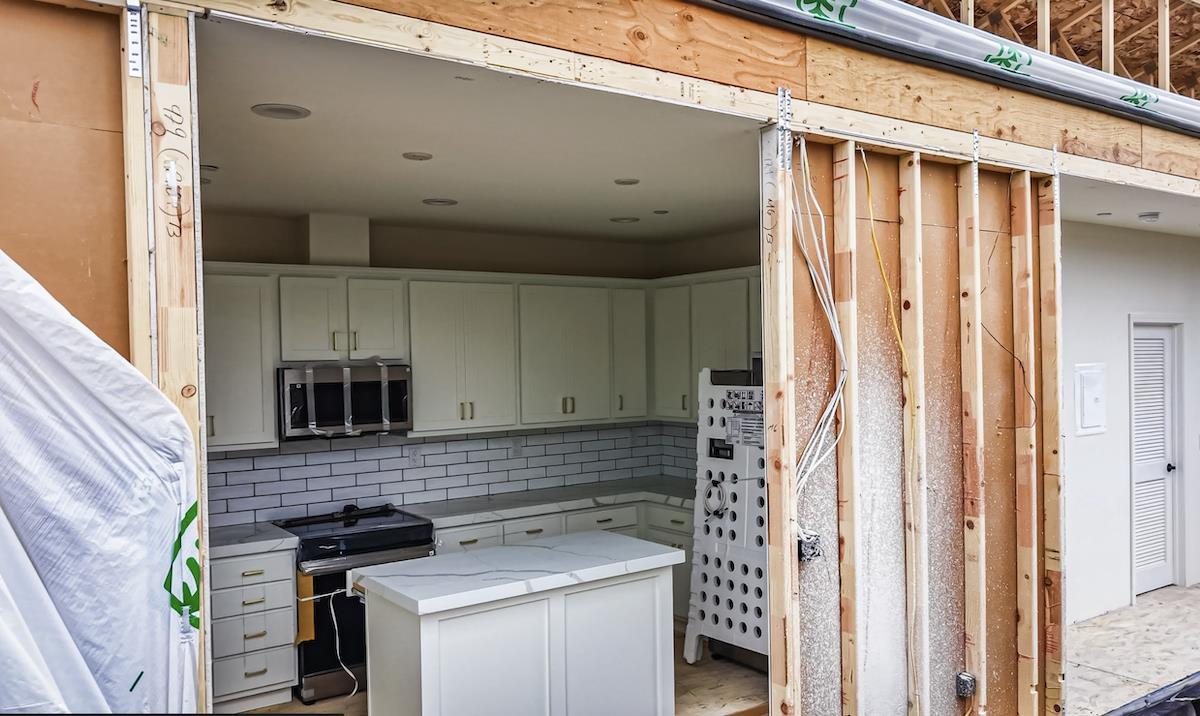
That does not eliminate risk. It shifts where risk lies and how it is managed.
For strategic leaders, that distinction matters. Offsite is not simply a production method. It is a different risk profile: more decisions and commitments upstream, fewer moving parts downstream.
The quiet unlock: jurisdictional acceptance and design discipline
California is often considered the hardest state to build in, and in many ways it is. But Roberts described a counterintuitive advantage: at the state level, manufactured homes are permitted on single-family-zoned lots in California if local design and development standards are met.
That “if” is the whole ballgame.
Villa did not try to win by imposing a modern aesthetic on a neighborhood that didn’t want it. The homes are “very, very traditional craftsman esthetic,” he said, and that is intentional. Familiar architecture becomes a trust mechanism – one that lowers the emotional temperature of neighborhood acceptance and keeps officials and buyers focused on what matters: quality, fit, and value.
Builders should not miss this. The fastest way to lose the offsite argument is to make the project feel out of place in its context. Acacia’s design choice is not conservative. It is strategic.
Making infill repeatable without pretending it’s standardized
Roberts delivered a line that should resonate with every operator who has tried to scale infill: “each of these projects is so frickin different and highly idiosyncratic.”
Infill is not tract building. The land is different. The utilities are different. The entitlement path is different. The neighbor dynamics are different. The fee stack is different. The conditions underfoot are different.
Villa’s claim is not that it can turn infill into a cookie-cutter process. Rather, it is that it can build a data-backed operating system to reduce the cost of solving each new puzzle.
What’s next for Villa
Following a $40M capital raise announced in April of last year, Villa continues to scale up its purpose-built offsite homebuilding platform. Among its many projects in motion, Villa is helping homeowners rebuild after fires in Southern California.
Villa also has several investor and developer clients focused on densifying multifamily properties. Villa’s approach to homebuilding is focused solely on volumetric offsite construction, using both modular and manufactured homes, in a tech-forward, data-driven approach that drives cost efficiency, speed and quality and is particularly well-suited for infill locations.
Roberts called it “a Data Challenge,” describing databases that track jurisdictional permitting pathways, multi-factory product options, and granular costing. That data is not a tech story for its own sake. It’s what enables faster feasibility decisions, tighter bids, more credible schedules, and commitments with fewer blind spots.
In 2026’s headwinds market, credibility is a competitive edge. Builders who can underwrite and execute with fewer surprises will win market share, even without aggressive expansion.
A useful corrective for builders: no half measures
Roberts was blunt about why traditional builders often fail when they dabble in offsite.
First: you can’t retrofit it as a bolt-on.
“You can’t take an existing site development plan and just pivot it to offsite construction without having designed the product from the ground up with offsite construction in mind,” he said. Module dimensions, staging, crane access, sequencing—all of it changes.
Second: you can’t be half-committed. Villa is “solely focused on offsite,” he said, and that focus shapes every feasibility screen and every operating decision.
That doesn’t mean every builder should try to become Villa. In fact, Roberts suggested the opposite: builders should be careful about attempting to replicate a company built from the ground up around a different value chain.
The takeaway is more practical: if you want offsite to work, stop treating it like a pilot. Treat it like a system – designed from the start for the method, supply chain and site choreography.
Zeroing in
Acacia Village is not a cure-all for affordability. Mid-$700Ks in Santa Rosa is still a high price in absolute terms. Roberts acknowledged the nuance: smaller homes can command a higher price per square foot, but the absolute price point and the scarcity of new, single-level homes create a real market opening.
The larger point is not the price tag. It’s the feasibility template.
In a higher-for-longer rate environment, with consumer angst elevated and insurance costs rising in hazard-exposed regions, builders have to protect against three killers:
- Time (carry costs and exposure)
- Variables (budget and schedule surprises)
- Local friction (delays, process drag, political risk)
Offsite construction, used in the right typology and paired with rigorous upfront homework, addresses all three – without pretending horizontals and entitlements go away.
That’s what Acacia Village represents: a small project with outsized signaling value.
Not a promise that offsite “boils the ocean.” A proof that in a market where “approved” projects routinely die in feasibility, a different operating system can bring a stranded plan back to life – and deliver homes with less disruption, tighter timing and a risk profile that capital can begin to trust.
Roberts put it plainly: more proof points build confidence. In 2026, confidence is scarce. Acacia Village is another piece of evidence that a specific slice of attainable infill-for-sale housing can be built – if you start from first principles, respect the constraints, and commit to the method end-to-end.
------------Read More
By: John McManus
Title: California’s Acacia Village tests offsite infill’s feasibility advantage
Sourced From: www.housingwire.com/articles/offsite-infill-feasibility-santa-rosa/
Published Date: Wed, 11 Feb 2026 22:22:09 +0000