.png)
A TikToker’s "Hubby Home Improvements" series made me think about how inventions are often intimately connected to care for the people close to us.
At the top of lifestyle content creator @relatable_laura’s TikTok, the first pinned playlists—titled "Hubby Home Improvements" and "Hubby DIYs & Solutions"—are a running archive of small fixes her husband has made around their home. Some of them, like a rope through their bathroom towel rod to help hand cloths stay in place, or an end table turned floating TV console that fits an ottoman beneath it, he did for them both and their children. But many, as she says in her videos, he made "just for me"—things like custom cabinets that hold laundry soap (with a hole below the dispenser) to fill an "awkward space" between the washer and dryer and an extendable hanger that makes steaming clothing less cumbersome, or a magnetic medicine cabinet to help ensure her tweezers don’t get lost.
Much of the content she posts to her more than 458,000 TikTok followers paints a portrait of domestic life shaped, literally, by love. In the videos about the DIY hacks her husband created specifically to make her everyday life run more smoothly, an all too familiar division of labor emerges. Laura appears to shoulder much of the household upkeep, like laundry and dishes. But most of the people in her comments section seem to consider her husband’s interventions designed to respond to the friction she encounters in those tasks as gestures of romance, rather than signals of gendered housework norms. Cruise through the comments of any of those TikToks and you’ll often find some iteration of the following quote toward the top: "He loved her to the point of invention!" Versions of that same phrase appear in the TikToks of numerous other users: A daughter shows off the tote bag her mom made her that doubles as a "knitting tactical vest" and a woman remembers the custom shelving system her husband built after she mentioned needing a better way to store holiday decor. Even a company that makes toe grips to help keep senior dogs from slipping posted a TikTok with the words, "When you love your senior dogs to the point of invention," over a video of a Husky in a hardwood-floor household. For some, the phrase has become an internet shorthand for describing a very particular type of devotion where customization is an act of love.
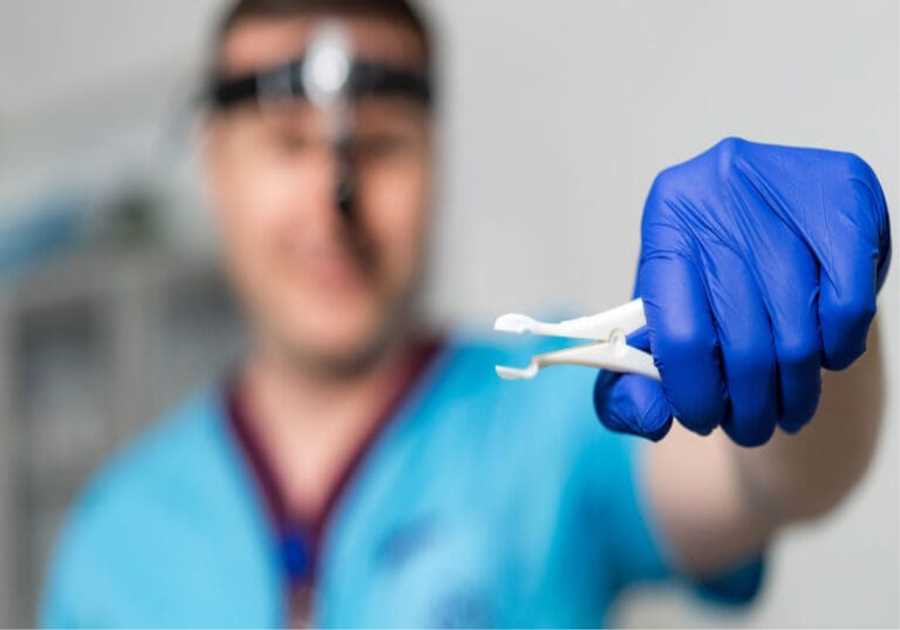
The actual quote, "I loved her to the point of invention," is from Sarah Ruhl’s 2004 play, The Clean House, which, ironically, is about a maid who despises cleaning. The line refers to William Stewart Halsted, the American surgeon who invented rubber gloves to protect the hands of his soon-to-be wife, who was working as a nurse, from harsh surgical chemicals in the late 19th century. His love for her inspired an innovation that transformed modern medicine.
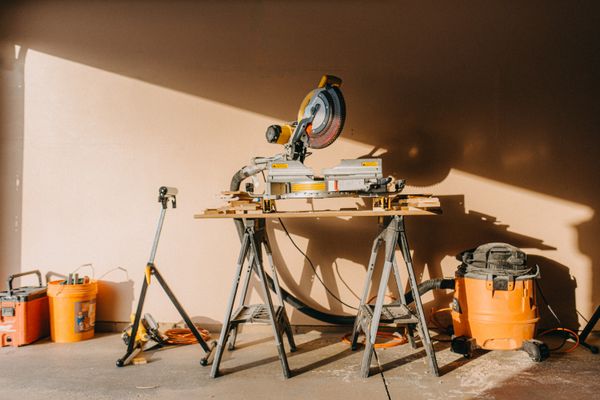
Designing something for another person can be an intimate act of service, which is one of the love languages.
Photo by Stefania Pelfini la Waziya via Getty Images
History is filled with similar tales of love-driven design. Elijah J. McCoy, an inventor and engineer, patented the first foldable ironing table after noticing his wife complain about uneven ironing surfaces. Abigail Carter stitched a pair of durable, over-the-shoulder trousers for her husband, railroad engineer Homer W. Carter, which became the foundation of the first manufacturer of overalls. Architect John W. Hammes designed the first in-sink garbage disposal after watching his wife struggle with food scrap cleanup. Everyday inventions like Band-Aids, Goldfish crackers, and even Wordle are proof that romance has long been a driving force behind creativity.
Most of us are more familiar with the proverb, "necessity is the mother of invention," usually attributed to Aesop’s fable "The Crow and the Picher," in which a very thirsty crow drops pebbles into a pitcher to raise the water level so he can drink. But who’s to say necessity was the only thing driving him? Maybe the crow had a partner, or a parent, or a child, a friend who was even thirstier than he was. Maybe it was love for someone close to him that pushed him to figure out a way to solve the problem. Design isn’t just about aesthetics, it often also involves invention. Invention requires paying attention, anticipating needs, and addressing them. So, in that sense, customization is a form of intimacy built into the architecture of a home itself.
Once you notice it, it’s hard to unsee. In fact, many of the homes Dwell covers involve stories of people devising their spaces around loved ones’ needs. Consider a couple who transformed their Tasmanian sleep-out into an accessible guest suite for their aging parents, with a kitchenette, private entrance, and curbless floor plan. They preserved much of the original structure but reimagined it to be intentionally geared toward "aging in place." Or a couple in Toronto who worked with an architect to retrofit their century-old bungalow for multigenerational living after a relative’s stroke, installing a concealed elevator, wide doorways, and custom millwork to accommodate wheelchair use. These projects are part of a broader landscape in which more and more homeowners and even renters are asking themselves how their homes can better serve them and the people they love.
Laura’s "Hubby Home Improvement" TikToks may resonate with those who respond gleefully to them because they tap into something deeper than the satisfaction of a DIY hack. Acts of service are a love language, and there’s something extremely intimate about a design devised as a lasting act of service for another person. Living with someone you love means building something together, literally and figuratively, and there’s always a give and take. I learned this firsthand when my boyfriend and I moved in together. I didn’t necessarily see the allure of hanging his high school basketball jersey on the wall, but I ended up creating a DIY frame for it and it became part of our decor because it mattered to him. Sure, that’s not as revolutionary as creating rubber surgical gloves, and I definitely can’t patent it. But the longer I think about it, the more I’m convinced that great design means paying close attention to those you love.
Top photo by Jackyenjoyphotography via Getty Images
Related Reading:
Design Meet-Cutes: When Finding Furniture Leads to Love
I’m Single. I Have No Kids. Is My Home Ready for Me to Get Old Alone?
Read More
By: Anna Braz
Title: Hear Me Out: Designing for Others Is a Love Language
Sourced From: www.dwell.com/article/love-to-the-point-of-invention-designing-for-others-is-a-love-language-a85792ed
Published Date: Fri, 13 Feb 2026 17:56:43 GMT
Did you miss our previous article...
https://trendinginbusiness.business/real-estate/remembering-a-pioneering-som-architectand-everything-else-you-need-to-know-about-this-week