.png)
Macworld
At a glance
Expert's Rating
Pros
- Extreme color accuracy
- Really good built-in webcam
- Very good HDR brightness
Cons
- Costs a fortune
- Speakers are mediocre
- Mac-only; Thunderbolt-only
Our Verdict
For well-heeled Mac (and only Mac) users, this is just the display to make your content shine. It should cost a lot less, and should be 32 inches instead of 27, but there’s no denying that the color gamut and accuracy are top-notch, HDR picture quality is fantastic, and even the webcam is really good this time.
Price When Reviewed
This value will show the geolocated pricing text for product undefined
Best Pricing Today
Price When Reviewed
£2999
Best Prices Today: Apple Studio Display XDR (2026)
Retailer
Price
£2,999
View Deal

£2999
View Deal
Product
Price
Apple finally made a nice modern computer monitor with nice modern features and specs. Something that compares well with contemporary PC monitors in most respects: high and variable refresh rate, quality HDR, and wide color. The Pro Display XDR wasn’t it. The Studio Display (2022) wasn’t it.
This is it. It even manages to outshine its contemporaries in some ways.
It’s a shame it won’t be used by more than a handful of visual artists burning through VC startup money and YouTube influencers with cash to spare, because the Studio Display XDR is the kind of monitor you really need to get the full Mac experience. Unfortunately, the $3,300+ price tag places it out of reach and out of touch.
Studio Display XDR: Design
You’d have a hard time spotting the difference between the new Studio Display XDR and the regular Studio Display. They are virtually identical and almost exactly the same as the original 2022 Studio Display. It’s a 27-inch display, with relatively thick black bezels and a silver aluminum body that’s about an inch thick. There are four USB-C ports on the back and speaker holes along the top and bottom.
The regular Studio Display comes with a stand that only tilts, but does not go up or down—a problem since it’s set too low for most desks. There are a lot of Studio Displays sitting on makeshift monitor stands. You can buy a handsome tilt-and-height adjustable stand that is elegant, simple, and very Apple. With it, your display can tilt and go up and down, though not rotate. Unfortunately, it still costs $400, easily four times what a reasonable price should be. The Studio Display XDR comes with that upgraded stand, but it should really come standard with the regular Studio Display as well.

Foundry
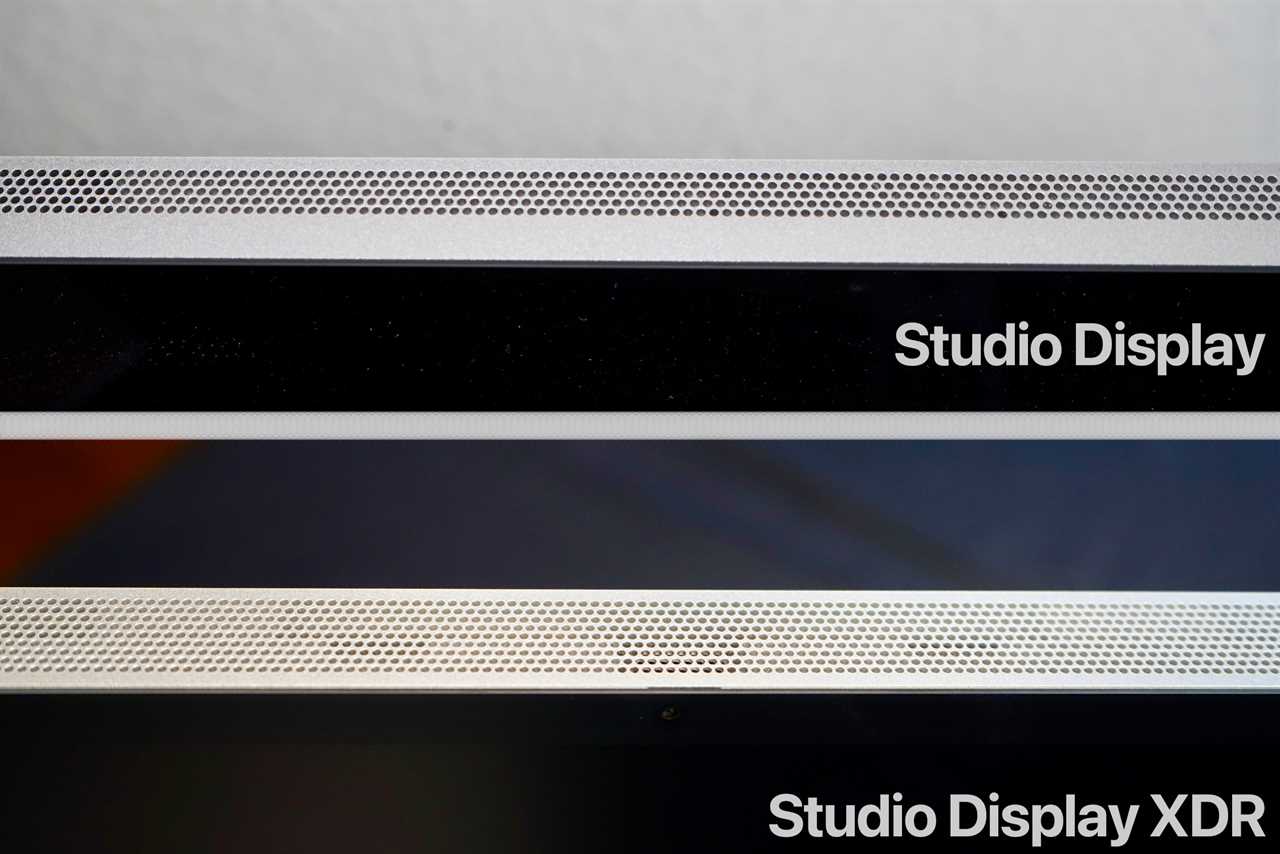
Those perforations are the only visible difference between the Studio Display and the Studio Display XDR when the power is off. The Studio Display has five rows of ventilation holes about halfway across the thickness of the display, while the XDR model has nine rows that nearly stretch all the way across.
Foundry
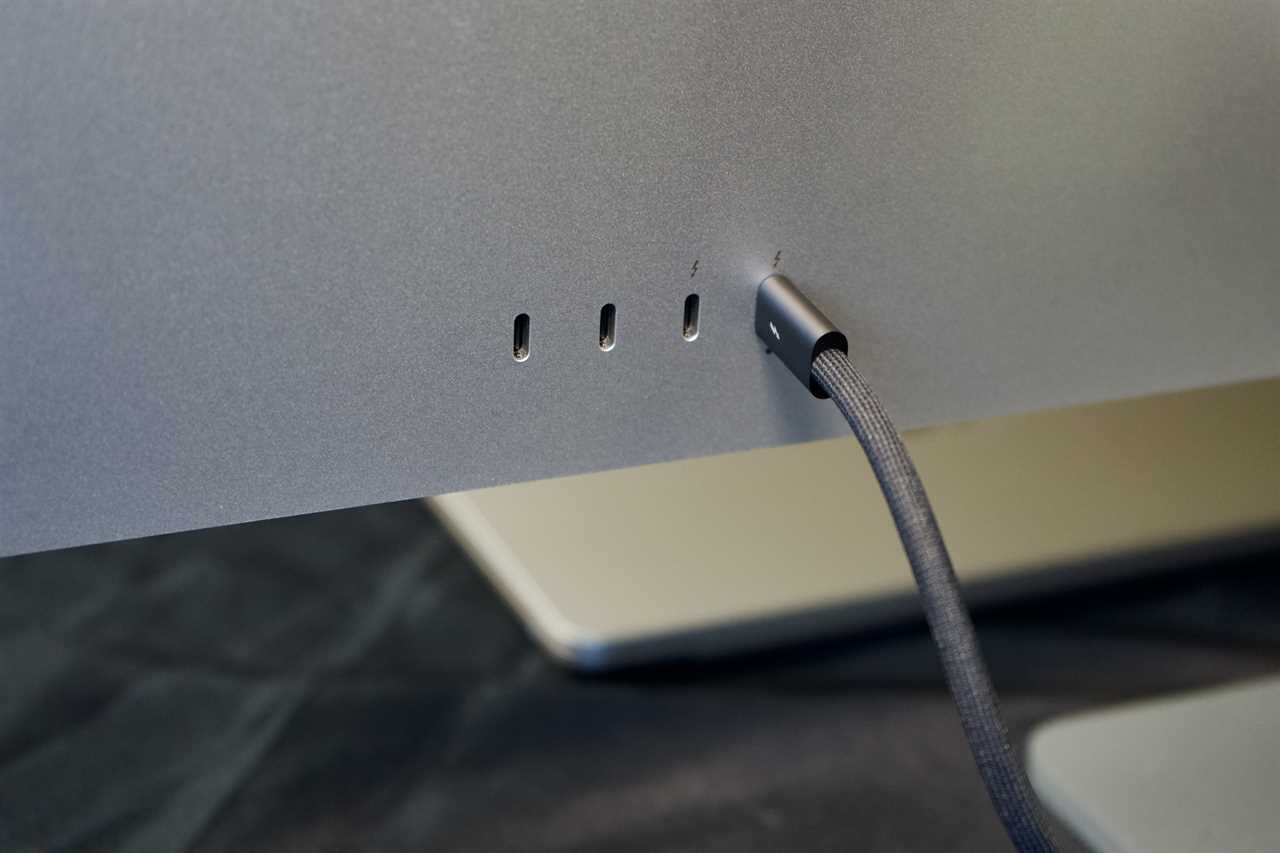
The four USB-C ports on the back are a big upgrade over the 2022 model, and identical on both the Studio Display and XDR versions. While the old Studio Display had a single Thunderbolt 3 port and three USB-C (10 Gbps) ports, the new models have a pair of Thunderbolt 5 ports and two USB-C ports.
Foundry
That second port lets you hook up high-speed accessories such as external storage, or daisy-chain multiple monitors together—up to four, with a MacBook Pro with M5 Max. The downstream Thunderbolt port still supplies up to 96W of power on the standard model to charge your connected MacBook, but the Studio Display XDR boosts that up to 140W so you can fast-charge a MacBook Pro.
These are nice improvements, but it’s frustrating to think that you’ll need adapters to plug anything in via HDMI or DisplayPort. Apple built Studio Display for Macs and Macs alone. Case in point: There is no way to adjust display settings other than with a connected Mac.
Studio Display XDR: Screen
The new Studio Displays both feature the same size and resolution as the old model: 5K (5120 x 2880) at 27 inches. The new XDR model finally adds the critical features that should be standard for any monitor costing over $800 these days.
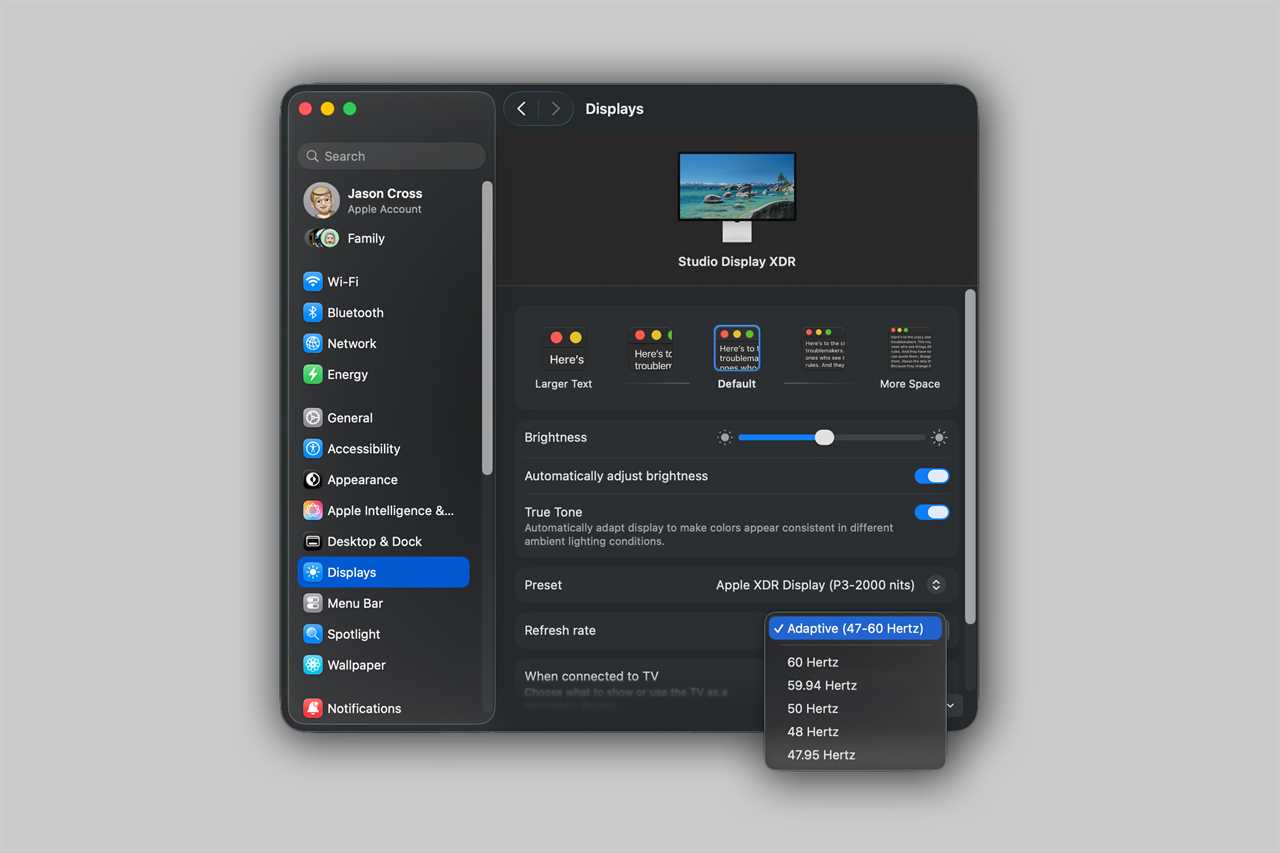
The XDR version has a mini-LED backlight array with up to 2304 dimming zones that can crank the brightness up to 1000 nits for SDR content and a peak of 2000 nits for HDR content. It supports resolutions up to 120Hz and variable refresh rates, too. (A note on 120Hz support: Macs with M1, M1 Pro, M1 Max, M1 Ultra, M2, and M3 will only drive the display up to 60Hz. You still get HDR and all the other display features, though.)
Foundry
Both models support P3 wide color, but the XDR model adds a host of additional color reference modes, including P3 + Adobe RGB, and even DICOM medical imaging. Calibration options are limited for a professional monitor, but enhanced full instrument-driven calibration is coming in a future software update, according to Apple’s white paper.
I don’t have the colorimeters to fully test the gamut and color accuracy of the Studio Display XDR. It’s not as high-resolution as the original Pro Display XDR, which had a 6016 by 3384 panel, but I would be shocked if the new model were any different than the original Studio Display, which was lauded for its spot-on calibration out of the box. To my eyes, the Studio Display XDR looks extremely accurate across the brightness range, and there’s a minimum of blooming or variance in backlight uniformity.
Motion clarity is another matter. The original Studio Display was criticized for both its low 60Hz refresh rate and aging panel technology with poor response times, resulting in significant blur and smearing on moving objects.
The Studio Display XDR improves that quite a bit with the boost to 120Hz, but taking a spin through the tests at blurbusters.com, it’s easy to see that motion clarity is still an issue relative to quality OLED PC displays. Many of those are larger, support higher refresh rates, and feature much better response times, resulting in much better motion clarity.
It won’t be an issue for visual artists working on still images or video editing, but any quick-moving 3D graphics, including (but not limited to) games, will show significant motion clarity problems compared to monitors that cost a fraction of what the Studio Display XDR does.
Studio Display XDR: Camera and speakers
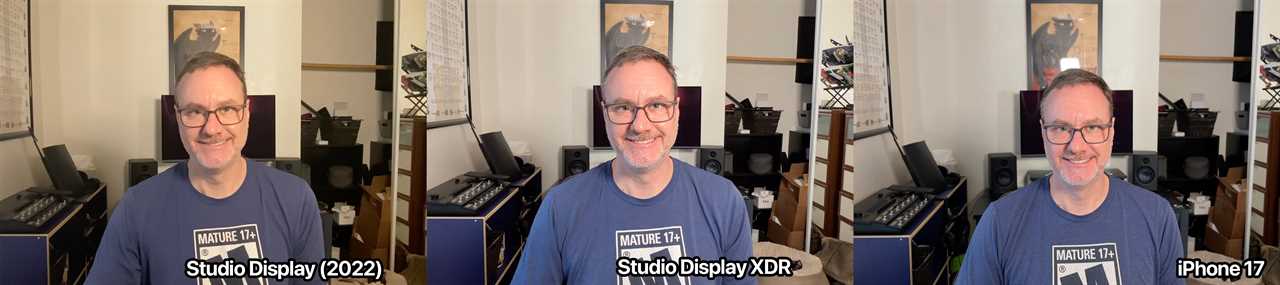
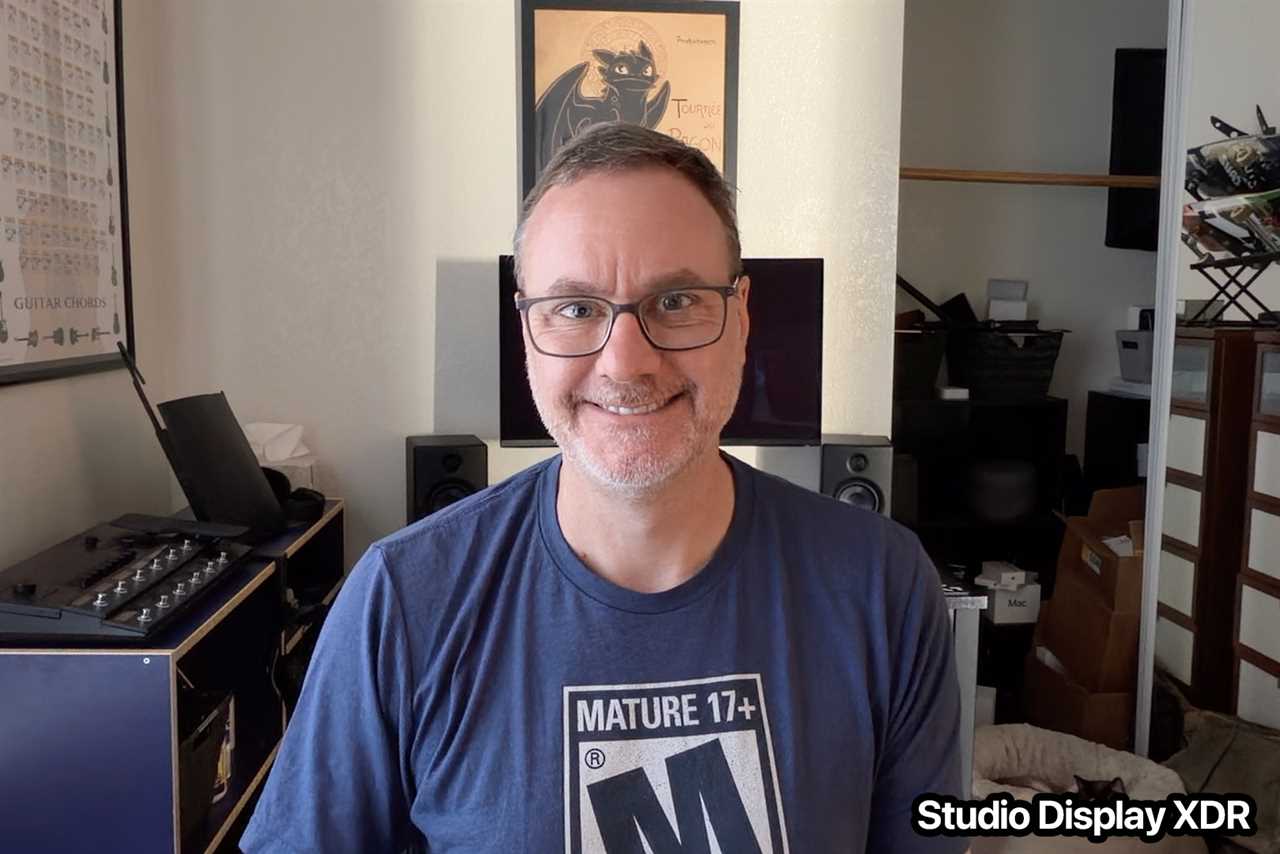
You’d be forgiven for thinking the webcam has barely been upgraded in the new Studio Displays, judging from the specs. The three-year-old model has a “12MP Center Stage camera,” and the new model has a “12MP Center Stage camera with Desk View.” The image quality is vastly improved, though Desk View is unfortunately not that useful here. The angle captured is still a little high, forcing you to tilt the monitor down quite far to show your desk.
It’s a night-and-day difference under any lighting conditions, and especially low light where video from the old Studio Display looks like mud. You still get better results with a modern iPhone using Continuity Camera, but the new Studio Display really closes the gap.
Foundry
White balance, clarity, resolution, and smoothness are all so much better. At this price we still think Apple should be a leader and give us 4K and 60fps recording, but at least the built-in webcam is now genuinely quite good.

The same can’t be said for the speakers. Apple touts its six-speaker array with Spatial Audio (a marketing term now indiscriminately applied to every Apple product, it seems) as having 30 percent deeper bass than the six-speaker array on the previous Studio Display. It’s noticeably better, but still not very good.
The overall sound is tinny and thin, and “Spatial Audio” seems like a joke—there’s barely any stereo separation, much less some sort of 3D, room-filling spatial sound.
Monitors are notorious for having terrible built-in speakers, or none at all. The Studio Display’s audio is much better than most, but that’s damning with faint praise. If you care about sound quality at all, invest in dedicated speakers. Even cheap speakers sound better than the Studio Display.
Should you buy a Studio Display XDR?
The Studio Display XDR shines in its resolution (5K is nice when 4K is so common), color accuracy, brightness, and webcam quality. The speakers are far better than what you get in most monitors, though still not very good.
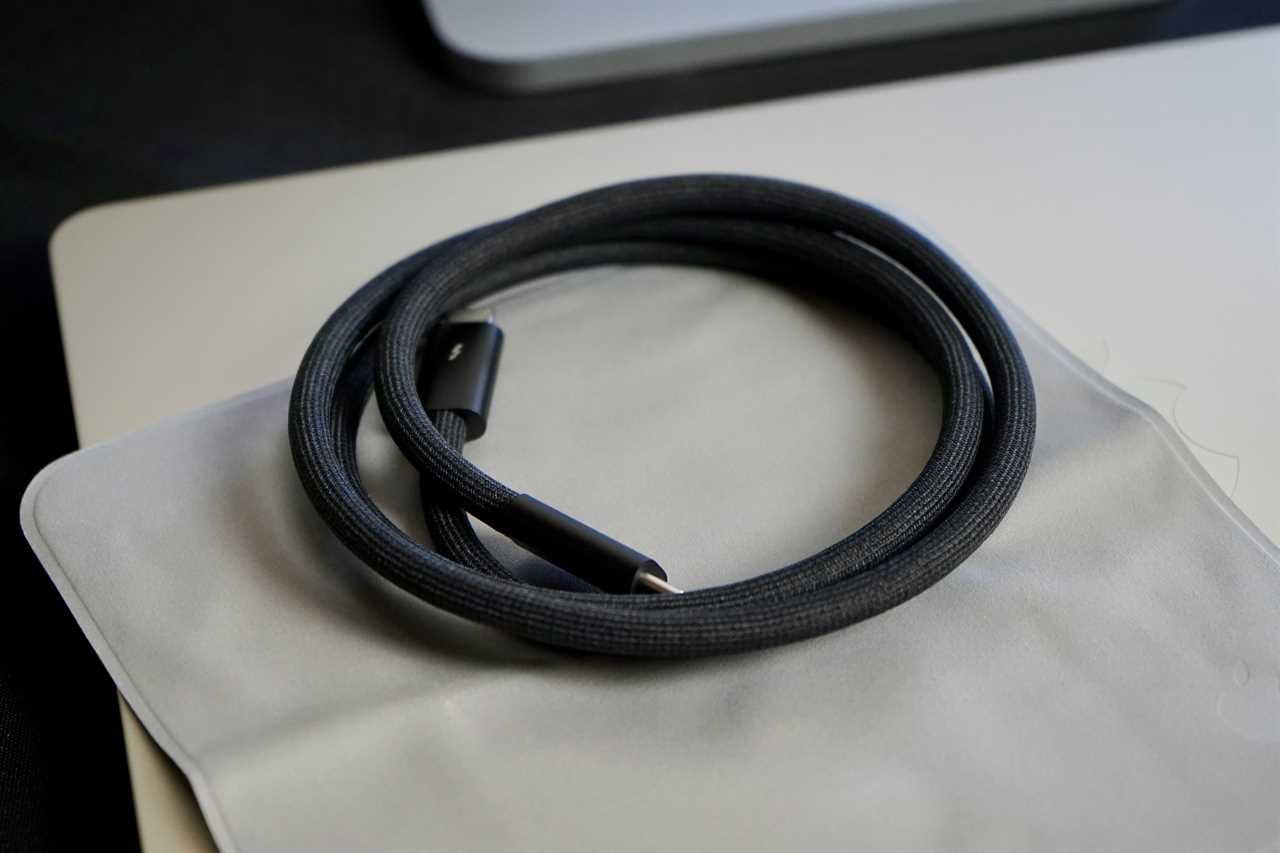
But it’s hard not to criticize the price. At $3,299 it’s three times what it should cost, even for an Apple product. At least the price includes the tilt-and-height adjustable stand, a whopping $400 upgrade for the regular Studio Display, as well as a short 1-meter Thunderbolt 5 cable. And yes, if you order the Nano Texture Glass (+$300) to reduce glare, it still comes with the Apple Polishing Cloth.
Foundry
But consider the alternatives. Just one example of many: the 27-inch Asus ROG Swift PG27UCDM is a QD-OLED 4K display with 99% DCI-P3 color coverage, extremely good color accuracy, a 240Hz refresh rate, much better motion clarity, and HDR peak brightness of 1000 nits. It accepts multiple standard display inputs, has USB-C ports, and delivers 90W of power. Sure, it’s got no webcam or speakers, but it’s $1099.
If Apple were to charge only double that for the Studio Display XDR, you could probably convince yourself it’s worth it. Integrated webcam and useable, if not great, speakers. 5K resolution. Higher brightness and wider color gamut. Who needs inputs other than Thunderbolt anyway?
We’re used to paying the so-called “Apple Tax” for products with superior design and build quality, but the Studio Display XDR, like the standard Studio Display, pushes the concept too far. It’s a great product for Mac users (and only Mac users), but such a terrible value that it’s hard to recommend it, even if it’s on sale.
Read More
Title: Studio Display XDR review: The right Mac display at the wrong price
Sourced From: www.macworld.com/article/3083124/studio-display-xdr-review.html
Published Date: Wed, 11 Mar 2026 13:51:29 +0000