.png)
Macworld
Back in March, Apple announced its cheapest notebook ever, the MacBook Neo. Starting at as little as $599 ($499 for students), the laptop has been selling like hotcakes. Typically, high sales would make the corporate overlords happy. The MacBook Neo’s exceptional success, however, has apparently become a real problem.
Due to chip shortages and the MacBook Neo’s extraordinarily high demand, Apple is struggling to produce new units en masse. A recent report from analyst Tim Culpan suggests that the company could stop selling the base Neo model, pushing customers to the higher-end variant that costs $100 more and helping Apple preserve its margins. While this approach can potentially resolve one issue, it would introduce a bigger challenge.
The Neo problem
The MacBook Neo packs a binned version of the iPhone 16 Pro’s A18 Pro chip. In simpler terms, Apple is repurposing faulty iPhone processors that had one fewer GPU core that would have otherwise been discarded. This approach has enabled Apple to price the Neo competitively, as it had plenty of these flawed processors lying around. Once Apple runs out of those chips, making new ones won’t be a simple switch.
While Apple had to know the MacBook Neo would be a hit, its popularity has exceeded even the company’s expectations. Departing CEO Tim Cook stated during Apple’s most recent earnings report that the company hadn’t forecasted this level of enthusiasm, which helped attract a record number of first-time Mac buyers. Consequently, Apple has reportedly increased the production target from 5-6 million to a whopping 10 million.
So, between running out of binned A18 Pro chips and TSMC’s limited capacity to produce new units due to the memory crunch, keeping up with the MacBook Neo’s demand is becoming trickier.
The MacBook Neo uses a binned version of the A18 Pro chip inside the iPhone 16 Pro.
Connor Jewiss / Foundry
Rumored remedies
To deal with the RAM crisis without introducing sudden price hikes, Apple has been silently discontinuing certain Mac models. The entry-level Mac mini, which started at $599 and offered 256GB of storage, was recently removed from the Apple Store. This pushes customers to the 512GB tier, which starts at $799 instead. The company similarly stopped selling the M3 Ultra Mac Studio with 256GB and 512GB of RAM. Perhaps unrelated, Apple also recently stopped selling the Mac Pro, which started at 64GB of RAM.
Culpan’s recent report suggests that, as it did with the Mac mini, Apple may retire the $599 MacBook Neo with 256GB of storage. This would force customers to pay $100 more for the model with 512GB of storage and Touch ID. The same report also claims Apple may be exploring new color options to make the $699 configuration more enticing and “soften the impact of higher prices.”
The problem, however, is that, unlike the Mac mini, the MacBook Neo’s budget-friendly pricing is its key selling point and the main stimulus behind its high demand. If a product is unaffordable to a group of people, a new shiny color won’t fix that. Even at $699, many would-be Neo customers will likely explore cheaper Windows laptops or Chromebooks.

The MacBook Neo’s main appeal is its starting price. Even a small hike would limit its appeal.
Eugen Wegmann
The RAM crisis has been ongoing for a while now, and Apple still chose to release the affordable MacBook Neo right in the middle of it for a reason. While its sales may have exceeded expectations, the company was aware of the industry challenges and associated impacts on its products.
Additionally, the MacBook Neo’s entire objective is to get students and kids used to the Apple ecosystem early on to win them as potential lifelong customers. It’s not meant to be a high-profit driver or a direct revenue generator. In a way, I see it as a free trial of sorts to get users hooked on Apple hardware. It would make more sense for Apple to absorb the costlier production fees than kill the Neo’s momentum.
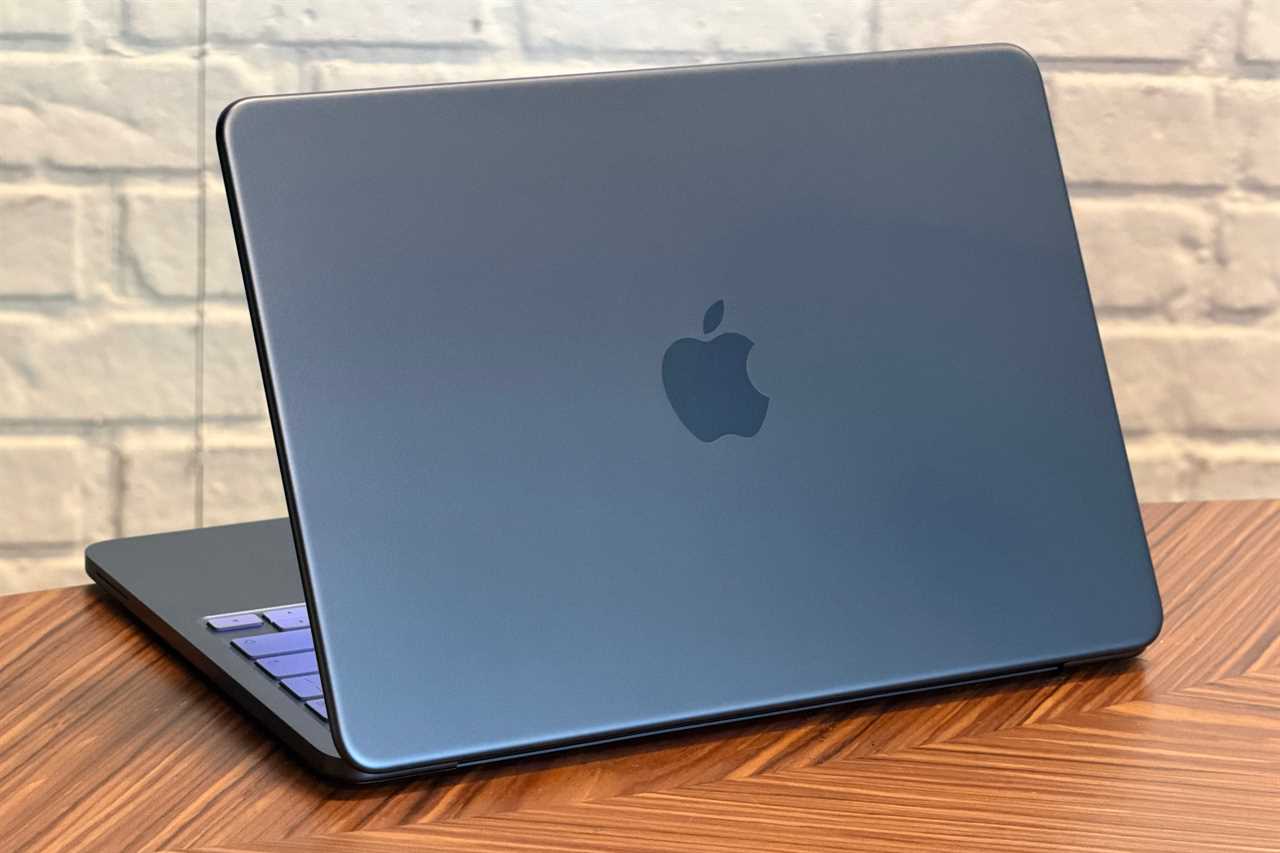
The $599 MacBook Neo is Apple’s gateway Mac, and it’s not going anywhere.
Foundry
Possible outcomes
So, how does Apple deal with the situation? Just today, it was revealed that Apple will now require proper identification for students or teachers shopping in its discounted education store in the US and other countries. (Curiously, Apple’s education store has always operated on the honor system and never required buyers to use a dot-edu email or scan an ID card.) While a seemingly innocuous move, it could be hiding a solution for the Neo problem.
If Apple is really in a predicament as big as Culpan says, Apple’s most likely route is to eventually make the $599 MacBook Neo exclusive to the education store, as its primary target is students on a budget. This would enable Apple to keep its low pricing but alleviate some of the demand for the cheapest model without eliminating it from the lineup completely.
Alternatively, Apple could accelerate the production of the MacBook Neo 2 and release it sooner than planned, as Apple presumably has an ample supply of binned A19 Pro chips. Or maybe the $699 model gets the newer chip while the $599 model sticks with the A18 Pro. This would address the supply constraints in the short run until it figures out a sustainable, long-term solution that isn’t a price hike.
Whichever route Apple chooses, one thing is clear: The $599 MacBook Neo isn’t going anywhere. And you’d be crazy to believe it would even consider it.
Read More
Title: The $599 MacBook Neo is here to stay
Sourced From: www.macworld.com/article/3134739/the-599-macbook-neo-is-here-to-stay.html
Published Date: Fri, 08 May 2026 14:07:39 +0000