.png)
Macworld
Later this year, the MacBook Pro is expected to undergo one of its most significant transformations ever with a touchscreen OLED display. At around the same time, the iPhone Fold will bring a tablet-sized screen to Apple’s handset for the first time.
For years, Apple has resisted the temptation to replicate iPad features on its other devices. The iPad Pro can basically mimic a MacBook thanks to its M-series chip, Magic Keyboard, and iPadOS 26, but none of Apple’s other devices can compete with the iPad’s capabilities. The iPhone is too small. The Mac is too keyboard-centric.
However, while Apple’s laptops and tablets have been largely evolving along parallel lines, they’re now seemingly en route to an intersection. The looming strategy shift suggests that Apple is thinking differently behind the scenes. iPads and MacBooks are actively borrowing hardware and software features from each other, and, at this pace, they could realistically become a single product within a few generations.
Similar to how the iPhone rendered the iPod redundant, Apple’s upcoming touchscreen products appear to be starting to dig the iPad’s grave.
A new Pro in town
Over the past few years, Apple’s tablets have gained laptop-like features, allowing users to use them as hybrid desktop machines. The iPad Pro now boasts the latest M5 Mac chip, a landscape-positioned front camera, and support for the Magic Keyboard, which includes a responsive trackpad. The next-gen model could even introduce an advanced thermal management system to sustain more demanding processing. It’s pretty clear that Apple wants the iPad to look and function like a laptop at this point.
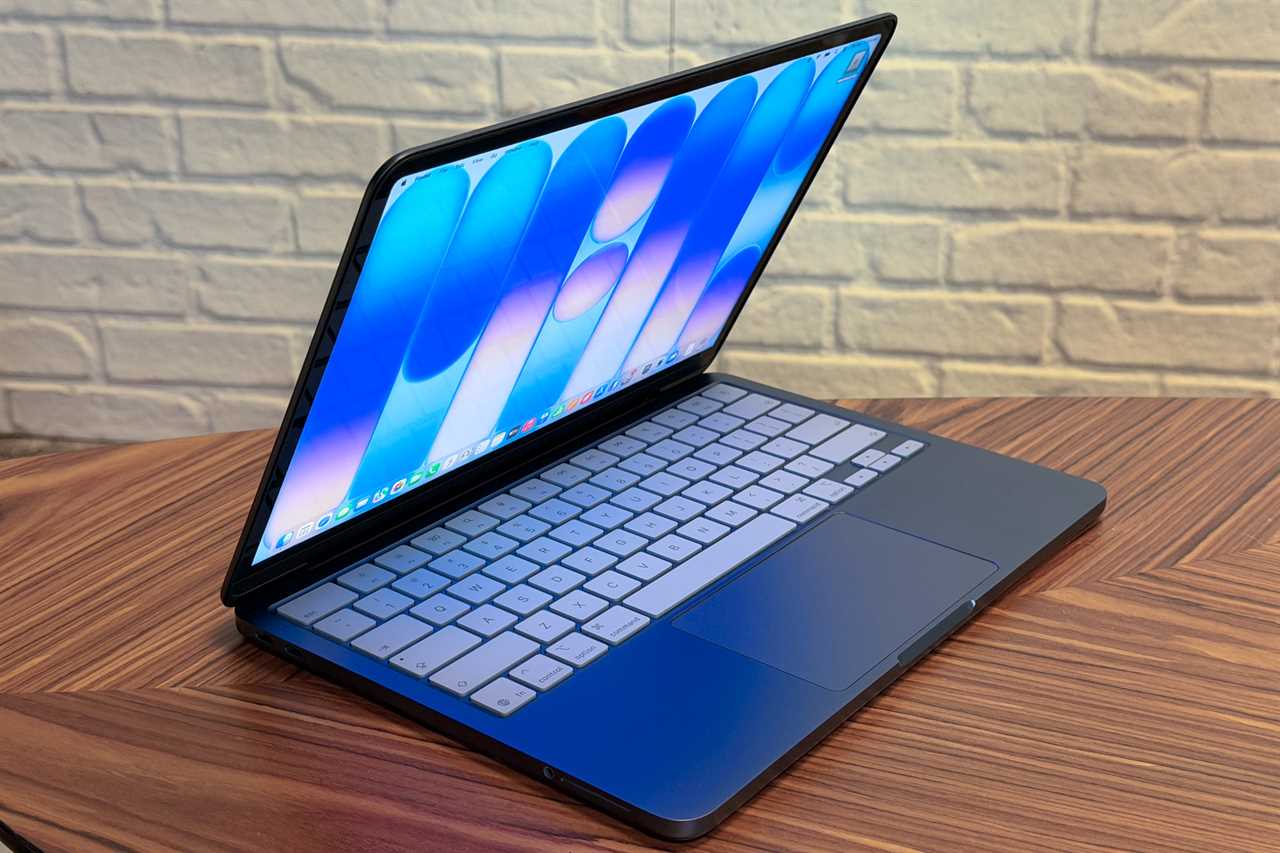
Meanwhile, the redesigned MacBook Pro will likely offer a slimmer shell and OLED touchscreen, bringing its form factor closer to an iPad Pro. That’s not to mention that Apple code has revealed in the past that the company is testing 5G-enabled MacBooks, so the overhauled model could potentially pack an in-house cellular modem, too.
A touchscreen MacBook is one step closer to making the iPad Pro irrelevant.
Foundry
So, in terms of hardware, we’re looking at two very similar machines. But hardware isn’t what sets the MacBook and iPad apart; it’s software. iPadOS 26 already introduced a ton of macOS features, including a proper cursor, a menu bar, traffic light buttons, background tasks, more flexible app windows, etc. The operating system now also runs certain desktop-class apps from Apple and third parties, such as pro media editors.
Nevertheless, it’s ultimately a mobile OS that doesn’t support sideloading apps, Mac-only software, terminal commands, extensive file management, and so on. On the other hand, the touchscreen MacBook Pro will reportedly offer a touch-tuned UI that dynamically adapts to user input. The OS will seemingly offer larger buttons when users tap on the display and revert to the classic look when opting for point-and-click input.
In this case, macOS 27 could effectively bridge the software gap between Macs and iPads by offering the best of both worlds: advanced desktop features and a simpler layout for touch controls.
The Neo is the new Air
With the MacBook Neo selling for $599 (or $499 from the education storefront), Apple is enticing students and youngsters to opt for a Mac instead of an iPad as their first school device. For the same price, they can either buy an 11-inch iPad Air or a MacBook Neo. For getting work done, the choice is obvious.
Kids who might have wanted an iPad Air will likely opt for a MacBook Neo now.
Foundry
If the touchscreen Pro is successful, it’s almost certain to expand to the Air and the Neo, making it even harder to justify buying an entry-level iPad. We’ve seen it before with the iPhone X, which started as a higher-end model alongside the iPhone 8, but quickly expanded to cheaper iPhones, such as the iPhone XR and iPhone 11, and eventually the cheapest iPhone 16e.
The same goes for the iPad mini, which is in danger of being eclipsed by the iPhone Fold. For one, iPadOS is increasingly gaining desktop-like features that make more sense on larger screens. And those who want a small book-like tablet will surely opt for an iPhone Fold instead, which is expected to cost roughly what you’d pay for a mini and an iPhone Pro.
A slow demise

It’s likely that the Mac will be around longer than the iPad.
Foundry
Of course, Apple isn’t just going to suddenly stop making iPads next year. While most of Apple’s revenue comes from iPhones, Services, wearables, and Macs, the iPad continues to dominate the tablet market, and it’s not going anywhere just yet. The touchscreen MacBook Pro launching later this year or in early 2027 is just another step. It took Apple some 15 years to retire the iPod following the original iPhone’s debut, and it will likely take a similar path here.
But the writing is on the wall. After more than 15 years, the iPad is finally facing some serious competition, not from third-party tablet makers but from Apple itself. And as we’ve seen before, that story never ends well.
Read More
Title: The end of the iPad is beginning
Sourced From: www.macworld.com/article/3109565/the-end-of-the-ipad-has-begun.html
Published Date: Wed, 22 Apr 2026 11:45:00 +0000
Did you miss our previous article...
https://trendinginbusiness.business/technology/the-download-introducing-the-10-things-that-matter-in-ai-right-now