.png)
You already know getting a customer is hard. But keeping them? That’s where things get tricky. Retention is what separates brands that thrive from those that fade away. If you’re not analyzing customer behavior and adjusting your marketing strategy around it, you’re leaving growth on the table.
That’s where predictive analytics in marketing and customer segmentation strategies come in. They give you the tools to understand who your customers are, what they want, and how to keep them engaged. Instead of throwing campaigns into the void and hoping they land, you can make smarter decisions that build loyalty over time.
Quick Takeaways
- Retention depends on understanding behavior, not just tracking sales numbers.
- Predictive analytics in marketing helps forecast customer actions before they happen.
- Customer segmentation strategies let you personalize without wasting resources.
- Behavior data creates opportunities for loyalty programs and targeted offers.
- Retention-focused marketing saves money compared to chasing new customers.
Retention > Acquisition
Acquiring new customers will always have its place. But research keeps proving that retaining existing customers is more cost-effective than chasing new ones. Retained customers are more likely to spend more over time, refer others, and trust your brand.
It’s simple math. If you focus on understanding why customers stay, you’ll naturally reduce churn and strengthen your bottom line. And the best way to do that? Analyze behavior.
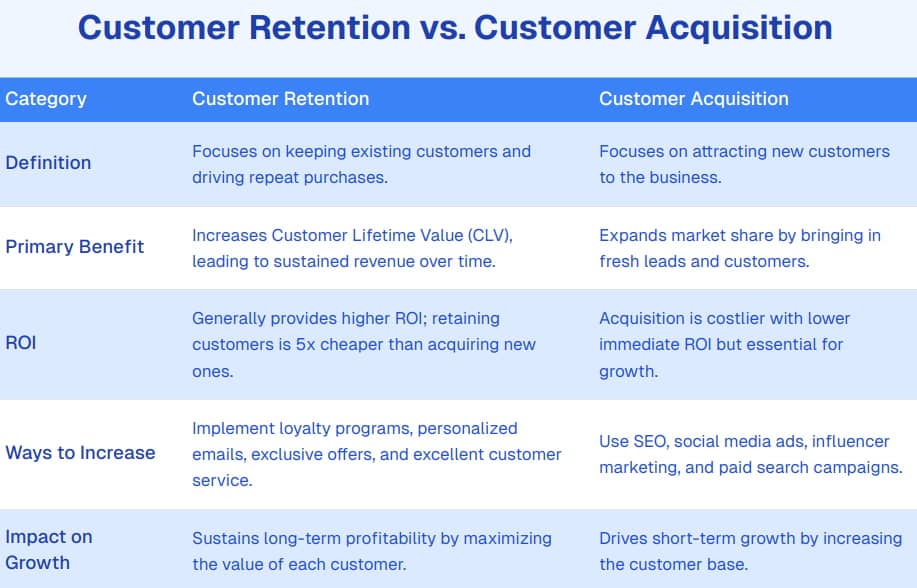
Image source
Predictive Analytics in Marketing
Predictive analytics isn’t as intimidating as it sounds. Think of it like a crystal ball backed by data. It uses past actions to forecast future behavior.
For example:
- If someone buys office software every December, predictive analytics can help you plan targeted campaigns in November.
- If customers stop opening emails after three months, the data can flag when churn risk is highest.
- If high-value buyers engage more with social ads than emails, you can shift spend accordingly.
Predictive analytics in marketing helps you stop guessing and start planning. Instead of reacting after you’ve lost a customer, you can act before they walk away.
How Predictive Analytics Connects to Retention
So how does predictive analytics in marketing tie into retention? It all comes down to proactive engagement.
- Churn Prediction: Identify who’s slipping away and re-engage them with timely offers.
- Upsell Potential: Spot customers most likely to purchase upgrades or add-ons.
- Optimal Timing: Find out when people are most active and send campaigns at the right moment.
By combining these signals, you build a retention strategy that’s both cost-effective and scalable.
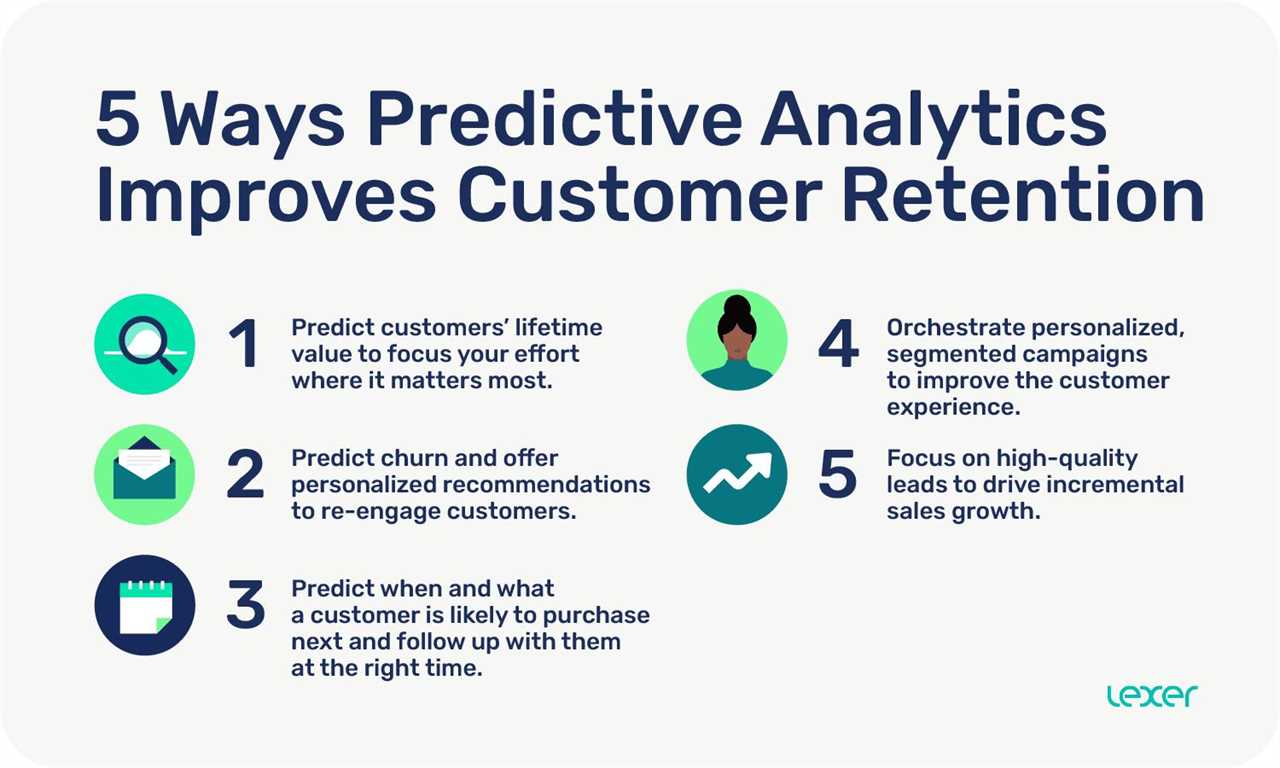
Image source
Customer Segmentation Strategies: Why One-Size Doesn’t Fit All
Not every customer has the same needs. Trying to market to everyone in the same way is like trying to sell the same pair of shoes to an entire city. Some people need running shoes. Others need sandals. The trick is knowing who’s who.
Customer segmentation strategies break your audience into smaller groups based on shared characteristics. The most common ones include:
- Demographic Segmentation: Age, gender, income, or job role.
- Behavioral Segmentation: Purchase history, browsing habits, or loyalty status.
- Psychographic Segmentation: Interests, values, or lifestyle.
- Geographic Segmentation: Location-based preferences or seasonal habits.
When you segment effectively, you can craft messages that feel personal without being wasteful. Instead of sending the same campaign to 10,000 people, you send tailored versions to five different groups.
Practical Examples of Segmentation
Imagine you run a B2B software company. Here’s how segmentation strategies could play out:
- Demographics: Marketing automation messages differ for small business owners compared to enterprise managers.
- Behavior: Customers who frequently use a free feature get targeted upgrade campaigns.
- Geography: A webinar invitation is scheduled for different time zones.
- Psychographics: Decision-makers who value innovation see messaging focused on new features, while cost-focused buyers see ROI messaging.
These strategies aren’t about making marketing harder. They’re about making it smarter.
Retention Marketing in Action: Combining Analytics and Segmentation
The real power comes when you connect predictive analytics with segmentation. Instead of just guessing who’s at risk of leaving, you can pinpoint exactly which segment is most vulnerable. Then you act fast.
Here’s a scenario:
Predictive analytics flags that mid-sized companies with declining log-ins are at risk of churn. Segmentation data shows that this group values customer support. You respond by sending proactive support check-ins and offering a webinar on best practices.
That’s retention marketing at its best. You’re not spamming the entire customer base. You’re addressing the right group, at the right time, with the right message.
Feedback in Behavior Analysis
Numbers tell part of the story. But direct feedback from customers fills in the gaps that metrics alone can’t explain. Surveys, interviews, and NPS (Net Promoter Score) responses give context to behavior patterns.
For instance, if data shows customers dropping off after the second month of using your product, feedback might reveal the onboarding process is confusing. Without combining both, you’d miss the real reason behind churn.
Collecting feedback should be part of any retention strategy. Use it to refine customer segmentation strategies and improve predictive models.
Tools That Help With Predictive Analytics in Marketing
Plenty of tools make predictive analytics more accessible. You don’t need a data science team to get started. Some widely used categories include:
- CRM Platforms: Many now include built-in predictive models.
- Email Marketing Tools: These can flag disengaged contacts or suggest send times.
- Analytics Dashboards: Visualize churn risks, lifetime value, and conversion funnels.
- AI-Powered Tools: These platforms automate predictive modeling without heavy lifting.
The point isn’t to overload your tech stack. Start with one or two tools that align with your current marketing strategy. Grow from there.
Best Practices for Retention Marketing
Once you’ve analyzed behavior, segmented audiences, and used predictive analytics in marketing, what’s next? It’s about consistency.
Here are some best practices that keep retention strong:
- Personalize Where It Counts: Use segmentation to tailor offers and emails.
- Automate Engagement: Trigger campaigns based on behavior, not guesswork.
- Reward Loyalty: Give perks to long-term customers, even if it’s just exclusive content.
- Stay Proactive: Don’t wait for churn to happen before acting.
- Measure and Adjust: Track what’s working and refine over time.
Retention isn’t a one-time project. It’s an ongoing strategy that needs attention just like acquisition.
Why Retention Marketing Saves Money
It costs less to keep a customer than to win a new one. Studies repeatedly show retention-focused marketing delivers better ROI. Existing customers already know your brand. You don’t have to spend as much convincing them.
Plus, retained customers are more likely to expand their relationship with your business. They might upgrade, renew, or bring in referrals. When you focus on predictive analytics in marketing and customer segmentation strategies, you set yourself up for long-term growth.
Common Mistakes to Avoid
Not every retention strategy hits the mark. Here are mistakes businesses often make:
- Tracking too many metrics without focus.
- Ignoring feedback in favor of only numbers.
- Over-segmenting until campaigns feel scattered.
- Treating predictive analytics like a one-time project instead of ongoing.
- Forgetting that retention starts with a strong onboarding experience.
Avoid these pitfalls and you’ll save both time and money in the long run.
Real-World Example: Subscription Services
Think about subscription-based B2B services. Retention is everything in that model. Predictive analytics can flag churn risks by tracking log-in frequency or support ticket trends. Segmentation can break subscribers into groups based on product use.
By combining the two, you can send re-engagement campaigns to customers at risk, while rewarding highly engaged users with loyalty perks. It’s a simple but powerful way to reduce churn.
So, Where Do You Go From Here?
Retention starts with understanding. If you want customers to stick around, you need to know what drives their behavior. Predictive analytics in marketing and customer segmentation strategies give you the playbook.
It’s not about chasing every possible metric. It’s about focusing on the signals that matter most for your business. Over time, you’ll spot patterns, identify churn risks earlier, and keep your best customers longer.
Strengthening Retention IS Possible (If Done Right)
You want growth that lasts. Retention is the way to get there. By analyzing customer behavior, you learn what really drives loyalty. Predictive analytics in marketing helps you act before problems escalate. Customer segmentation strategies let you personalize without wasting resources.
So, are you ready to put retention front and center in your marketing strategy? Start small. Test one predictive model. Segment one group. Track the results. Over time, you’ll see how behavior-based marketing creates stronger relationships and better outcomes.
If you need to find creative solutions to help your brand retain customers, check out our Content Builder Service. Set up a quick consultation, and we’ll help you grow a business you’re excited to show off!
Read More
By: Giana Reno
Title: Analyzing Customer Behavior to Tailor Marketing Efforts for Retention
Sourced From: marketinginsidergroup.com/marketing-strategy/analyzing-customer-behavior-to-tailor-marketing-efforts-for-retention/
Published Date: Wed, 14 Jan 2026 11:00:38 +0000