.png)
For a long time, “big data” felt out of reach for small businesses. It sounded expensive, complicated, and built for enterprises. That’s no longer true. Today, open-source data analytics tools and affordable marketing data solutions give small teams access to serious insight without serious budgets. The tools are available. What matters now is how you use them.
Small businesses generate more data than they realize. Website traffic. CRM activity. Email engagement. Ad performance. Customer behavior. The opportunity isn’t collecting more information. It’s turning what you already have into smarter decisions.
With the right mix of open-source platforms, free analytics tools, and public data sources, small businesses can build a data foundation that supports better targeting, clearer attribution, and stronger growth.
Let’s look at the top free big data resources available today and how to use them strategically.
Quick Takeaways
- Big data isn’t reserved for enterprise companies anymore. Small businesses have access to powerful, free tools.
- Open-source data analytics platforms eliminate licensing costs and scale as your business grows.
- Affordable marketing data solutions help you track behavior, measure performance, and improve targeting without heavy overhead.
- Free BI and visualization tools turn raw data into insights your leadership team can actually act on.
- The competitive advantage doesn’t come from having more tools. It comes from using the right data strategically.
Why Small Businesses Need a Big Data Mindset
Big data isn’t about volume. It’s about visibility.
Small businesses often assume they don’t generate enough information to justify advanced analytics. In reality, they’re surrounded by signals. Website visits, form submissions, ad clicks, email engagement, CRM activity, and sales conversations all create usable data. The issue is interpretation.
Adopting a big data mindset means treating those signals as strategic assets instead of isolated reports.
Big Data Is Really About Connected Signals
When you connect behavioral data to revenue outcomes, patterns emerge. You can see which channels attract high-intent buyers, identify friction points in the funnel and understand which content drives conversions rather than just traffic.
Open-source data analytics tools make this connection possible without inflating costs, allowing you to centralize data, analyze trends, and scale infrastructure gradually.
The advantage doesn’t come from having more dashboards. It comes from connecting data across systems.
Strategy Matters More Than Tool Count
Affordable marketing data solutions have lowered the cost of analytics. What separates high-performing small businesses is how intentionally they use those tools.
Instead of asking, “How did this campaign perform?” they ask, “What does this tell us about buyer behavior?” Instead of reviewing metrics occasionally, they monitor trends and adjust strategy in real time.
Small businesses that succeed with data focus on the signals tied directly to revenue, retention, and efficiency. They build systems that can grow with them rather than rebuilding their analytics stack every year.
Big data isn’t about acting like an enterprise. It’s about making smarter decisions with the data you already have.
Open-Source Data Analytics Platforms
When people hear “open-source,” they often think of tools built only for developers or large engineering teams. That perception is outdated.
Today, open-source data analytics platforms power many modern marketing and operations systems. They eliminate licensing fees and scale without locking you into expensive contracts.
For small businesses, that flexibility matters. You can build infrastructure gradually and expand it as your data grows.
Here are several open-source data analytics platforms worth understanding.
Apache Hadoop
Apache Hadoop was designed to store and process large datasets across distributed systems. It handles both structured and unstructured data at scale.
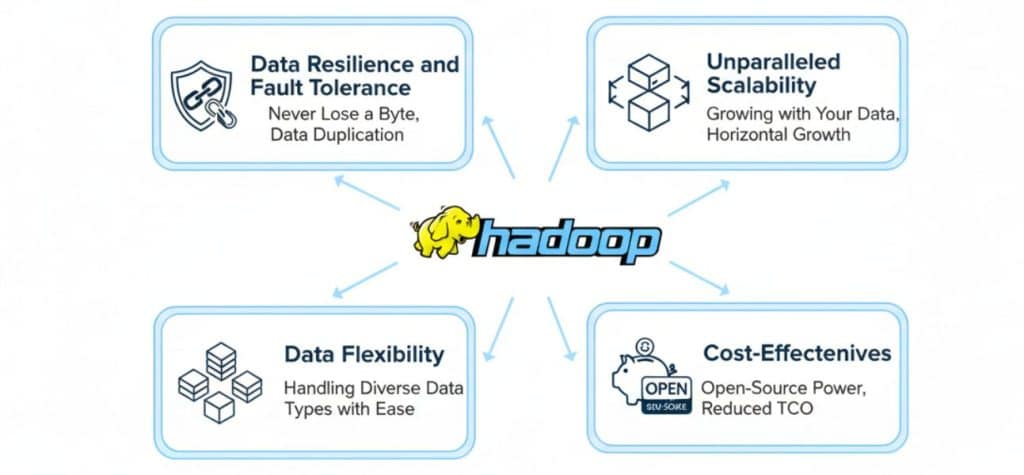
Image Source
Most small businesses won’t need Hadoop on day one. However, businesses with high ecommerce volume, significant web traffic, or large behavioral datasets can use it as a scalable foundation.
Its core advantage is flexibility. You can expand storage and processing capacity as data increases without migrating to a new system.
Apache Spark
Apache Spark focuses on faster, real-time data processing. It allows businesses to analyze user behavior, campaign performance, and operational metrics quickly rather than waiting for batch reports.
For small marketing teams running multi-channel campaigns, Spark supports more dynamic reporting and predictive modeling. It also integrates well with other open-source data analytics tools, making it a strong addition to a growing data stack.
PostgreSQL
PostgreSQL is one of the most practical open-source databases available. It supports complex queries, handles large datasets efficiently, and connects easily to BI and visualization platforms.
For many small businesses, PostgreSQL is sufficient to centralize CRM exports, marketing performance data, and operational reporting in one location.
Paired with visualization tools, it becomes a highly affordable marketing data solution that supports clearer reporting and more informed forecasting.
Free Customer & Marketing Analytics Tools
Open-source infrastructure builds the foundation. Marketing analytics tools turn that foundation into insight.
Small businesses don’t need enterprise software to understand customer behavior. Several free platforms already provide meaningful visibility into how prospects find you, engage with you, and convert.
Google Analytics 4
Google Analytics 4 remains one of the most accessible and powerful free analytics platforms available. It tracks user behavior across websites and apps using event-based measurement, giving businesses a clearer view of the customer journey.
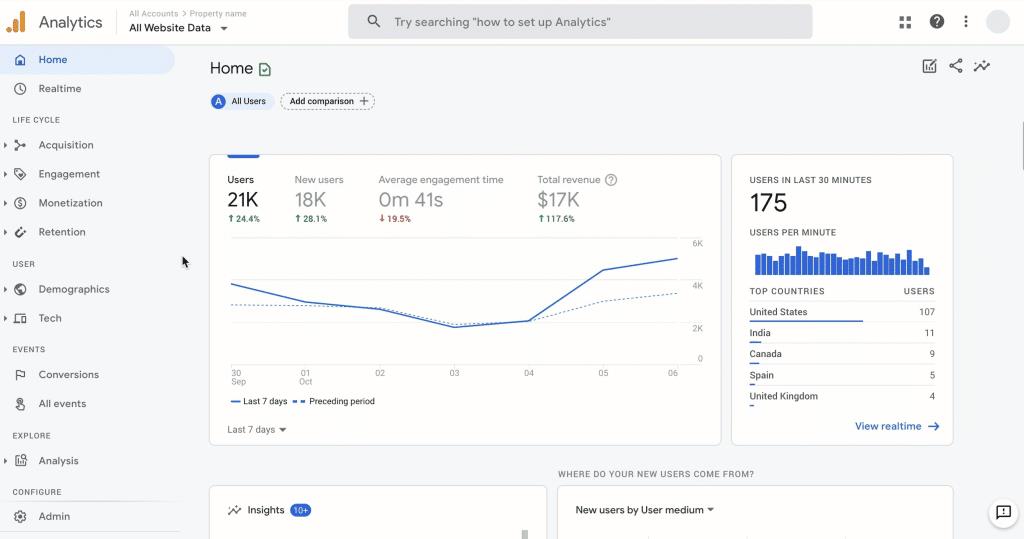
Image Source
With GA4, small businesses can analyze traffic sources, measure engagement, and evaluate conversion paths without additional licensing costs. It also supports predictive metrics, which can help identify high-value audiences and potential churn risk.
When integrated with CRM or ad platform data, GA4 becomes part of a broader affordable marketing data solution rather than a standalone reporting tool.
Google Looker Studio
Google Looker Studio allows businesses to transform raw analytics data into clean, shareable dashboards. It connects easily to Google Analytics, Google Ads, Search Console, and other data sources.
Instead of manually exporting reports, small teams can build real-time dashboards that show performance trends, lead volume, and campaign results in one place.
The real value is alignment. Leadership can see marketing performance without relying on static slide decks. Sales teams can track pipeline impact alongside campaign metrics.
HubSpot Free CRM
HubSpot’s free CRM gives small businesses a centralized way to track contacts, deals, and interactions. It captures email activity, form submissions, and sales communication in one system.
For many small teams, this becomes the anchor of their data ecosystem. Website analytics show traffic patterns. CRM data shows revenue impact. Together, they provide a clearer picture of attribution.
Affordable marketing data solutions work best when marketing and sales signals connect. Even a free CRM can dramatically improve visibility when used consistently.
Free Data Visualization & BI Tools
Data only drives decisions when it’s understandable.
Free visualization and business intelligence tools allow small businesses to interpret open-source data analytics without investing in enterprise BI software.
Microsoft Power BI (Free Version)
The free version of Microsoft Power BI allows users to build interactive dashboards and connect multiple data sources. While sharing and collaboration features are limited compared to paid versions, it’s more than capable of supporting internal reporting needs.
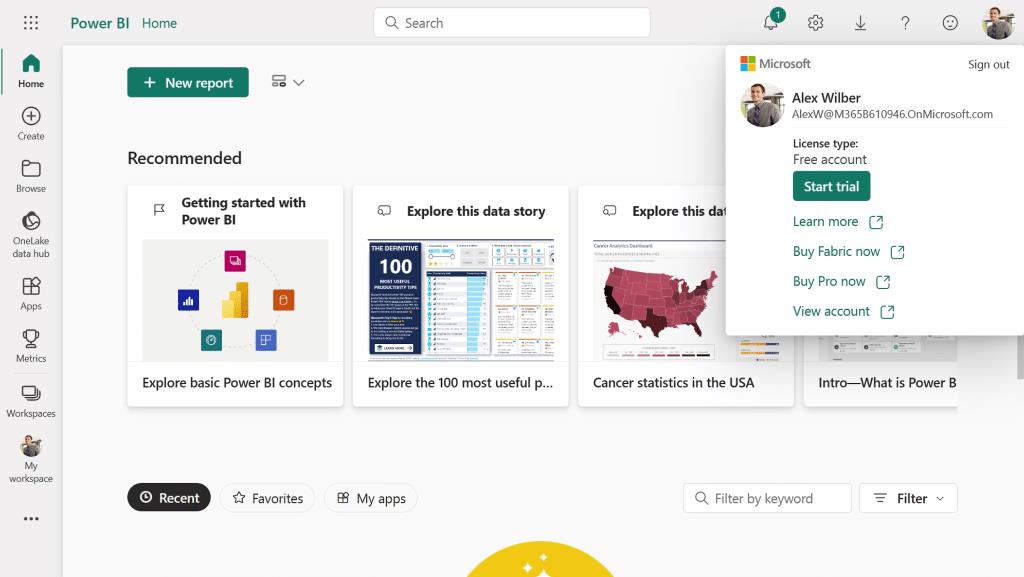
Image Source
For small businesses centralizing marketing, sales, and operational metrics, Power BI offers modeling flexibility and customizable dashboards without significant cost.
Tableau Public
Tableau Public provides data visualization capabilities for storytelling and exploratory analysis. While it requires published dashboards to be public, it can still serve as a useful learning and presentation tool.
Small businesses can use it to experiment with visualizing trends, building campaign performance summaries, or presenting market data in compelling formats.
Metabase
Metabase is an open-source BI tool designed for accessibility. It allows teams to query data, build dashboards, and generate reports without advanced technical expertise.
Because it can be self-hosted, Metabase integrates well into an open-source data analytics stack. For businesses comfortable managing their own infrastructure, it offers flexibility and control without licensing fees.
Visualization tools bridge the gap between raw datasets and leadership decisions. They ensure that insights don’t remain buried in spreadsheets.
Open Data Sources Small Businesses Can Use
Big data isn’t limited to internal metrics. Public datasets can provide powerful context for targeting, expansion planning, and competitive analysis.
U.S. Census Bureau
The U.S. Census Bureau provides demographic and economic data that can help small businesses evaluate market size, income distribution, and population trends.
For local businesses or companies planning geographic expansion, census data can guide targeting decisions and refine buyer personas.
Data.gov
Data.gov aggregates publicly available datasets across industries, including economic indicators, labor statistics, and regulatory information.
Businesses in healthcare, manufacturing, finance, or technology can use these datasets to understand macro trends that influence demand.
Google Trends
Google Trends shows search interest patterns over time. It helps businesses evaluate seasonality, compare keyword demand, and identify rising topics.
When paired with website analytics and CRM data, search trend insights can improve content strategy and campaign timing.
Social Media Platform Insights
Most social platforms offer built-in analytics dashboards that track engagement, reach, and audience demographics.
While often overlooked, these insights provide early indicators of audience interest and content resonance. When integrated into a broader affordable marketing data solution, they support smarter content and ad strategy.
How to Build an Affordable Big Data Stack
Knowing which tools exist is helpful. Knowing how to connect them is what creates value.
Small businesses don’t need a complicated architecture diagram to build a functional data system. They need clarity about what they’re trying to measure and a disciplined way to connect the right signals.
Start With Business Questions
Before selecting tools, define the decisions you want data to support.
Are you trying to improve lead quality? Increase conversion rates? Shorten sales cycles? Reduce churn?
Clear business questions prevent tool overload. They also ensure that your open-source data analytics infrastructure serves strategy instead of becoming a collection of disconnected dashboards.
Centralize Core Data
At minimum, small businesses should connect:
- Website analytics
- CRM data
- Ad platform performance
- Email marketing metrics
Centralization doesn’t require expensive software. PostgreSQL, a free CRM, and a visualization tool like Looker Studio or Power BI can form a practical foundation.
When marketing and sales signals live in separate systems, attribution becomes guesswork. Connecting them creates accountability.
Build Dashboards That Support Decisions
A dashboard should answer a question.
It should not list every available metric. It should not exist solely for reporting activity.
Focus on revenue-driving indicators such as cost per qualified lead, conversion rates by channel, customer acquisition cost, and retention metrics. When dashboards reflect business priorities, leadership engagement increases.
Scale Only When Signals Justify It
Open-source data analytics tools allow businesses to grow gradually. You don’t need enterprise infrastructure before revenue supports it.
As transaction volume increases or analysis becomes more complex, platforms like Apache Spark or Hadoop can be layered in. The key is intentional expansion rather than reactive tool replacement.
Affordable marketing data solutions work best when built in stages.
Common Mistakes Small Businesses Make With Free Data Tools
Free tools reduce financial barriers. They don’t eliminate strategic mistakes. Many small businesses struggle with analytics because implementation lacks structure.
Tool Overload
It’s easy to adopt multiple platforms without defining ownership. Data becomes fragmented. Reporting becomes inconsistent.
Fewer integrated tools often outperform larger, disconnected stacks.
No Data Governance
Even small teams need standards. Define naming conventions, tracking parameters, and data validation processes early.
Without governance, dashboards become unreliable, and leadership confidence drops.
Focusing on Volume Instead of Insight
Traffic spikes and engagement metrics can look impressive. If they don’t tie to revenue or retention, they distract from meaningful performance analysis.
Open-source data analytics should support decisions that influence growth, not vanity reporting.
Lack of Ownership
Someone must own analytics. Even in small organizations, assign responsibility for maintaining dashboards, validating data accuracy, and updating reporting frameworks.
When no one owns the data, no one trusts it. Avoiding these mistakes makes affordable marketing data solutions significantly more effective.
Turn Free Data Into Strategic Growth Today with Marketing Insider Group
Access to data has never been the real problem. Access to strategy has.
Small businesses now have access to analytical capabilities once limited to enterprise budgets. Open-source data analytics and affordable marketing data solutions have leveled the playing field.
What separates high-growth companies from everyone else is clarity. They focus on the signals that influence revenue, integrate marketing and sales data, and build dashboards that support real decisions rather than simply reporting activity.
Free tools can absolutely support enterprise-level insight. But insight only drives growth when it’s tied to execution.
Want to build a data-driven lead engine? Subscribe to Marketing Insider Group for expert insights that improve lead performance, strategy execution, and marketing ROI.
Read More
By: Lauren Basiura
Title: What Are the Top Free Big Data Resources Available to Small Businesses?
Sourced From: marketinginsidergroup.com/search-marketing/what-are-the-top-free-big-data-resources-available-to-small-businesses/
Published Date: Mon, 23 Mar 2026 10:00:45 +0000
Did you miss our previous article...
https://trendinginbusiness.business/business/recordbreaking-british-steel-order-secured-in-746m-uknigeria-ports-deal