.png)
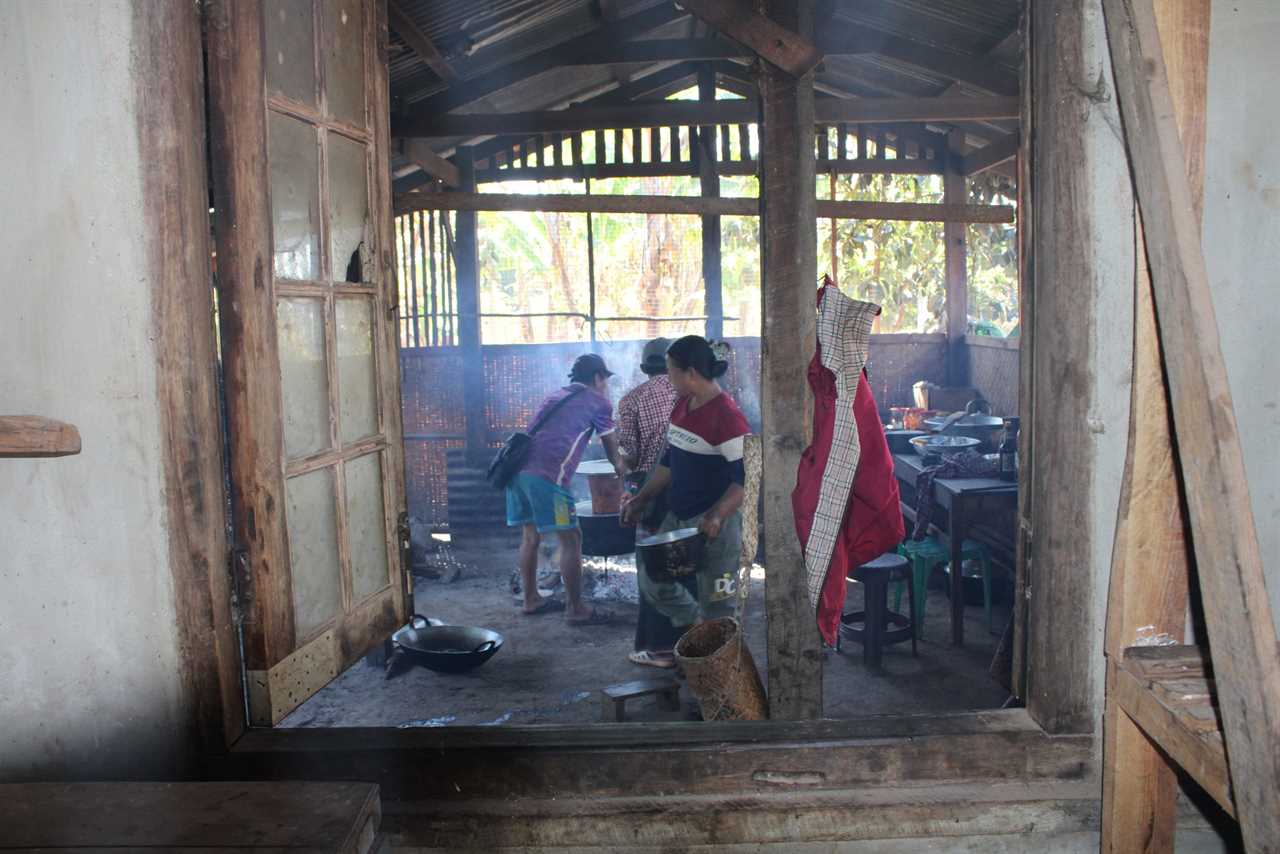
At a community meeting house in a village near the front lines between the resistance forces and the government army, villagers began working early in the morning to prepare meals for the resistance soldiers manning the forward bunkers.
“Each village takes a turn feeding the soldiers for a day,” said Able, a soldier from the Karenni Nationalities Defense Force (KNDF). “They have to collect enough food for two meals each day for each soldier.” In some villages, this means each family is asked to produce a certain number of meals, which are collected and delivered to soldiers at the front. In this village, however, the meals were cooked in a central meeting hall that also prepared food for the local school.
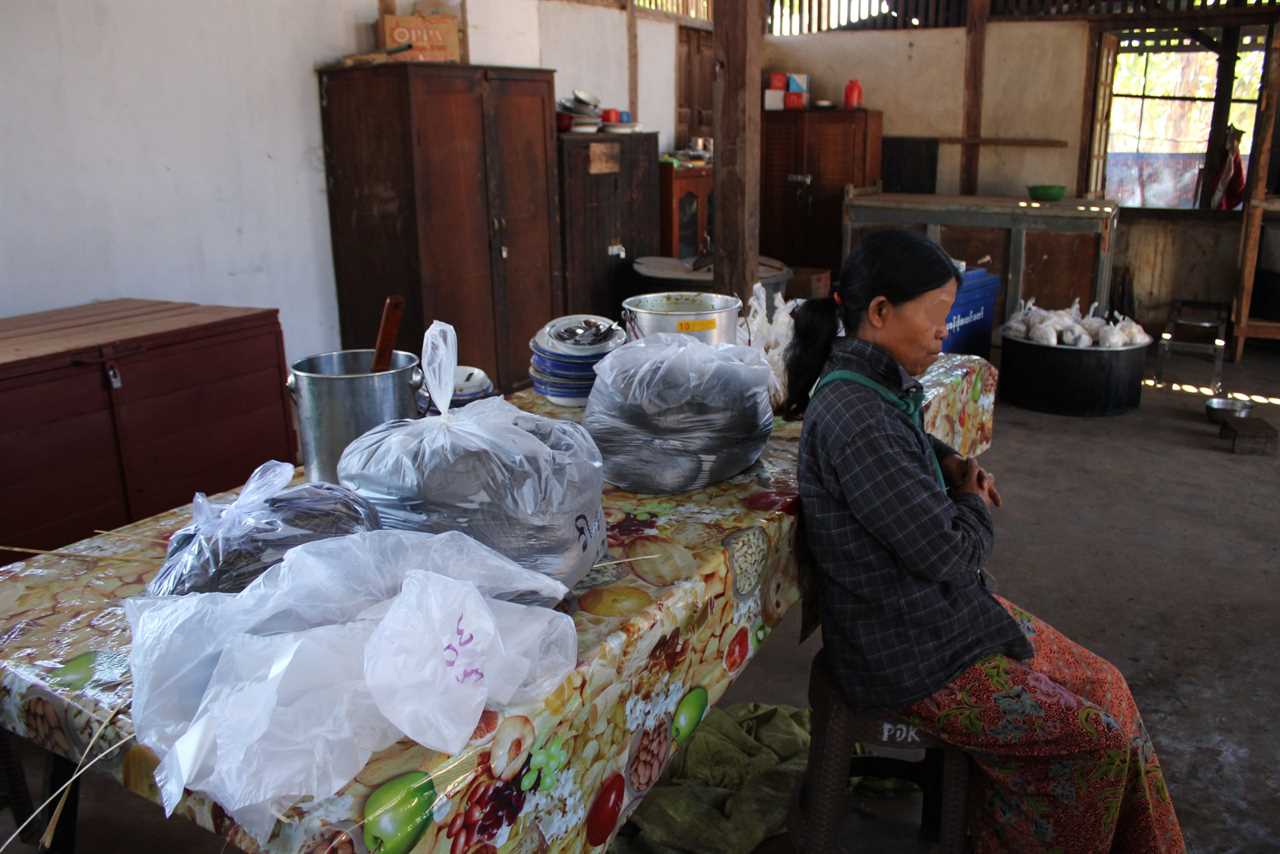
A community leader told me, “We provide meals for the students depending on donors. Some weeks we can provide five, but other weeks we can only make lunch three times.” Like other schools in the resistance-controlled area, he told me the students were distributed across three different locations to make them less of a target for airstrikes.
The women worked feverishly in the kitchen as the men prepared the trucks to deliver the food to the soldiers. For this one section of the front line, the packets ran into the hundreds.
The meals consisted of a bag of rice, a small bag of vegetables, and an even smaller bag of pork for each man. “They also like when the village sends them curry,” Able laughed, remembering how much he appreciated having curry to season his food when he was on the line.
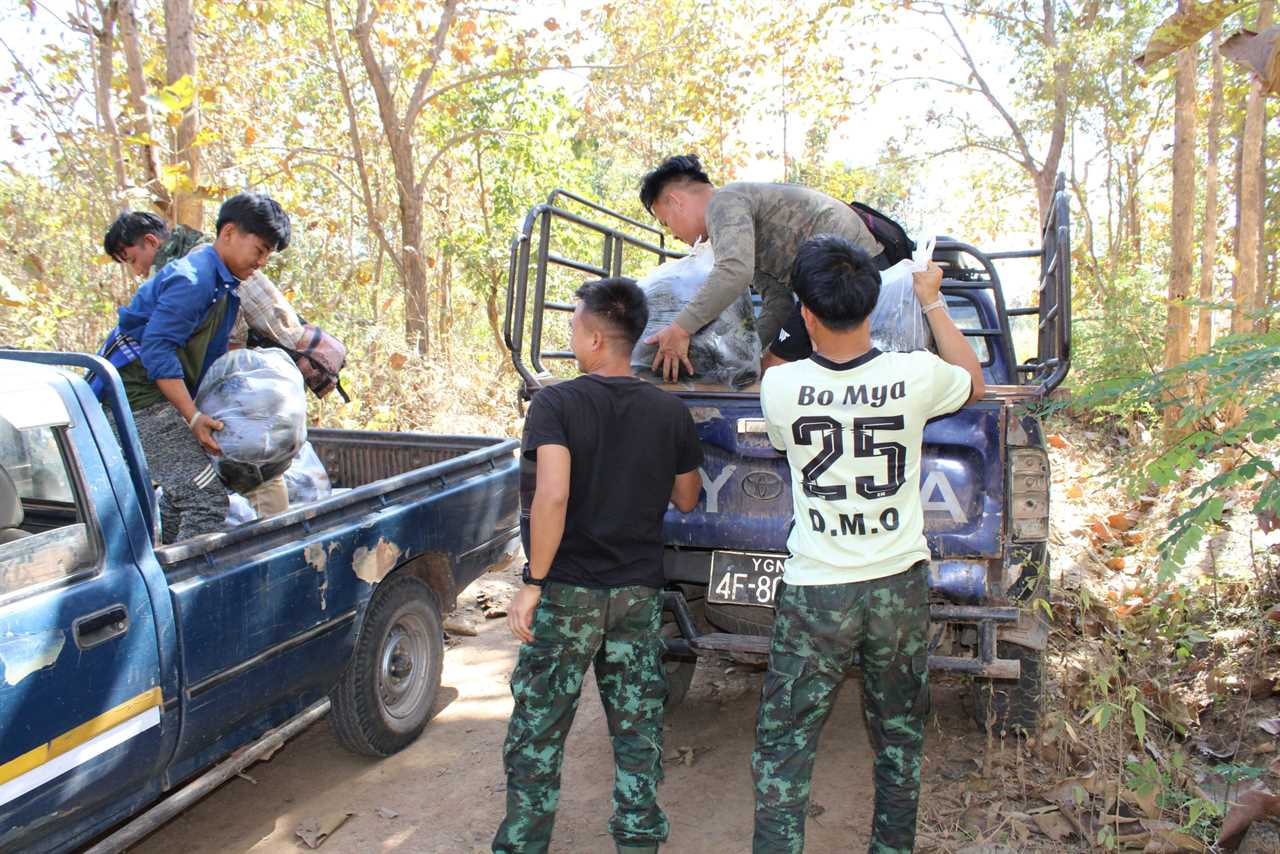
In a country without electricity or refrigeration, every meal requires building a fire. Whatever is cooked must be eaten in a single sitting because there is no way to store it. It would be effectively impossible for soldiers on the front to cook their own food. A fire would attract enemy fire. Cutting firewood would place them in danger and reduce their cover and concealment.
So, the villagers cook the food and send it to them in plastic bags. The soldiers eat it cold, and sometimes old, if it takes a long time to reach them.
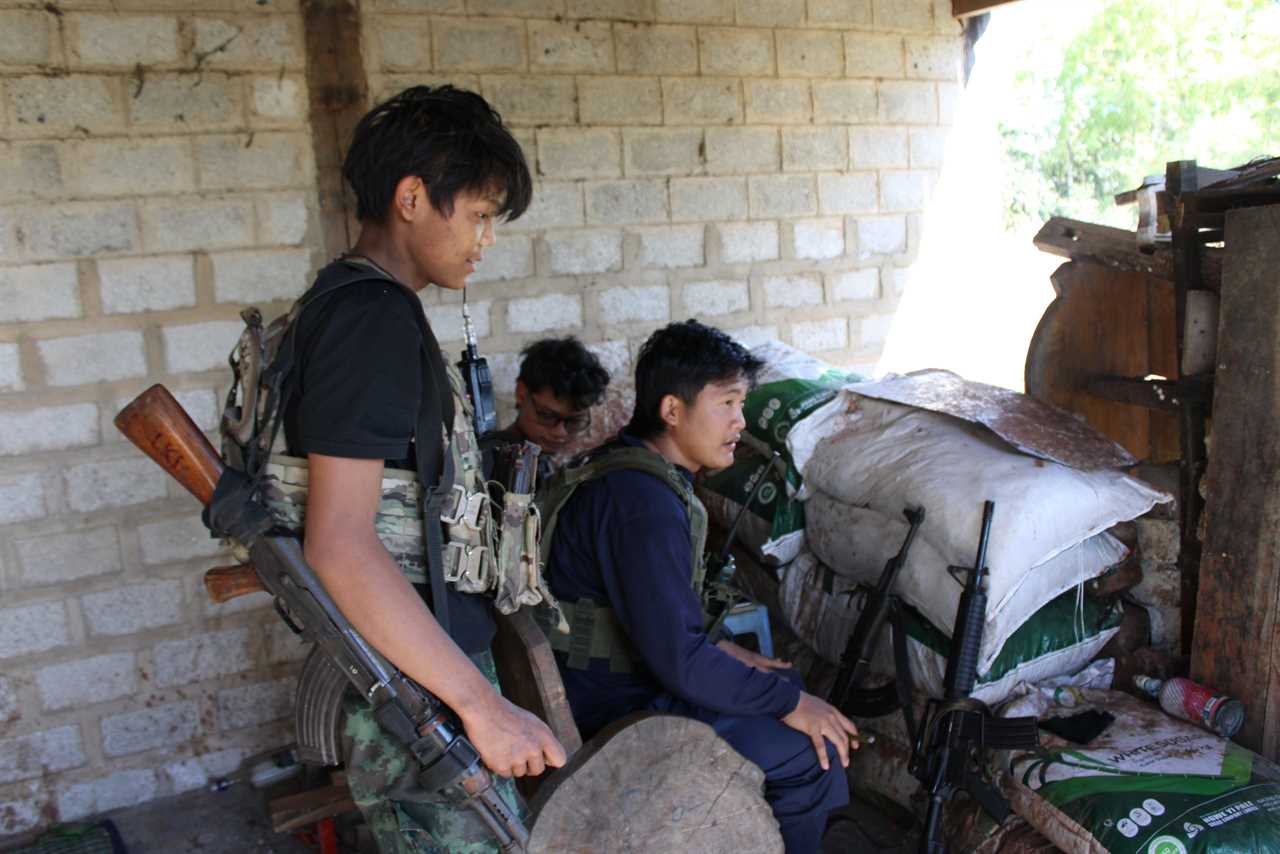
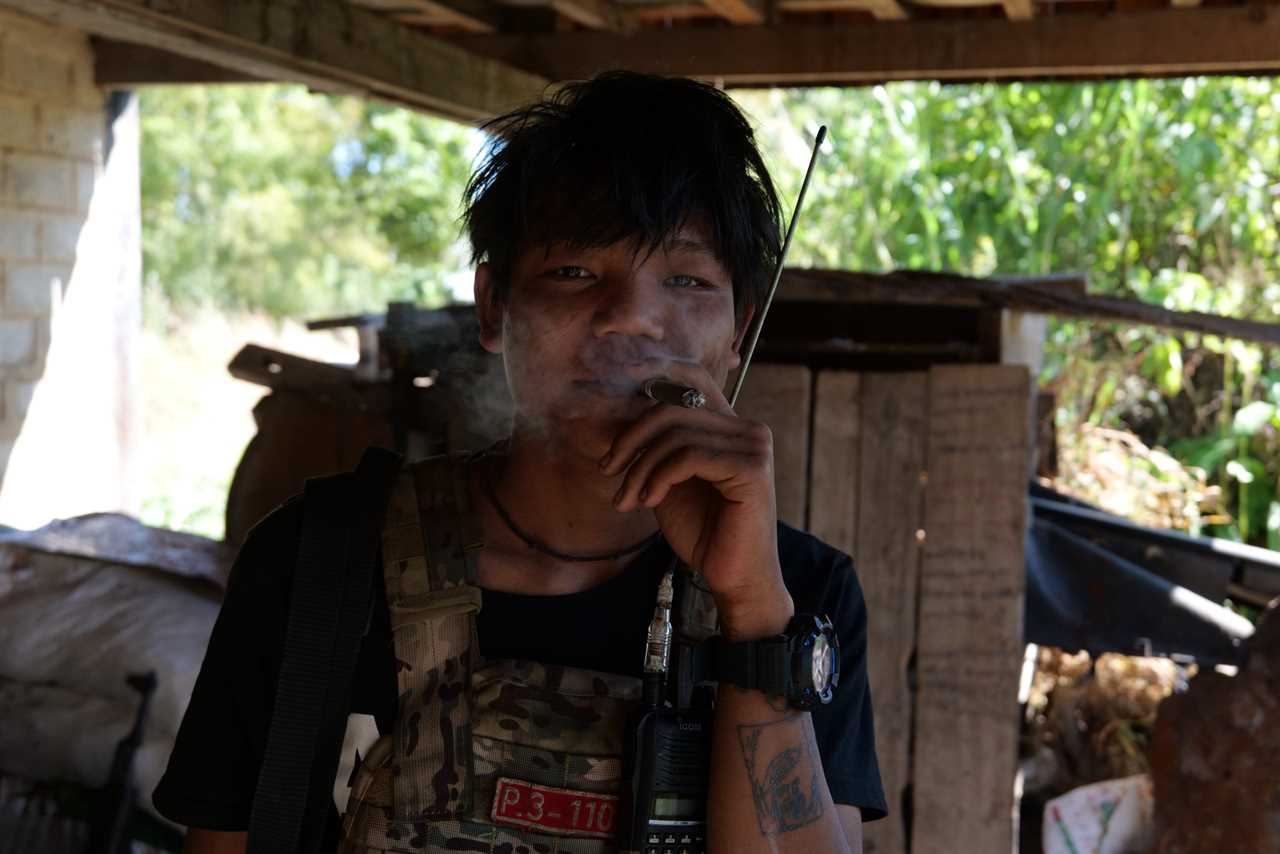
Being an American soldier is a very different experience from being a resistance soldier. American soldiers are issued four full combat uniforms. Resistance soldiers often have only one, and many do not even have a complete set. Some may have a tunic and trousers, but few have jungle boots, uniform underwear, T-shirts, or socks. Many soldiers wear flip-flops.
It is not uncommon to see men wearing half a uniform and half civilian clothes. Some wear a regimental soccer T-shirt because it bears the unit name, even if it is yellow, purple, or another bright color instead of green or camouflage.
American infantry soldiers go through 22 weeks of basic training and infantry school under the modern OSUT structure. Some of the resistance soldiers told me they had only two weeks to one month of training. Modern infantry trainees can fire 1,500 to 2,500 or more rounds during the length of their training.
By contrast, many resistance soldiers told me that only a small number of trainees are selected in each cycle to live-fire a weapon. Others said that everyone was given a chance to fire three rounds so they would at least know how to operate their weapon in combat.
Bullets are in such short supply that a single round of 7.62 mm ammunition can cost about $3 USD.
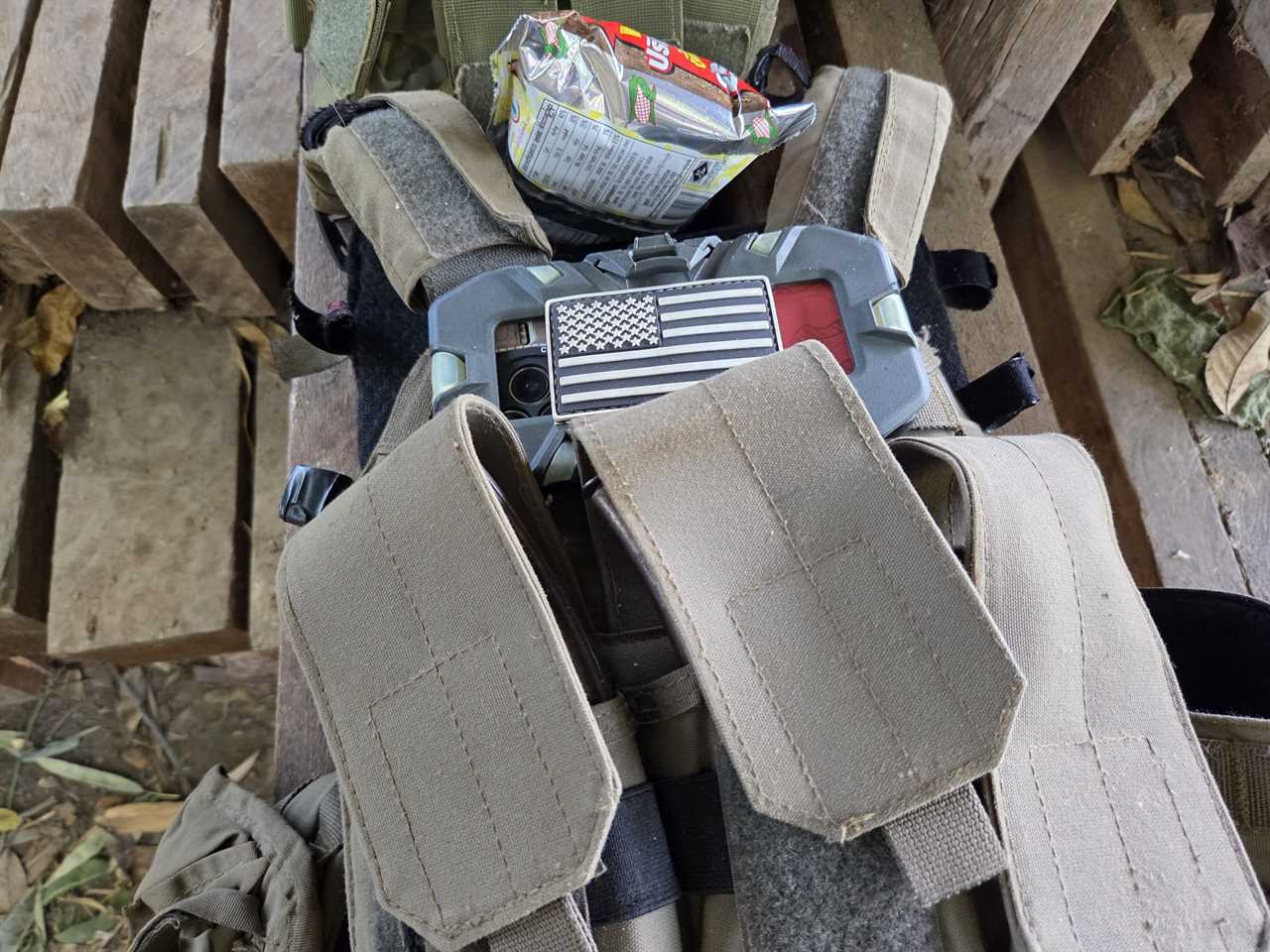
Comparing the food, American soldiers in the field are assured at least one hot meal per day unless the mission prevents it. The rest of the time, they eat Meals, Ready-to-Eat, or MREs, vacuum-packed meal pouches small enough to fit in the cargo pockets of their trousers. A soldier can carry as many as six in his uniform pockets alone.
A standard U.S. military MRE contains about 1,250 calories. Three per day provide roughly 3,600 to 3,900 calories, the target intake for highly active soldiers in field conditions. Each meal includes a main course such as spaghetti with meat sauce, a chicken burrito bowl, or beef shredded in barbecue sauce, one or more sides, seasoned rice, garlic mashed potatoes, cornbread, a dessert, such as cookies or pound cake, coffee with creamer and sugar, and a beverage mix such as cocoa, a milk shake, or an electrolyte drink.
One MRE provides roughly half of a sedentary civilian’s daily caloric needs. Three per day form a high-calorie diet designed for combat-level exertion.
By contrast, the average resistance soldier receives about two portions of rice, two servings of vegetables, one portion of meat, and possibly one hard-boiled egg per day. That amounts to approximately 1,400 to 1,700 calories daily. According to U.S. standards, a lightly active adult male requires about 2,200 to 2,500 calories per day. A combat-active resistance soldier operating in jungle terrain could require 3,000 or more calories per day. Being a resistance soldier means being hungry all the time.
The food was loaded onto trucks, and we drove as close to the front as possible before continuing on foot into the jungle. We stopped at numerous bunkers along the line, where the realities of the war became clear.
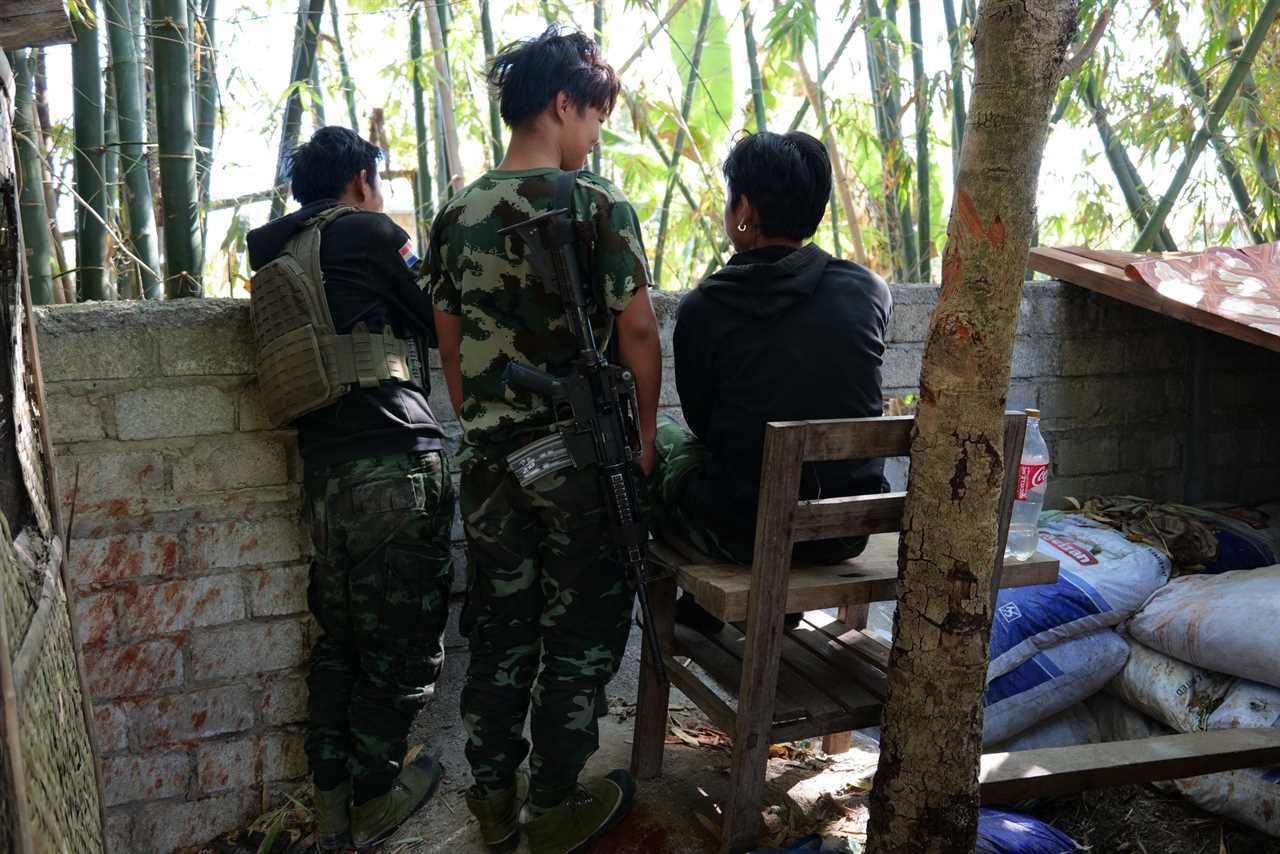
There is no running water. During the week a soldier spends in a position before being rotated out, he will not take a shower. They are given about one bucket of questionable water, hand-carried out to them each day, and that may have to serve four or five men.
The soldiers at the various stops were from multiple ethnic armed organizations as well as the People’s Defense Forces (PDF), anti-junta militias formed in the wake of the military coup. Now, nearly all of the armed groups in Karenni State are cooperating and allowing the KNDF to take a leadership role.
At one gun emplacement, the soldiers told me they had been there for five months. I asked them what they do all day, and they said, “Wait.” They also told me that they can sometimes hear the enemy on the other side. One soldier said, “They get drunk at night, and we can hear them fighting with each other.”
A number of other differences between American soldiers and resistance soldiers came to mind. American soldiers are issued modern, standardized weapons, whereas the resistance soldiers carry a hodgepodge of Chinese copies, captured Burma Army weapons, American weapons from the Vietnam War, the occasional British colonial rifle, and even the odd flintlock.
American soldiers have resupply, reinforcements, medevac, and scheduled rotations. Resistance soldiers have none of that. They are holding the line that keeps their families alive behind them. The only way they will ever go home is victory.
The post Exclusive from Burma: Feeding Resistance Soldiers at the Front appeared first on The Gateway Pundit.
------------Read More
By: Antonio Graceffo
Title: Exclusive from Burma: Feeding Resistance Soldiers at the Front
Sourced From: www.thegatewaypundit.com/2026/02/exclusive-burma-feeding-resistance-soldiers-front/
Published Date: Thu, 12 Feb 2026 16:30:24 +0000
Did you miss our previous article...
https://trendinginbusiness.business/politcal/recordhigh-number-of-detained-illegal-aliens-are-voluntarily-leaving-the-country-under-trump-administration