.png)
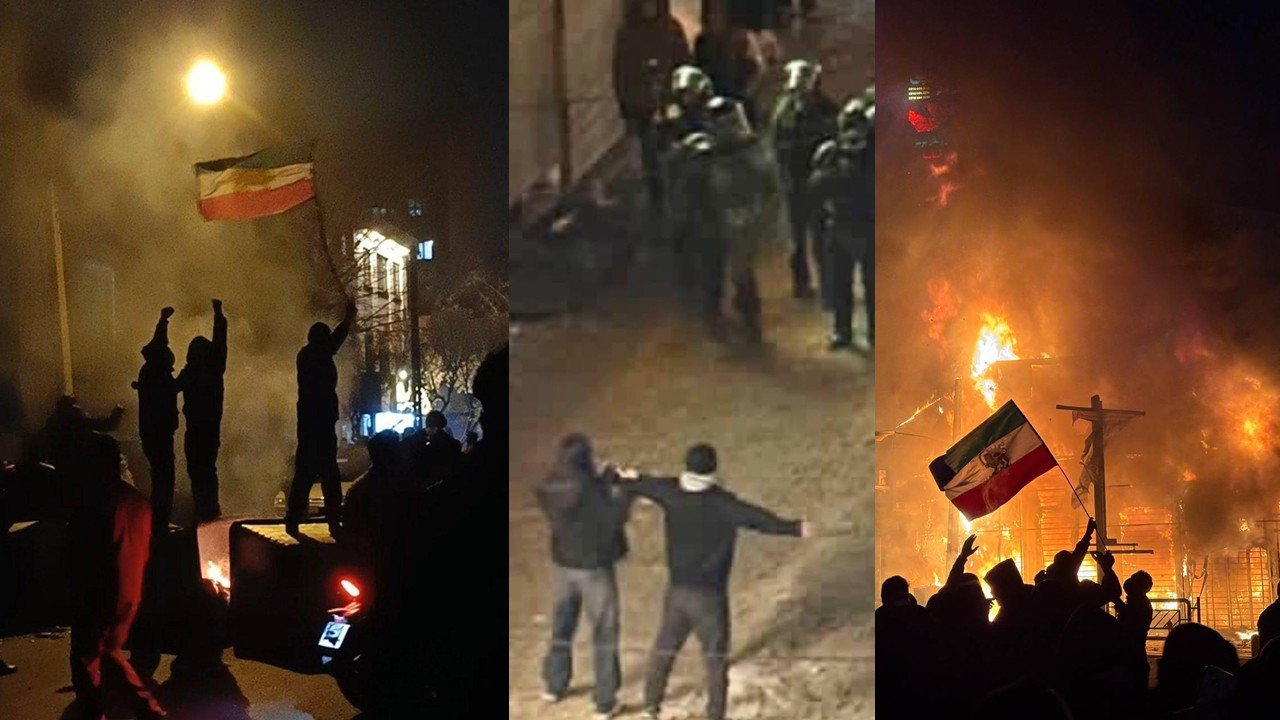
On Friday, February 20, anti-regime journalist Morad Vaisi went live on YouTube and read the names, ages, and cities of 1,044 Iranian children killed by the Islamic Republic during the 2026 uprising. It took him 4 hours and 18 minutes to read them all.
Morad Vaisi, also spelled Veisi, is a senior Iran analyst at Iran International, where he hosts the program Politics with Morad Vaisi. He previously worked as a journalist and editor at Radio Farda, specializing in IRGC affairs and the office of Khamenei. Radio Farda is the Iranian branch of the U.S. government-funded Radio Free Europe/Radio Liberty, which provides factual, objective, and professional journalism.
Iran International is a London-based anti-regime media outlet funded by Saudi Arabia. In 2022, the Iranian regime labeled it a “terrorist organization” after it extensively covered nationwide anti-government protests. In 2023, the network was forced to leave its London offices following a significant escalation in state-backed threats from Iran. Iran’s Armed Forces combat command warned that “certain institutions and countries” supporting Iran International were now part of its “target bank.”
In an interview with The Gateway Pundit, filmmaker Saghar Erica Kasraie, a naturalized U.S. citizen and Christian convert, explained how Morad Vaisi inspired her to make her film Occupied Homeland.
“When the protest movement, when the revolution reignited, he devoted his entire platform to naming every single person that died in this conflict. And he’s become an icon now for us. And we gave him a very special thank you at the very end. I saw that at the end of the film.”
The film opens with Iranians sitting in an apartment, listening to the reading of names and debating Iran’s future. According to Kasraie, some of the actors were afraid to say what they really felt or to read the script as written.
The regime has institutionalized the doctrine of Velayat-e Faqih, which holds that the Supreme Leader rules as God’s representative on earth. As a result, any criticism of the regime is seen as blasphemy. “They were afraid of insulting Islam or seeming like it was an Islamophobic film,” she said. This fear extends not only to reprisals by the Islamic regime but also to censorship and deplatforming in the liberal West, where criticism of Iran’s regime is often labeled as Islamophobia.
“And so, unfortunately, it didn’t pan out the way he hoped, but I think we’ve gotten the message across,” Kasraie said.
She went on to explain that the regime built a military structure to protect itself from the people of Iran. Describing the Islamic Republic, she said it began as a movement to protect Islam and evolved into a system backed by a dedicated military force, the Islamic Revolutionary Guard Corps (IRGC). The IRGC was established as a parallel military to the regular army, the Artesh, because Khomeini did not trust the existing military to be ideologically loyal.
“It’s called the Islamic Revolutionary Guard Corps. They’re protecting Islam, not protecting the country, not protecting the people. And it’s not actually protecting Islam, it’s protecting their version of Islam,” she said.
Kasraie added that when Khomeini rose to power, he emphasized ideology over nationalism, saying he was not seeking nationalism but Islamism as a way of life and politics.
In the film, the actors discuss various options for Iran, including the extent to which they should rely on the United States. In the end, the option most of them agree is the best way forward is for Prince Reza Pahlavi, son of the late shah, to return and head a transitional government until elections can be held. Kasraie said she believes this view reflects the majority opinion in Iran.
“For the last 47 years, we have had a very fractured opposition. We had leftists, we had Marxists, we had Islamic Marxists, we had monarchists, we had Republicans, and they all fight each other instead of focusing on the goal, which is regime change. And because of that fracture, it has been very hard for our diaspora to get behind the Iranian people’s struggle for freedom.”
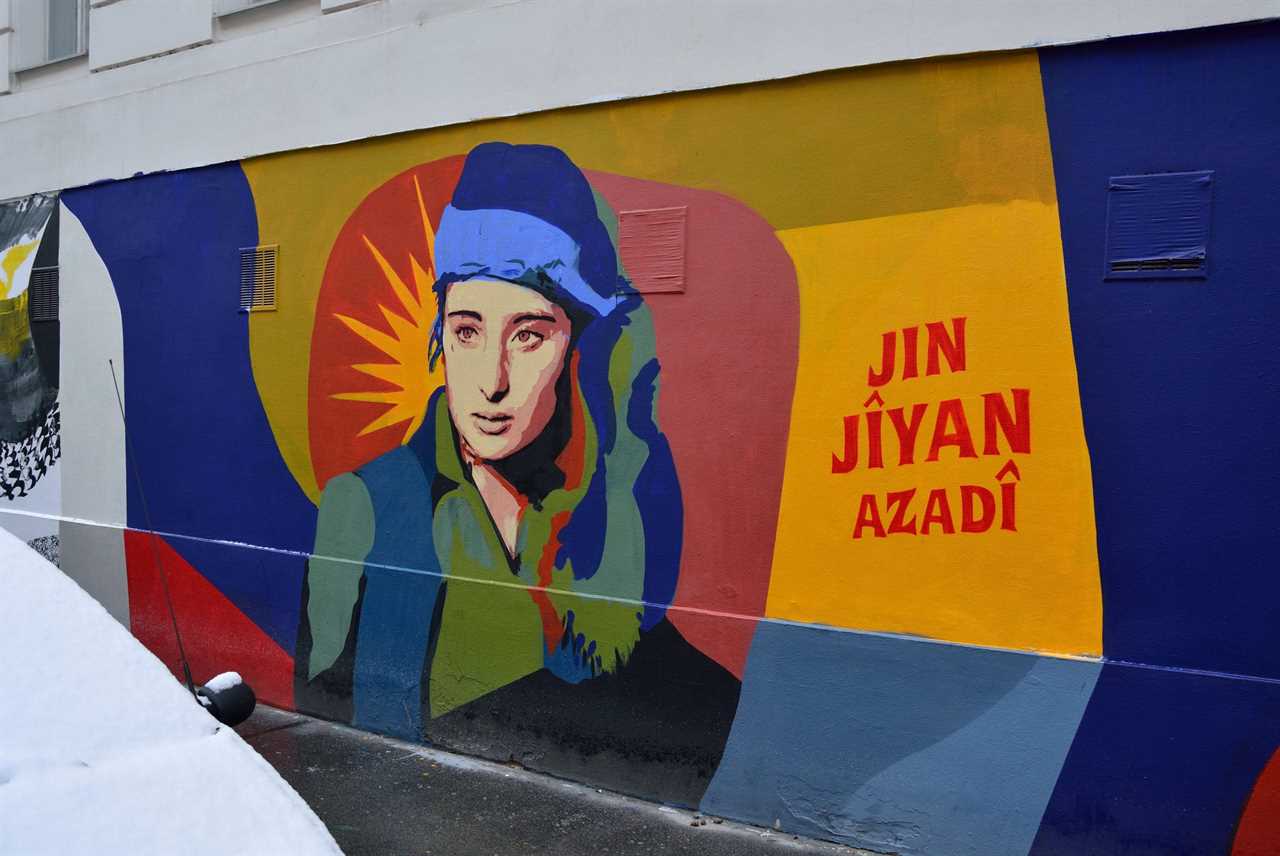
Kasraie identified the 2022 Woman, Life, Freedom movement as a turning point that galvanized the resistance. Mahsa Amini died on September 16, 2022, after being arrested by the morality police for an improper hijab, sparking nationwide protests that spread to all 31 provinces.
Estimates of the death toll vary. The United Nations reported approximately 500 killed, while human rights groups placed the number higher. Iran Human Rights documented at least 469 deaths by December 2022, and HRANA recorded over 500, including 47 minors. More than 14,000 people were arrested, and at least seven were executed in connection with the protests. The regime’s own figure of around 200 deaths is widely considered an undercount.
The movement’s slogan, “Woman, Life, Freedom,” originates from the Kurdish phrase “Jin, Jiyan, Azadi,” reflecting Amini’s Kurdish identity and her Kurdish name, Jina. Kasraie said that prior to the protests, opposition groups had been divided and “distracted by the infighting,” but afterward, Iranians around the world began to unite. She recalled that when Justin Bieber tweeted Mahsa Amini’s name, “with one hashtag, all eyes came on Iran,” helping to spark global attention and energize the movement. The hashtag was retweeted 270 million times, setting a new record on X.
After 2022, amid bridge-building between the Iranian diaspora and anti-regime groups, support for Reza Pahlavi grew. Kasraie said that Reza Pahlavi is a name known to Iranians across the globe, regardless of ideological or religious differences, because he represents a dynasty associated with positive memories for many Iranians.
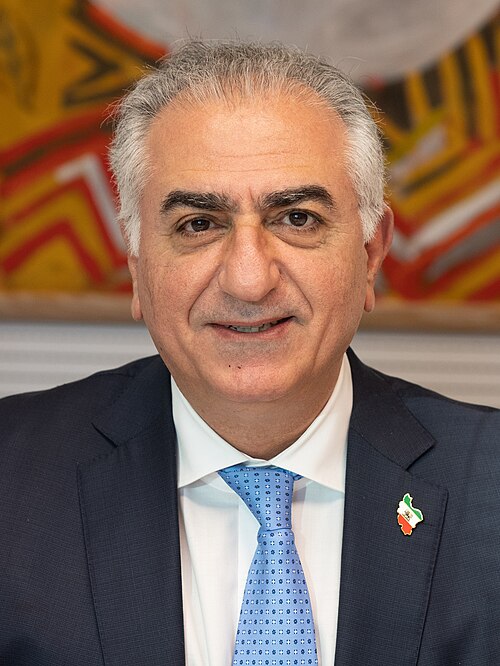
“Reza Pahlavi is a name that every Iranian across the globe, despite our ideological and religious backgrounds, knows because he represents a dynasty that has pleasant memories for the Iranian people.”
Responding to Western critics who argue that Pahlavi cannot lead and that an opposition figure should emerge organically from inside Iran, Kasraie said such expectations ignore the realities on the ground.
“Are you crazy? If anyone inside rose up and said, yes, I will lead this transition, they will die. The regime will kill them.” She added, “We’re talking about a police state. We’re talking about a theocracy. We’re talking about a force that’s so evil that is willing to shoot a child in the head for just being outside.”
She made it clear, however, that the diaspora will not decide Iran’s future. She said that the Iranian people will ultimately choose their leader at the ballot box, a point she believes is understood in the West.
She reiterated that, despite Western media claims to the contrary, the prince has significant support inside the country. “People inside Iran are asking. They wrote his name on the walls. They came to the streets with his pictures. They chanted his name in the thousands, in the streets. The slogans were ‘long live the king.’ They say his name. I mean, there’s many slogans I could share with you which wouldn’t make sense in English, but the most important one is ‘long live the king. This is our last battle. Pahlavi will return.’”
She concluded with a reference to her film Occupied Homeland, saying “the reason we ended the film with the voice of an Iranian girl from inside Iran is because we want the world to know that the Iranian people are asking for Reza Pahlavi.”
The post “Occupied Homeland,” a Film Inspired by Iranian Regime Massacres appeared first on The Gateway Pundit.
------------Read More
By: Antonio Graceffo
Title: “Occupied Homeland,” a Film Inspired by Iranian Regime Massacres
Sourced From: www.thegatewaypundit.com/2026/03/occupied-homeland-film-inspired-iranian-regime-massacres/
Published Date: Thu, 19 Mar 2026 15:30:35 +0000
Did you miss our previous article...
https://trendinginbusiness.business/politcal/newsom-implies-investigative-journalist-nick-shirley-is-a-pedophile-for-exposing-daycare-fraud