.png)
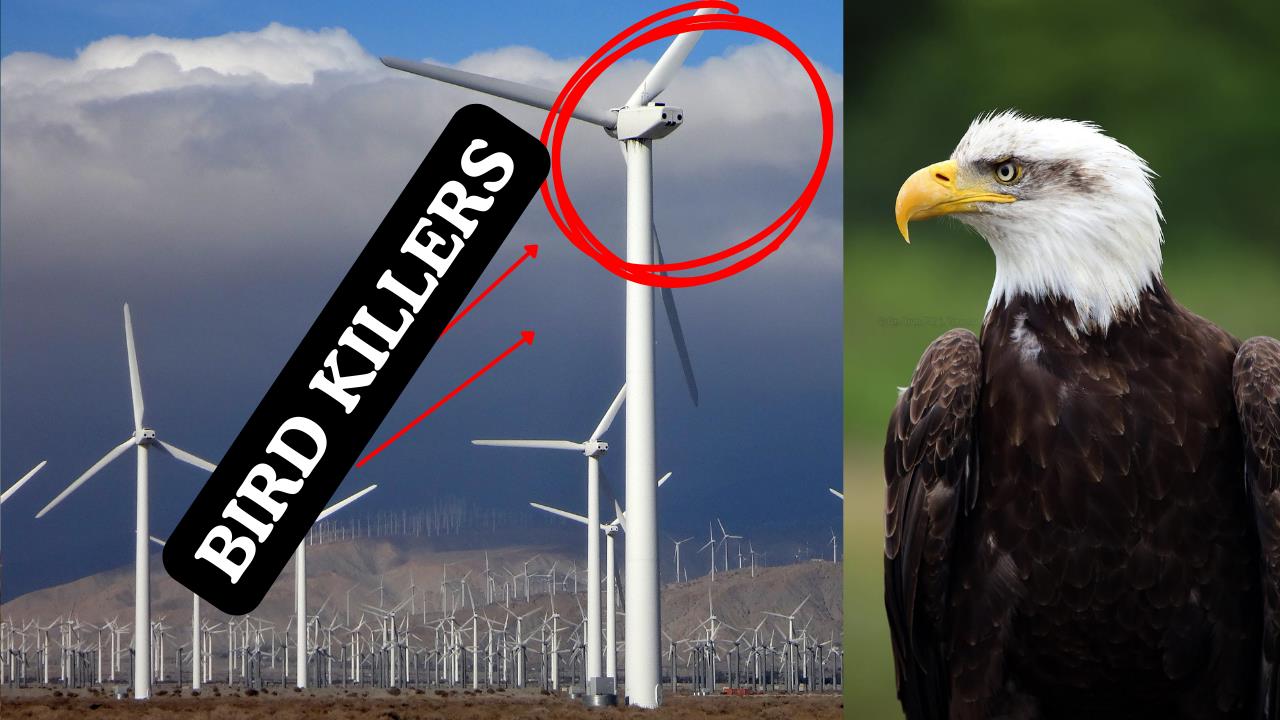
WATCH: Wind Turbines Are Killing Bald Eagles—And China Is Cashing In.
For more than a decade, Western governments promoted wind energy as a straightforward solution to complex energy and geopolitical problems. Wind power was marketed as clean, inexpensive, and strategically essential—capable of creating jobs, reducing emissions, and limiting reliance on foreign suppliers.
That argument spread quickly through global climate conferences and corporate sustainability offices. What did not spread was an honest assessment of who profited from the transition or which environmental and strategic costs were ignored.
China captured more economic and geopolitical advantage from this transition than any other nation. Beijing did not simply participate in the renewable-energy sector; it built the manufacturing system that underpins it.
Today, China controls more than 70% of the global wind-turbine supply chain and produces over 80% of the world’s rare-earth elements, which are essential for turbine generators.
State subsidies, state-directed financing, and export mandates allowed Chinese firms to underprice Western competitors, effectively making the United States and Europe dependent on a Chinese industrial network for their own energy infrastructure.
This was not an unintended outcome. China expanded its coal fleet—adding roughly two new coal plants per week in recent years—to power factories producing “green” hardware for global export.
While the United States retired more than 300 coal units since 2010, and Europe imposed strict emissions policies, China increased emissions to manufacture the very wind components Western nations relied on to lower theirs. The West reduced domestic production while China strengthened its industrial leverage.
Environmental impacts were similarly minimized. Wind turbines occupy large land areas and disrupt ecosystems, but the most visible consequence is bird mortality. According to U.S. Fish and Wildlife Service estimates, wind turbines kill between 500,000 and 700,000 birds annually in the United States alone.
Independent ecological studies suggest the number may exceed 1 million when offshore installations are included. Raptors—especially eagles—are disproportionately affected. Federal data has documented incidents in which individual wind facilities kill dozens of golden eagles per year, losses that other industries would face major penalties for.
These impacts are structural, not accidental. Wind turbines are frequently built along ridgelines, prairie corridors, and coastal regions where airflow is strongest. Those same regions serve as primary migratory pathways.
Developers, environmental review boards, and federal agencies acknowledge this overlap in planning documents, yet the information rarely reaches the public. What would be considered an unacceptable environmental cost for a fossil-fuel project is reframed as tolerable when produced by wind.
Wind’s operational limitations create further tradeoffs. Capacity factors—the percentage of time a turbine actually produces its rated power—hover between 32% and 35% in the United States.
Because wind is intermittent, grid operators rely on natural gas or nuclear generation to stabilize supply.
This backup requirement raises system-wide costs.
Over the past decade, states with rapid wind expansion, such as California and New York, recorded double-digit percentage increases in retail electricity prices, far outpacing national averages. These higher costs extend beyond construction; taxpayers subsidize transmission buildouts, grid upgrades, and decommissioning.
China, meanwhile, collects revenue from exporting turbines and components while expanding its geopolitical influence through supply-chain control.
The issue is not whether cleaner energy should be pursued. Rather, it is whether Western governments conducted a clear-eyed evaluation of the strategic and environmental costs before restructuring their national energy systems. Many did not.
Policymakers adopted a model shaped more by political convenience rather than strategy. The result is a framework that increases dependence on China, raises electricity costs, and creates environmental consequences that run counter to stated climate goals.
A credible approach would evaluate nuclear energy, domestic manufacturing, wildlife protection, and grid reliability together. It would recognize the contradiction of claiming climate leadership while importing hardware from a country that is increasing its coal consumption to record levels.
Most importantly, it would acknowledge that industrial wind development carries real ecological consequences—especially for migratory and protected bird species—that cannot be dismissed because they conflict with political messaging.
Windmills did not deliver the transformation policymakers promised. They shifted industrial power further toward China, imposed measurable environmental harm, and left Western nations with a more expensive and strategically weaker energy system.
The post Wind Turbines Are Killing Bald Eagles—And China Is Cashing In appeared first on The Gateway Pundit.
------------Read More
By: Gregory Lyakhov
Title: Wind Turbines Are Killing Bald Eagles—And China Is Cashing In
Sourced From: www.thegatewaypundit.com/2026/01/wind-turbines-are-killing-bald-eagles-china-is/
Published Date: Tue, 13 Jan 2026 13:00:13 +0000
Did you miss our previous article...
https://trendinginbusiness.business/politcal/disturbance-at-georgia-prison-leaves-3-inmates-dead-a-dozen-more-injured