.png)
When a "stigmatized property" hits the market, it doesn’t always come with a reduced asking price—or even notice of its tragic backstory.
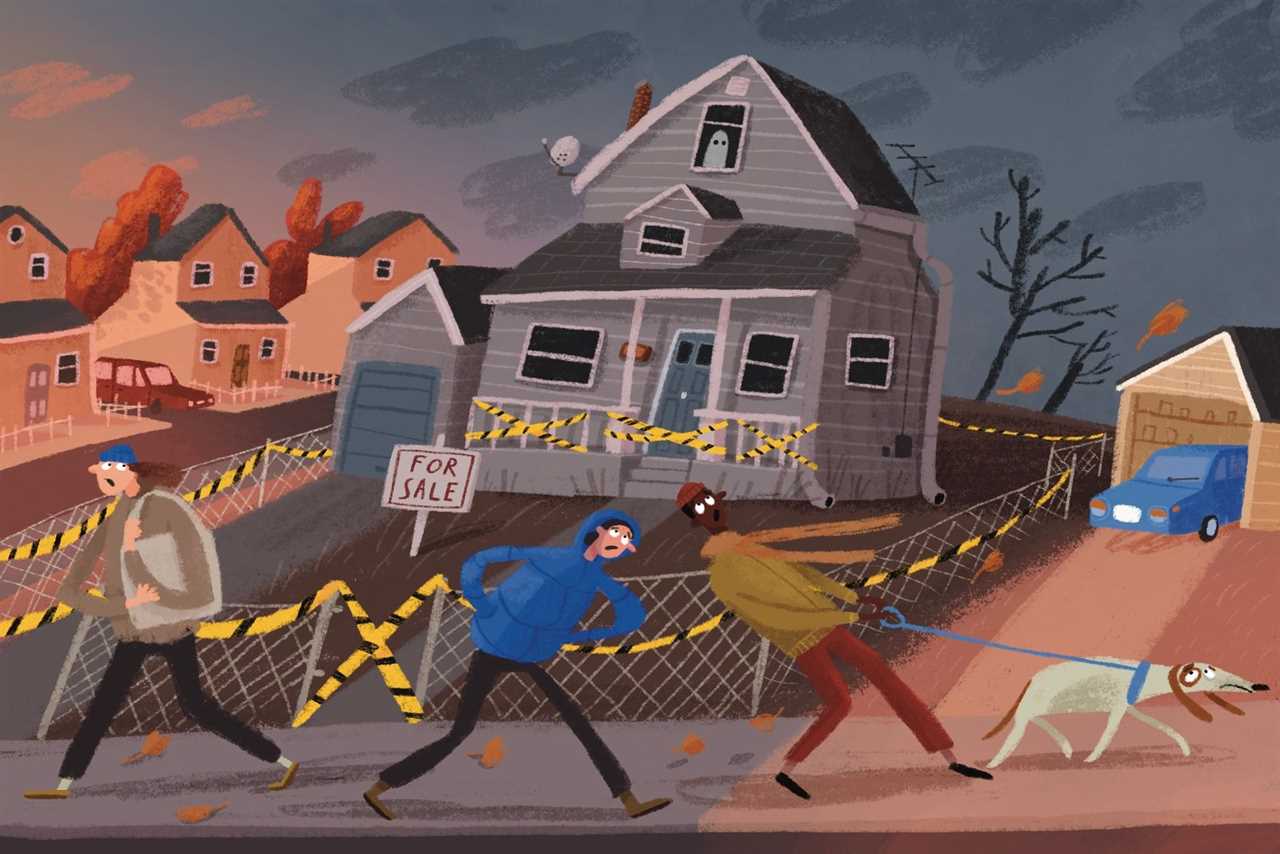
The day Andy Gibbs and his wife closed escrow on a house near Tucson, Arizona, in 2018, his realtor walked through the home with a handful of smoldering sage, telling the deceased previous owner—who had recently died by suicide in the kitchen—that he could now leave.
"We had a limited budget, and with little housing inventory—at Christmastime—our options were limited," he explains. "We looked for a house with good bones in a good neighborhood. Despite the death disclosure—likely the reason the price was low—we put an offer on that house."
Gibbs ultimately remodeled the entire home room by room, including replacing all the flooring. He sold the property in April, but opted not to disclose the death to the new buyers. Under Arizona law, they were not required to do so unless the buyer specifically asked about this aspect of the house’s history. "We never received that request," he says.
Gibbs’s former home is what’s known as a "stigmatized property," which, according to Dr. Randall Bell, principal and CEO of Landmark Research Group, an advisory firm specializing in real estate damage economics, refers to "any site where there was a horrible tragedy—whether it be an old war site, crime scene, rape or murder, suicide, or any kind of negative event in human history." Nicknamed the "Master of Disaster" because he appraises damage at the sites of traumatic events and crime scenes, Bell has assessed notable houses with dark histories, including the sites of infamous 1990s crimes like Nicole Brown Simpson’s former Brentwood condo, the JonBenét Ramsey house in Boulder, Colorado, and the Mediterranean-style mansion near San Diego where 39 members of the Heaven’s Gate cult died by suicide (all of which sold at discounted prices and/or sat on the market for years without a buyer).
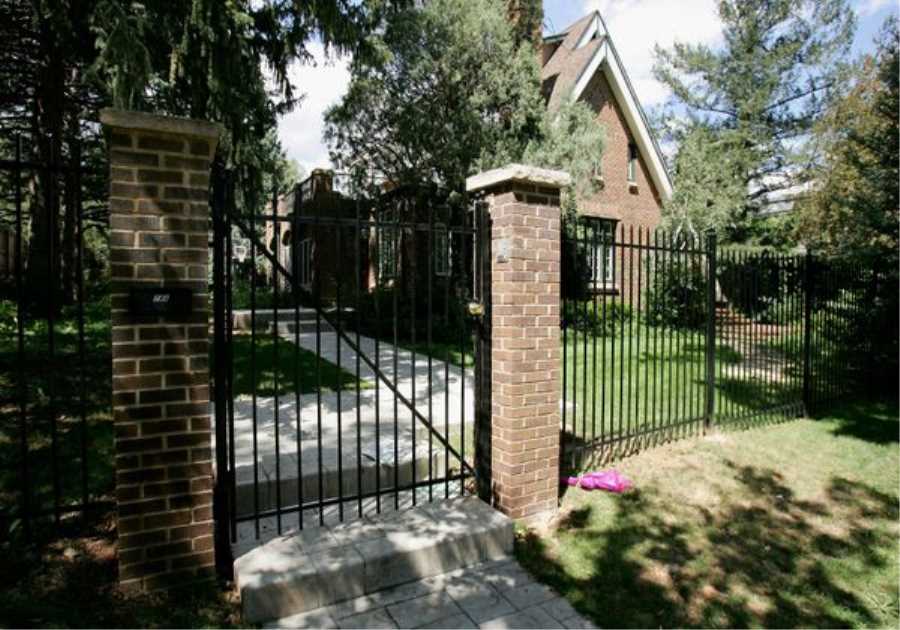
Two years after 6-year-old JonBenét Ramsey was found killed in her family’s Colorado Tudor in 1996, the Ramsey family sold the five-bedroom house to an investor group for $650,000 ($150,000 more than they bought it for in 1991). The street address was changed in 2001 and a large fence and tall trees were added to discourage looky-loos. The current owners purchased the property for $1.05 million in 2004 and have tried to list it for sale on and off since 2008 to no avail.
Photo by Doug Pensinger/Getty Images
In the field of real estate damage economics, stigmatized properties are considered a gamble. "It’s the risk that a buyer takes on, given the property’s reputation and notoriety in the marketplace, and any potential negative connotations toward that property," Bell explains, though he adds that "generally speaking, stigma tends to dissipate over time with many properties." So while historic, allegedly haunted homes may retain their value—for example, the Lizzie Borden house (the site of a notorious 1890s unsolved double murder in Massachusetts) sold for $2 million in 2021 and has operated as a house museum and B&B for decades, and the real-life Rhode Island farmhouse that inspired The Conjuring went for $1.5 million, $300,000 over the asking price, in 2022—houses with more recent morbid pasts are a different story.
Assessing a stigmatized property
With any stigmatized property, Bell considers three elements: "cost," which is typically the repair or remediation cost, "use," which is often computed as the rental rate of the property while the occupants are evacuated or the property is not conventionally usable, and "risk" or stigma—"often computed by comparable situations or case studies in the neighborhood, around the country or even internationally," he explains. Some properties are more stigmatized than others. "Crimes against children would be at the top of the list," Bell says. "Then crimes against women or the elderly, and then murder." Suicides affect property values the least, he notes.
There isn’t a federal law requiring realtors to disclose whether a death or crime took place in a house; this is regulated on the state level, and most states don’t have legislation in place. "It’s caveat emptor—‘let the buyer beware,’" Bell says. One exception is California, where realtors and sellers are required to disclose any death that occurred on the property within the last three years. Other states require the listing agent to inform potential buyers of any known murders or suicides within the last 12 months (South Dakota) or three years (Alaska). Because of the inconsistency of states’ laws, Bell recommends that potential buyers ask the realtor about the house’s past directly. "The one thing that one hundred percent no broker or realtor or agent has is the right to lie," he explains. "If you ask, they have to tell you the truth." There are also dedicated websites like DiedInHouse.com and HouseCreep.com where users can pay a fee to conduct a search for an address to see if any deaths or crimes have taken place there.
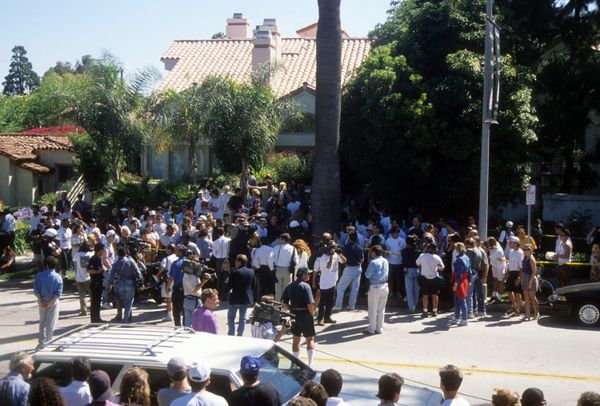
Stigmatized properties sometimes garner attention that new owners will have to deal with. The buyers of the Brentwood, California, condo where Nicole Brown Simpson and Ron Goldman were killed in 1994 (pictured above at the center of a media frenzy the day after the murders) sold for a reduced price two years later, with the new owners reportedly changing its shrubbery and address.
Photo by David Ryder/Getty Images
The price is right
When people buy stigmatized properties, Bell says that it’s usually—though not always—for economic reasons. "Sometimes the market is really tight, and it’s what’s available," he notes. That said, according to a 2025 poll from market research and data analytics firm YouGov, just 26 percent of American adults would be willing to purchase a house where the previous owners had been murdered. Stigmatized properties can have a similar effect outside the U.S. "The buyers who actually move forward are usually either completely unfazed by the history or very value-conscious," says Robin Edwards, a property buying agent at Cureton Property Finders in London. "A tragic history does not automatically mean a huge discount, but it can definitely narrow the buyer pool and sometimes that can give interested buyers more leverage."
While price drops on homes where notable or recent deaths occurred typically range from 10 to 25 percent, Bell says he’s also seen homicides that had no effect on a property’s value, this tending to be the case more often in urban areas with lower-income demographics. That’s likely not a mark of certain buyers’ comfortability; with more financial constraints and fewer options in squeezed markets, there’s a lot less room to be picky about your home’s history.
Pricier locales also aren’t immune to decreases in property value. When Marisa Vallbona and her family moved into their La Jolla, California, home in 2001, word on the street—at least amongst the kids in the neighborhood—was that it was haunted. But the house’s reputation didn’t come as a surprise to her: she already knew that the previous owner had died by suicide on the property. "The savings were substantial, so hearing that didn’t bother us at all," Vallbona explains. "We loved the home because it was the perfect size for us, located in an ideal community with gorgeous views, and had an expansive lot."
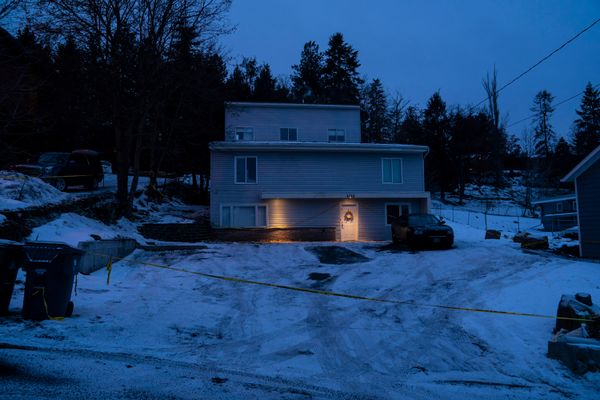
The off-campus house in Moscow, Idaho, where four University of Idaho students were murdered in November 2022 was demolished the following year.
Photo by David Ryder/Getty Images
See the full story on Dwell.com: Deaths, Disclosures, and Discounts: How Dark Histories Impact Home Sales
Read More
By: Elizabeth Yuko
Title: Deaths, Disclosures, and Discounts: How Dark Histories Impact Home Sales
Sourced From: www.dwell.com/article/deaths-disclosures-and-discounts-buying-and-selling-stigmatized-properties-murder-houses-a4182fe5-c6875079
Published Date: Thu, 08 Oct 2026 13:57:47 GMT