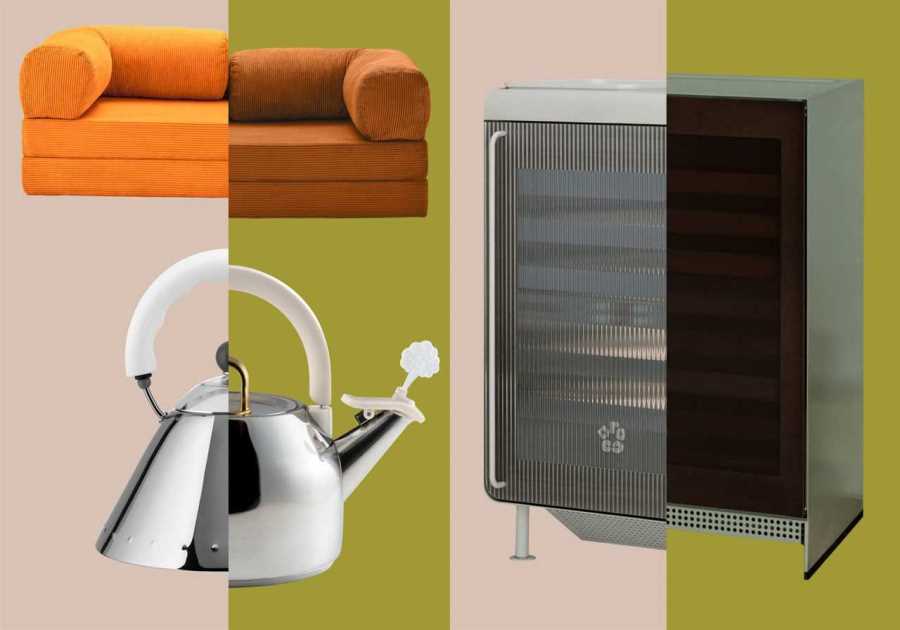
.png)
As low-price, low-quality knockoffs go viral on social media, home goods retailers are finding new ways to compete in the price wars.
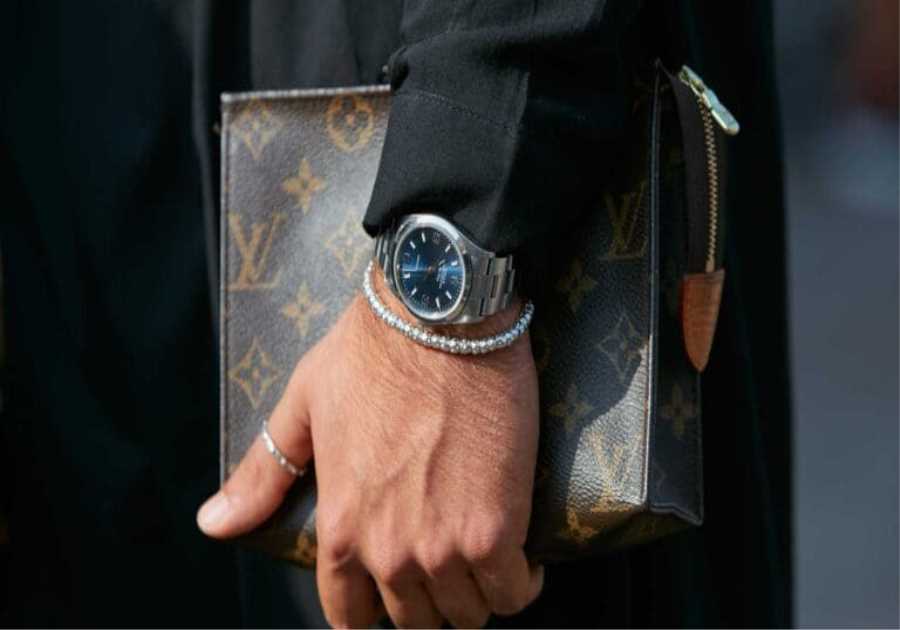
They’ve gone by many different names over the years—knockoffs, replicas, and fakes—but recently counterfeit goods have become known as "dupes." The word practically rolls off your tongue. It doesn’t have the same back-alley connotations as, say, a bootleg handbag, and sort of sounds cute. Unlike years past where a fake Birkin would have been a major faux pas, social media has turned buying lower-priced versions of viral products into a badge of honor. Selling them, too. While brands like Restoration Hardware have quietly copied the work of more famous designs, new retailers like Quince are loudly marketing look-alikes to shoppers who want low-cost luxury.
Independent designers and larger brands alike have tried to fight knockoffs as best they can, through lawsuits, shaming, and educational efforts. Success has been limited because few can afford legal fees and copyright is notoriously difficult to obtain for design objects. Meanwhile, cheap replicas have become even harder to fight because it’s easier than ever for sellers to generate AI images of a product, open an online storefront, buy Google Ads, and bank on the viral product marketing itself. A couple years ago, social media and marketing experts began advising brands to embrace the dupe and now, it seems, some are taking that suggestion by duping themselves.
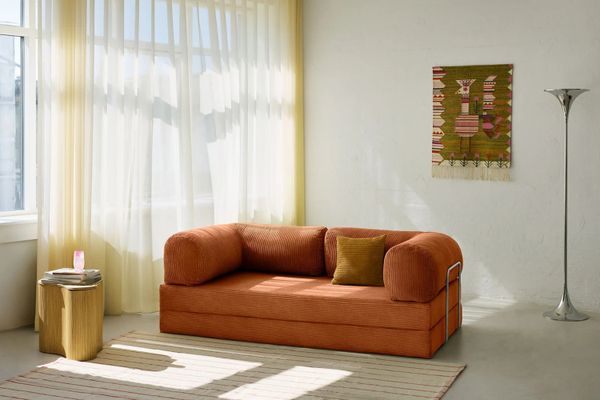
OMHU launched in 2022 and their Teddy sofa quickly became one of the most popular sofas on our Instagram feeds.
Courtesy OMHU
OMHU, the Danish brand behind the viral "boneless" Teddy sofa, is one of them. Dupes of its design—all-foam cushions that rest on the floor, held in place by a chrome frame—can be found via Walmart, Wayfair, Temu, and AliExpress for around $300; a real Teddy runs about $2,000. "I had quite a lot of people just sending me stuff where it’s like, ‘This looks like your sofa, but it isn’t. What’s going on?’" says Christine Smith, the creative director of OMHU. "It’s a never-ending thing." Just as soon as they reported counterfeits on Temu and were able to get the platform to take down the storefront, another shop would pop up the next day.
Smith wanted to try something else. In early September, OMHU launched the Tedy (the misspelling is intentional), a bright-orange iteration of the Teddy for $799.99, with free shipping. The idea was to "outdupe the dupe." It produced 100 Tedy sofas—50 for shoppers in Europe and 50 for shoppers in the U.S.—and dropped them on Temu, Etsy, and dupe.com. They sold out in 10 minutes. In an ironic twist, Temu reported suspicious activity when OMHU sold the sofas on its platform and disabled the storefront so the brand had to individually contact each buyer to ship the sofa to them. OMHU doesn’t plan to restock Tedys, but they did make a website—iconicdupe.com—to preserve the campaign.
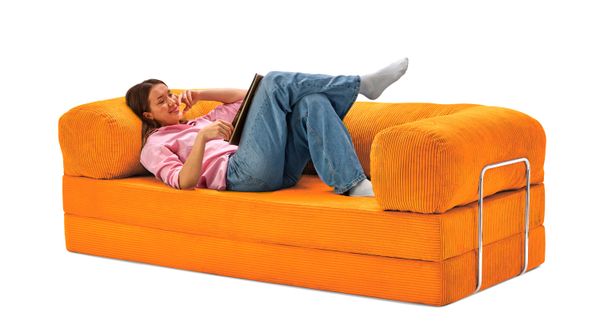
In photos alone, you can pick up on a quality difference with OMHU’s Tedy sofa, the limited-edition ‘dupe version’ of the original Teddy sofa.
Courtesy OMHU
"I think sometimes when you treat stuff with a different tone of voice and not just pointing a finger, but actually doing it with a wink in the eye and a bit of humor, you can get a lot more people to pay attention," Smith says. The true aim is to skewer knockoffs and start a conversation about why they’re not worth buying.
Shoppers received the campaign enthusiastically, but perhaps weren’t in on the joke. "This was such a smart business decision!" said one comment on the brand’s Instagram. "You guys have been missing out on so many customers and $$$ from people who simply can’t justify spending $1,500 to $3,000 on a couch in this economy."
This mismatch between what people want to spend and how much it costs to produce a quality product is where the tension lies. Brands are sympathetic to the budget constraints of fans and want their products in as many hands as possible, but you can’t please everyone. It took Rocco, the makers of a viral beverage fridge, a year and a half to develop a lower-cost option, the Essential fridge, which launched in August. At $1,195, it’s nearly half the price of the Classic yet still features a whisper-soft compressor and very even and precise cooling inside, according to the brand.
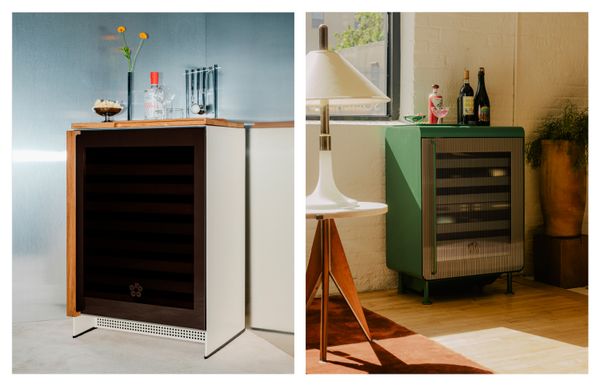
Rocco’s beverage fridge caught a lot of attention when it launched, but at $1,995 it’s not the most accessibly priced. The Essential fridge is still an investment piece at $1,195, but it opens the door to more customers.
Courtesy Rocco
See the full story on Dwell.com: Design Brands Are Now Duping Themselves—Sort Of
Related stories:
- LA Design Week/end Was the Comeback the City Needs Right Now
- What the Obama Center Actually Cost—and Everything Else You Need to Know About This Week
- The Reason This Spanish Architect Got Into Prefab Has Nothing to Do With Speed or Budget
Read More
By: Diana Budds
Title: Design Brands Are Now Duping Themselves—Sort Of
Sourced From: www.dwell.com/article/design-brand-dupes-trend-0151b81f
Published Date: Mon, 12 Oct 2026 14:07:20 GMT