.png)
Afro Dandyism, Blaxploitation Glam, and Haitian Revival are among the original names Shane V. Charles has coined for aesthetics rooted in the African diaspora, forming the basis of her upcoming book.
When I first saw Shane V. Charles’s Instagram posts defining original decor styles drawn from references across the African diaspora, it felt like she was describing the homes I had always imagined but never had the language for. Over the past year and a half, the Chicago- and Los Angeles-based interior designer and founder of Mild Sauce Studio has introduced her social media following of nearly 90,000 on Instagram and over 150,000 on TikTok to a range of what she calls "interior identities" with names she coined like Blaxploitation Glam, Creole Grandmillennial, and Pan-African Brutalism. Her posts offer casual decor enthusiasts a linguistic and visual reference to styles she’s felt have long existed in Black homes but haven’t yet been formally named. "A lot of us didn’t grow up seeing ourselves in the way our homes and environments were designed," she says.
If you want your home to reflect Trinidadian heritage, for instance, Charles suggests Calypso Moderne, a style that she says blends "Trinidadian carnival flair, Miami Art Deco curves, and the vibrant rhythm of calypso music." Mississippi Delta Deco mixes luxury golds and marble with blues-inspired tones for what she calls "Chicago but also with a Southern twist." Haitian Revival draws on Taíno influence and West African spiritual traditions through earthy textures and hand-beaded textiles. "Think plastered walls and tobacco brown, beaded motifs, altarpiece coffee tables, and art as portal," she explains in one video.
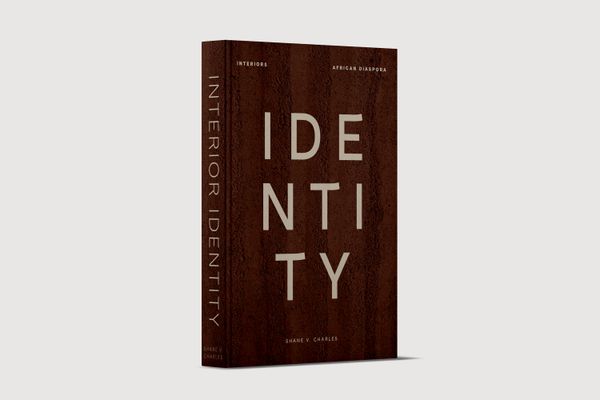
Charles’s work centers on a question rarely addressed in mainstream interiors: What does Black identity actually look like in design? In addition to her social media presence and professional design work, she’s publishing her first book, Interior Identity (tentatively slated for June 2026), which introduces 25 of her original interior design styles. Each outlines a distinct set of materials, palettes, and design principles, along with historical context. I spoke with Charles about why naming these styles matters and how she hopes the book will shift the discussion around identity in interiors. Our conversation has been edited and condensed for clarity.
What’s great about what you do is that your language is really specific. Do you see your work as creating a new canon for Black interior design?
Shane V. Charles: That’s a heavy question. So many people have been working in this space well before me, and they’ll continue to do so well after. But this work is a piece of it. I think naming and structuring design creates this academic legitimacy and permanence. The canon-building shifts design from, like, trend cycles to teachable frameworks. We’ve always had this conversation around: What is Black design? Most often, it’s leaned toward a themed or trend approach—prematurely using whatever we’ve seen in Black households or in a friend’s home. We’ve used kuba cloth, with no formal guidance or reference. We all love it, it’s framed in prints, it’s thrown on footstools, but the real question is, how does that relate to identity? It’s part of your everyday environment. How does it relate to you? And what’s the story? Or is it just something that you feel, as an individual, has constantly been used in Black households, and you were like, I’ll use that too, it reminds me of my mom’s house. [Laughs.]
When did you realize there was a void in the design space?
We’ll just use the kuba cloth as an example. One of the hospitality companies that I was working for [in my early career] had its own furniture line, and they introduced the kuba cloth, but with a twist, which is what happens. I saw the impact, but I didn’t necessarily see the credit. Not for myself, but for the usage of the material, referencing the material in that pattern for what it actually is, instead of the remixed version of it. Those contributions to the global design space and understanding, wow, we really are missing the mark in taking up more space here as a culture—that was my driving force.
Interior designer Shane V. Charles founded Mild Sauce Studio in 2019 and soon after started posting social media videos describing decor styles she felt had long existed in Black homes but hadn’t yet been formally named. The response led to her upcoming first book, Interior Identity.
Courtesy Mild Sauce Studio
How did you then go about building a digital audience?
Creators were already taking up space in the design world across TikTok, Instagram, and YouTube. And it was all kind of the same regurgitated information. That’s where I started. I was like, I’ll just say what they’re saying and get used to putting myself out there. I realized that felt extremely inauthentic and not a reflection of my creative self, so I took a break, took a step back, and I was like, I’ll just keep my clients and prioritize that. But then I realized I had the opportunity to be utterly creative in a way that the audience understood. Something as simple as sharing how I would redesign Red Lobster...and the floodgates opened. It was about creating from my own lens and trusting that the work would resonate with the right people at some point. People were very keen to learn more. They were booking time with me nonstop. The feedback was amazing.
Can you tell me more about the book?
It’s a combination of design styles and philosophies. Like, Bauhaus pulls from Germany, and wabi-sabi pulls from Japan—they’re both philosophies that are constant reference points in the design space. They both have this globally influential structure, which is why when I say them, they resonate. The styles in the book are crafted using the same methods, practices, research, and studies that were used to arrive at the influential structures we’re so used to referencing.
Let’s talk about some of those styles. When I see Harlem Deco, I think of Art Deco as a jumping-off point, of course. How do you come up with these combinations?
With Harlem Deco, I’m thinking about what happened during the Harlem Renaissance and how that influenced so much of who we are as a people in terms of textures and colors. Art Deco was relevant at that time, which is how I arrived at that name instead of calling it, like, Harlem Bauhaus. I married the Harlem Renaissance to the Art Deco movement and layered on more of that cultural relevance. You wouldn’t use Pan-African wabi-sabi…I mean, people can do whatever they want. [Laughs.] But will it make sense and hold substance? My stance would be no. I don’t know that it would carry the same amount of weight. There’s so much that influences design language. So as long as we’re willing to borrow from what already exists, it gives it breadth, and it gives it legs.
When you’re consulting and designing rooms specifically for Black clientele, what principles or questions guide you?
Every client, every project has its own direction and palette. I get pulled in a billion different ways. Especially when it comes to collaborating with my team. It’s about learning more about the client or the environment that the space is in. What city or country is it in? What’s the background on this client? What’s their upbringing? What do they care about and not care about? There’s subtle historical context, and sometimes it’s deeper than others. What type of architecture are we referencing? And then how do we integrate that language into the overall design direction? Obviously, spatial rhythm and color theory are natural go-tos that help drive a project. Those are the fundamentals.
Do clients request design styles based on your social media posts?
For a recent project, the client specifically requested Haitian Revival. Haitian Revival is going to look one way in the book, and it will settle [into the client’s home] in another way. Now that there’s a name for it, this client, who is from Haiti and has lived there, can say, ‘Here’s how I want this to show up for me.’ Instead of, ‘I’m Haitian. How do I bring in a Haitian flag and put it on my wall?’
For people encountering these terms for the first time, what do you hope they feel or recognize about themselves?
I hope they see themselves in the work. My hope is that it gives breath to everything that’s been missing, but also moves us toward taking up space and taking ownership of who we are as a culture and a people.
Do you see naming these design styles as an act of reclamation, or is it more about inserting Black people into the global design narrative?
I think "inserting" us in the narrative suggests that we have not been present. To me, this is like you’re building your own table and inviting the conversation in. It goes back to ownership. I don’t know if we’re reclaiming. It’s giving the [decor styles] a definition that they need to live and breathe. We’ve been having this conversation, and we’ve been a part of it.
Which of the "interior identities" in the book feel most personal to you?
Black Nouveau Fusion and Mississippi Delta Deco. Black Nouveau Fusion is what we saw in films like ATL. There’s this Chinese calligraphy and a strong Asian presence in a lot of the furniture because of what was happening with furniture during that time. It’s why it was so prevalent in Black households. That resonates because I saw it growing up. Mississippi Delta Deco has the strongest cultural reference for me because it references our ancestors’ migration from the South to the North. My mother came from Mississippi to Chicago, and her family carried a lot of what references this design style [in their living spaces].
If the industry were truly inclusive, how might interior design education look different?
One of my junior designers, who’s also a Parsons alum, has spoken about how going through the educational system kind of stripped them of their creativity from a diasporic perspective, being that it is Eurocentric. I challenge that because I see how we show up in this space, but there is a lack of inclusivity. I think design schools would start to integrate curriculum from the diaspora, structured in a way that’s digestible and seamlessly integrated. The work is being done. Are you willing to platform it? Creating this work took an immense amount of time, but it was a breeze because it was me speaking about the world I exist and live in.
Top image: all photos courtesy Mild Sauce Studio
Related Reading:
These Collectors of Black Memorabilia Want to Reframe What It Means
The Content Creators Who Turned an Obsession With Vintage Love Motels Into One
Read More
By: Clover Hope
Title: The Interior Designer Creating Language to Describe Black Decor Styles
Sourced From: www.dwell.com/article/shane-v-charles-interior-identity-book-interview-african-diaspora-decor-7d6d0983
Published Date: Wed, 25 Mar 2026 17:43:19 GMT