.png)
On a bright morning last April, a surveillance plane operated by the Colombian military spotted a 40-foot-long shark-like silhouette idling in the ocean just off Tayrona National Park. It was, unmistakably, a “narco sub,” a stealthy fiberglass vessel that sails with its hull almost entirely underwater, used by drug cartels to move cocaine north. The plane’s crew radioed it in, and eventually nearby coast guard boats got the order, routine but urgent: Intercept.
In Cartagena, about 150 miles from the action, Captain Jaime González Zamudio, commander of the regional coast guard group, sat down at his desk to watch what happened next. On his computer monitor, icons representing his patrol boats raced toward the sub’s coordinates as updates crackled over his radio from the crews at sea. This was all standard; Colombia is the world’s largest producer of cocaine, and its navy has been seizing narco subs for decades. And so the captain was pretty sure what the outcome would be. His crew would catch up to the sub, just a bit of it showing above the water’s surface. They’d bring it to heel, board it, and force open the hatch to find two, three, maybe four exhausted men suffocating in a mix of diesel fumes and humidity, and a cargo compartment holding several tons of cocaine.
The boats caught up to the sub. A crew boarded, forced open the hatch, and confirmed that the vessel was secure. But from that point on, things were different.
First, some unexpected details came over the radio: There was no cocaine on board. Neither was there a crew, nor a helm, nor even enough room for a person to lie down. Instead, inside the hull the crew found a fuel tank, an autopilot system and control electronics, and a remotely monitored security camera. González Zamudio’s crew started sending pictures back to Cartagena: Bolted to the hull was another camera, as well as two plastic rectangles, each about the size of a cookie sheet—antennas for connecting to Starlink satellite internet.
The authorities towed the boat back to Cartagena, where military techs took a closer look. Weeks later, they came to an unsettling conclusion: This was Colombia’s first confirmed uncrewed narco sub. It could be operated by remote control, but it was also capable of some degree of autonomous travel. The techs concluded that the sub was likely a prototype built by the Clan del Golfo, a powerful criminal group that operates along the Caribbean coast.
For decades, handmade narco subs have been some of the cocaine trade’s most elusive and productive workhorses, ferrying multi-ton loads of illicit drugs from Colombian estuaries toward markets in North America and, increasingly, the rest of the world. Now off-the-shelf technology—Starlink terminals, plug-and-play nautical autopilots, high-resolution video cameras—may be advancing that cat-and-mouse game into a new phase.
Uncrewed subs could move more cocaine over longer distances, and they wouldn’t put human smugglers at risk of capture. Law enforcement around the world is just beginning to grapple with what the Tayrona sub means for the future—whether it was merely an isolated experiment or the opening move in a new era of autonomous drug smuggling at sea.
Drug traffickers love the ocean. “You can move drug traffic through legal and illegal routes,” says Juan Pablo Serrano, a captain in the Colombian navy and head of the operational coordination center for Orión, a multiagency, multinational counternarcotics effort. The giant container ships at the heart of global commerce offer a favorite approach, Serrano says. Bribe a chain of dockworkers and inspectors, hide a load in one of thousands of cargo boxes, and put it on a totally legal commercial vessel headed to Europe or North America. That route is slow and expensive—involving months of transit and bribes spread across a wide network—but relatively low risk. “A ship can carry 5,000 containers. Good luck finding the right one,” he says.
Far less legal, but much faster and cheaper, are small, powerful motorboats. Quick to build and cheap to crew, these “go-fasts” top out at just under 50 feet long and can move smaller loads in hours rather than days. But they’re also easy for coastal radars and patrols to spot.
Submersibles—or, more accurately, “semisubmersibles”—fit somewhere in the middle. They take more money and engineering to build than an open speedboat, but they buy stealth—even if a bit of the vessel rides at the surface, the bulk stays hidden underwater. That adds another option to a portfolio that smugglers constantly rebalance across three variables: risk, time, and cost. When US and Colombian authorities tightened control over air routes and commercial shipping in the early 1990s, subs became more attractive. The first ones were crude wooden hulls with a fiberglass shell and extra fuel tanks, cobbled together in mangrove estuaries, hidden from prying eyes. Today’s fiberglass semisubmersible designs ride mostly below the surface, relying on diesel engines that can push multi-ton loads for days at a time while presenting little more than a ripple and a hot exhaust pipe to radar and infrared sensors.
A typical semisubmersible costs under $2 million to build and can carry three metric tons of cocaine. That’s worth over $160 million in Europe—wholesale.
Most ferry between South American coasts and handoff points in Central America and Mexico, where allied criminal organizations break up the cargo and slowly funnel it toward the US. But some now go much farther. In 2019, Spanish authorities intercepted a semisubmersible after a 27-day transatlantic voyage from Brazil. In 2024, police in the Solomon Islands found the first narco sub in the Asia-Pacific region, a semisubmersible probably originating from Colombia on its way to Australia or New Zealand.
If the variables are risk, time, and cost, then the economics of a narco sub are simple. Even if they spend more time on the water than a powerboat, they’re less likely to get caught—and a relative bargain to produce. A narco sub might cost between $1 million and $2 million to build, but a kilo of cocaine costs just about $500 to make. “By the time that kilo reaches Europe, it can sell for between $44,000 and $55,000,” Serrano says. A typical semisubmersible carries up to three metric tons—cargo worth well over $160 million at European wholesale prices.
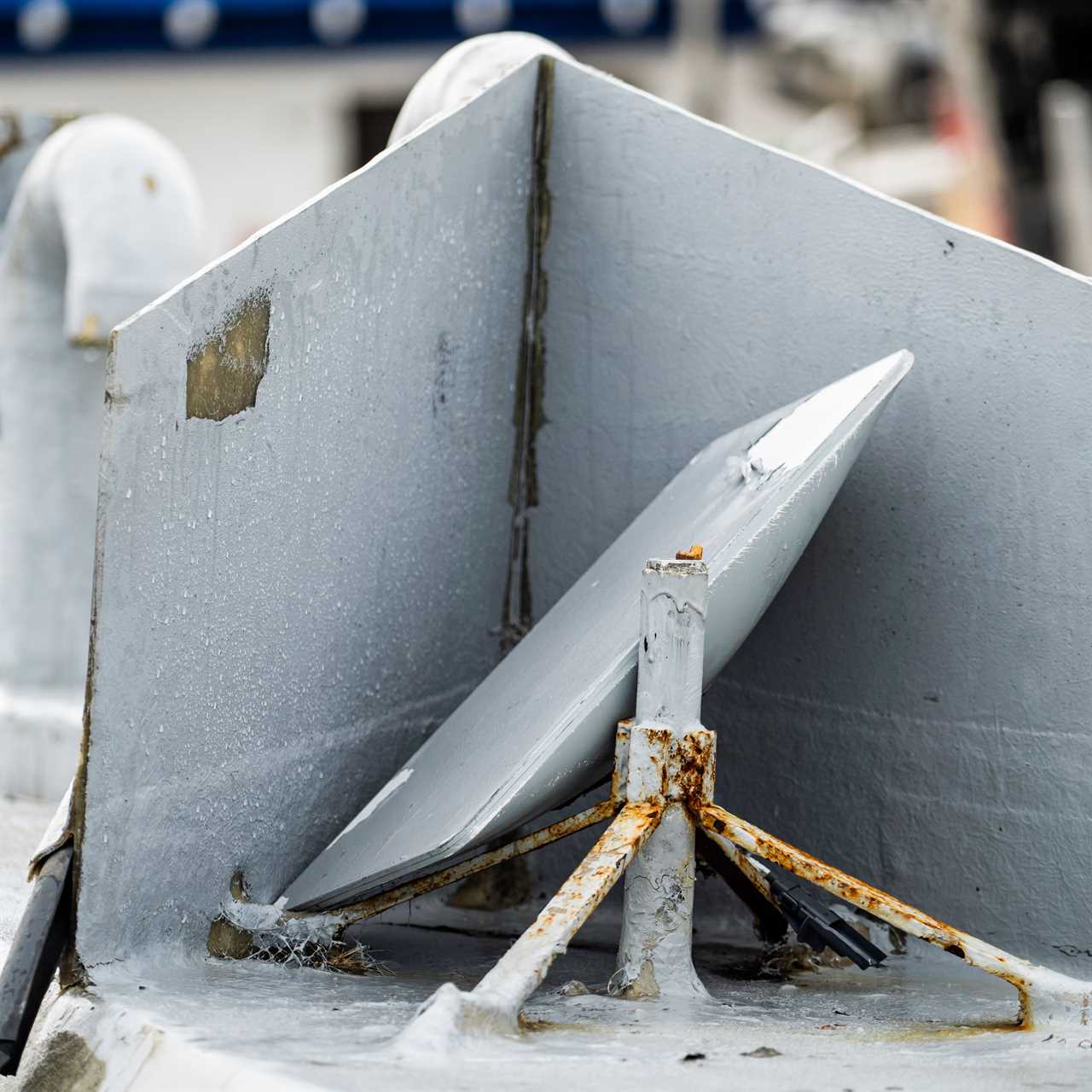
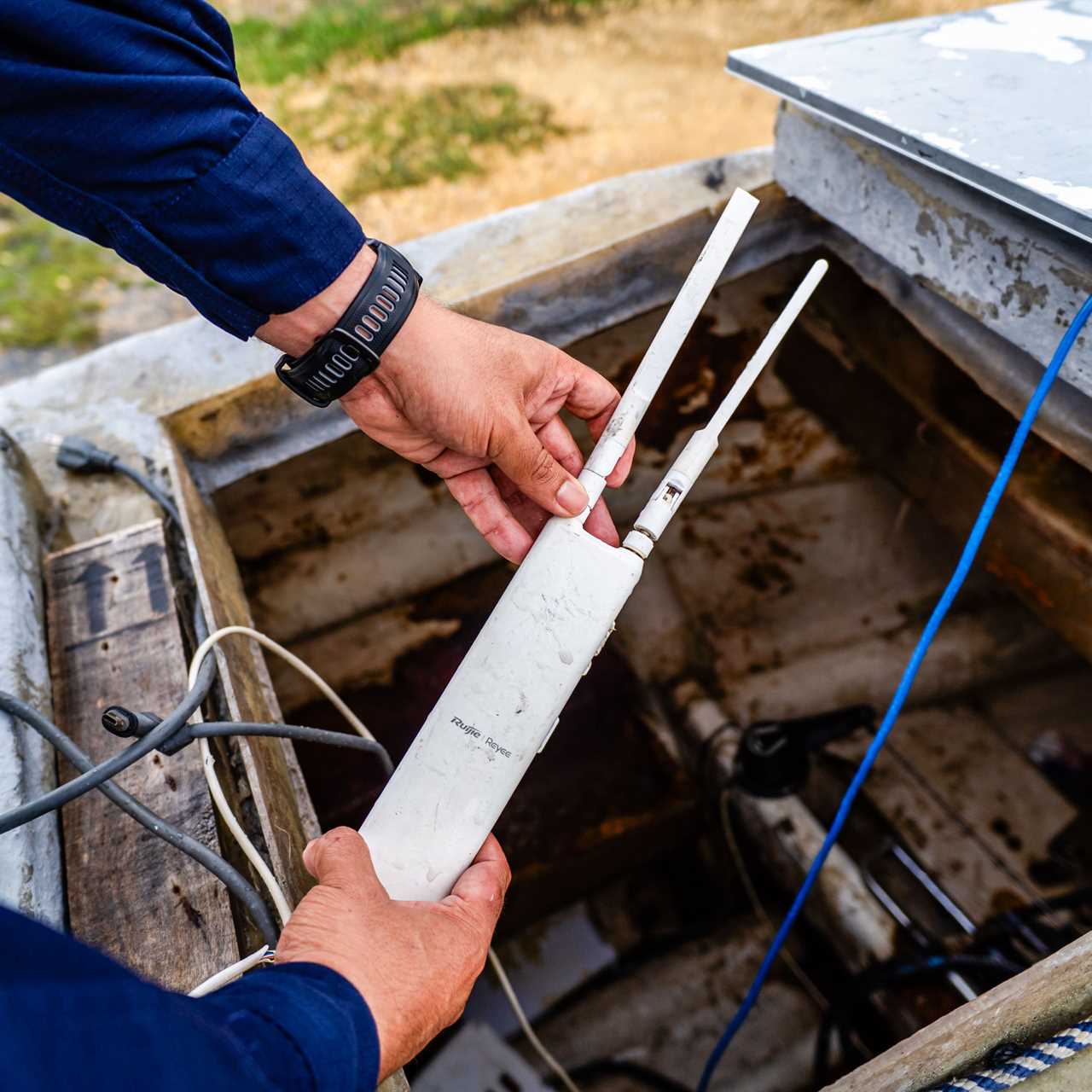
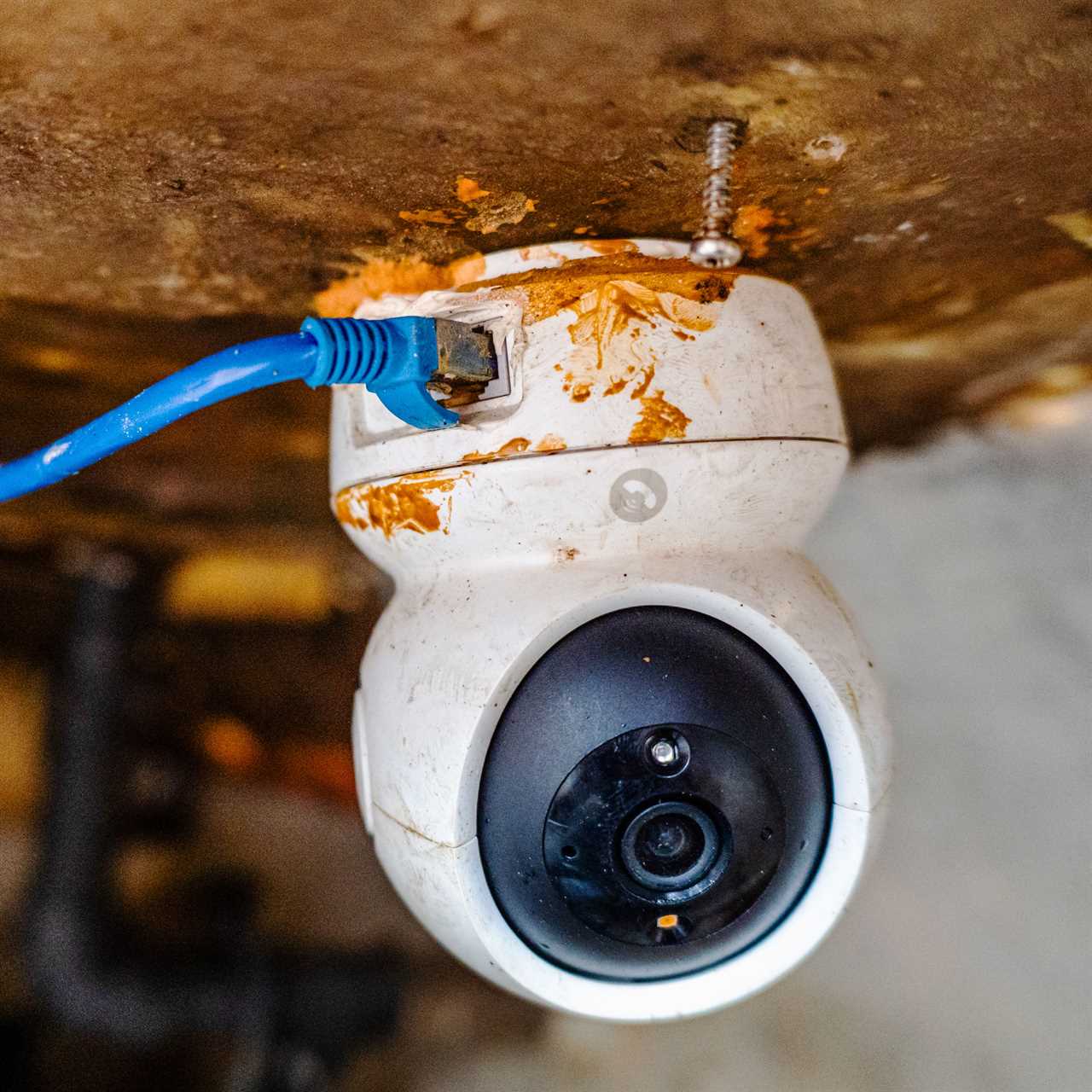
Off-the-shelf nautical autopilots, WiFi antennas, Starlink satellite internet connections, and remote cameras are all drug smugglers need to turn semisubmersibles into drone ships.
As a result, narco subs are getting more common. Seizures by authorities tripled in the last 20 years, according to Colombia’s International Center for Research and Analysis Against Maritime Drug Trafficking (CMCON), and Serrano admits that the Orión alliance has enough ships and aircraft to catch only a fraction of what sails.
Until now, though, narco subs have had one major flaw: They depended on people, usually poor fishermen or low-level recruits sealed into stifling compartments for days at a time, steering by GPS and sight, hoping not to be spotted. That made the subs expensive and a risk to drug sellers if captured. Like good capitalists, the Tayrona boat’s builders seem to have been trying to obviate labor costs with automation. No crew means more room for drugs or fuel and no sailors to pay—or to get arrested or flip if a mission goes wrong.
“If you don’t have a person or people on board, that makes the transoceanic routes much more feasible,” says Henry Shuldiner, a researcher at InSight Crime who has analyzed hundreds of narco-sub cases. It’s one thing, he notes, to persuade someone to spend a day or two going from Colombia to Panama for a big payout; it’s another to ask four people to spend three weeks sealed inside a cramped tube, sleeping, eating, and relieving themselves in the same space. “That’s a hard sell,” Shuldiner says.
An uncrewed sub doesn’t have to race to a rendezvous because its crew can endure only a few days inside. It can move more slowly and stealthily. It can wait out patrols or bad weather, loiter near a meeting point, or take longer and less well-monitored routes. And if something goes wrong—if a military plane appears or navigation fails—its owners can simply scuttle the vessel from afar.
Meanwhile, the basic technology to make all that work is getting more and more affordable, and the potential profit margins are rising. “The rapidly approaching universality of autonomous technology could be a nightmare for the U.S. Coast Guard,” wrote two Coast Guard officers in the US Naval Institute’s journal Proceedings in 2021. And as if to prove how good an idea drone narco subs are, the US Marine Corps and the weapons builder Leidos are testing a low-profile uncrewed vessel called the Sea Specter, which they describe as being “inspired” by narco-sub design.
The possibility that drug smugglers are experimenting with autonomous subs isn’t just theoretical. Law enforcement agencies on other smuggling routes have found signs the Tayrona sub isn’t an isolated case. In 2022, Spanish police seized three small submersible drones near Cádiz, on Spain’s southern coast. Two years later, Italian authorities confiscated a remote-controlled minisubmarine they believed was intended for drug runs. “The probability of expansion is high,” says Diego Cánovas, a port and maritime security expert in Spain. Tayrona, the biggest and most technologically advanced uncrewed narco sub found so far, is more likely a preview than an anomaly.
Today, the Tayrona semisubmersible sits on a strip of grass at the ARC Bolívar naval base in Cartagena. It’s exposed to the elements; rain has streaked its paint. To one side lies an older, bulkier narco sub seized a decade ago, a blue cylinder with a clumsy profile. The Tayrona’s hull looks lower, leaner, and more refined.
Up close, it is also unmistakably handmade. The hull is a dull gray-blue, the fiberglass rough in places, with scrapes and dents from the tow that brought it into port. It has no identifying marks on the exterior—nothing that would tie it to a country, a company, or a port. On the upper surface sit the two Starlink antennas, painted over in the same gray-blue to keep them from standing out against the sea.
I climb up a ladder and drop through the small hatch near the stern. Inside, the air is damp and close, the walls beaded with condensation. Small puddles of fuel have collected in the bilge. The vessel has no seating, no helm or steering wheel, and not enough space to stand up straight or lie down. It’s clear it was never meant to carry people. A technical report by CMCON found that the sub would have enough fuel for a journey of some 800 nautical miles, and the central cargo bay would hold between 1 and 1.5 tons of cocaine.
At the aft end, the machinery compartment is a tangle of hardware: diesel engine, batteries, pumps, and a chaotic bundle of cables feeding an electronics rack. All the core components are still there. Inside that rack, investigators identified a NAC-3 autopilot processor, a commercial unit designed to steer midsize boats by tying into standard hydraulic pumps, heading sensors, and rudder-feedback systems. They cost about $2,200 on Amazon.
“These are plug-and-play technologies,” says Wilmar Martínez, a mechatronics professor at the University of America in Bogotá, when I show him pictures of the inside of the sub. “Midcareer mechatronics students could install them.”
For all its advantages, an autonomous drug-smuggling submarine wouldn’t be invincible. Even without a crew on board, there are still people in the chain. Every satellite internet terminal—Starlink or not—comes with a billing address, a payment method, and a log of where and when it pings the constellation. Colombian officers have begun to talk about negotiating formal agreements with providers, asking them to alert authorities when a transceiver’s movements match known smuggling patterns. Brazil’s government has already cut a deal with Starlink to curb criminal use of its service in the Amazon.
The basic playbook for finding a drone sub will look much like the one for crewed semisubmersibles. Aircraft and ships will use radar to pick out small anomalies and infrared cameras to look for the heat of a diesel engine or the turbulence of a wake. That said, it might not work. “If they wind up being smaller, they’re going to be darn near impossible to detect,” says Michael Knickerbocker, a former US Navy officer who advises defense tech firms.
Autonomous drug subs are “a great example of how resilient cocaine traffickers are, and how they’re continuously one step ahead of authorities,” says one researcher.
Even worse, navies already act on only a fraction of their intelligence leads because they don’t have enough ships and aircraft. The answer, Knickerbocker argues, is “robot on robot.” Navies and coast guards will need swarms of their own small, relatively cheap uncrewed systems—surface vessels, underwater gliders, and long-endurance aerial vehicles that can loiter, sense, and relay data back to human operators. Those experiments have already begun. The US 4th Fleet, which covers Latin America and the Caribbean, is experimenting with uncrewed platforms in counternarcotics patrols. Across the Atlantic, the European Union’s European Maritime Safety Agency operates drones for maritime surveillance.
Today, though, the major screens against oceangoing vessels of all kinds are coastal radar networks. Spain operates SIVE to watch over choke points like the Strait of Gibraltar, and in the Pacific, Australia’s over-the-horizon radar network, JORN, can spot objects hundreds of miles away, far beyond the range of conventional radar.
Even so, it’s not enough to just spot an uncrewed narco sub. Law enforcement also has to stop it—and that will be tricky.
CARLOS PARRA RIOS
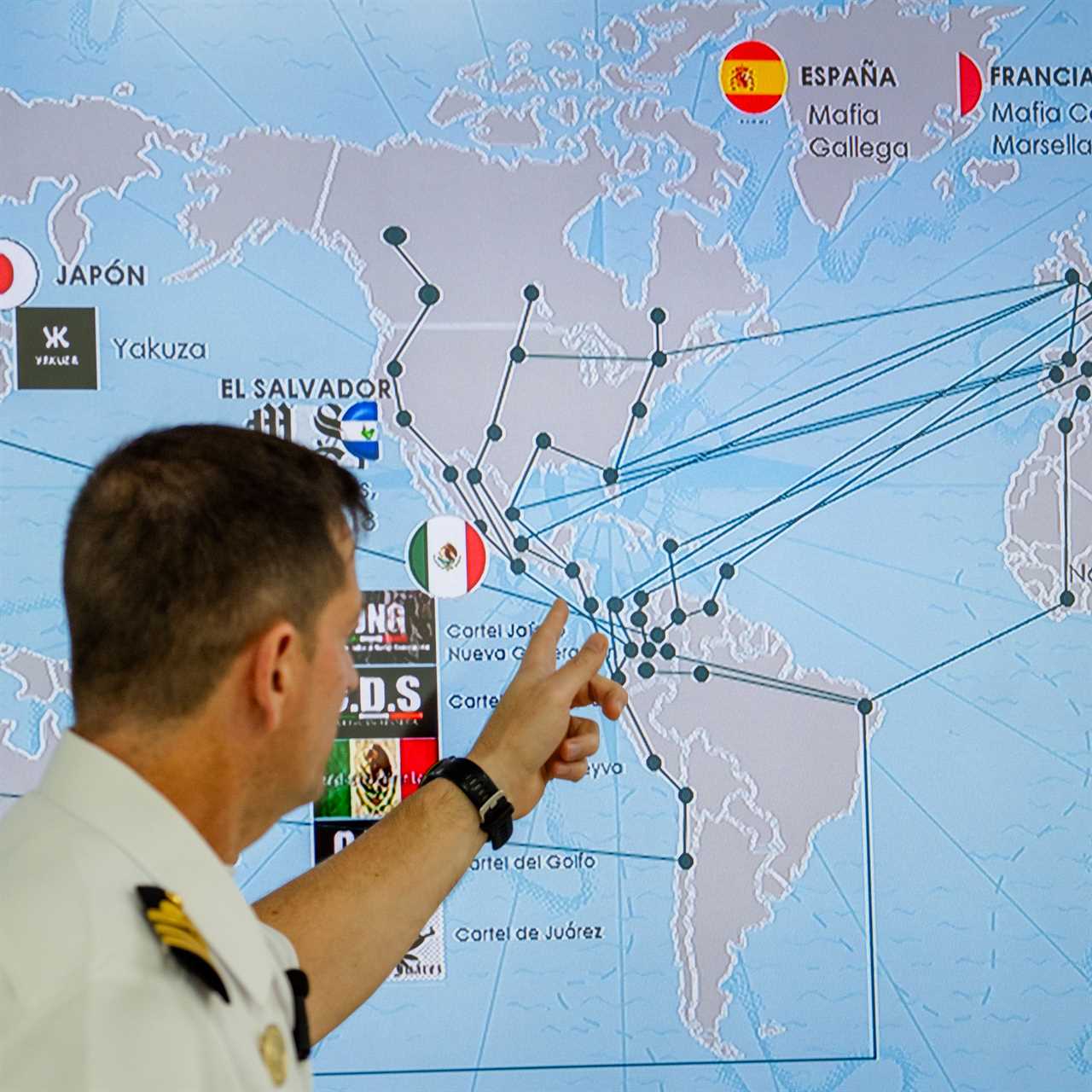
With a crewed vessel, Colombian doctrine says coast guard units should try to hail the boat first with lights, sirens, radio calls, and warning shots. If that fails, interceptor crews sometimes have to jump aboard and force the hatch. Officers worry that future autonomous craft could be wired to sink or even explode if someone gets too close. “If they get destroyed, we may lose the evidence,” says Víctor González Badrán, a navy captain and director of CMCON. “That means no seizure and no legal proceedings against that organization.”
That’s where electronic warfare enters the picture—radio-frequency jamming, cyber tools, perhaps more exotic options. In the simplest version, jamming means flooding the receiver with noise so that commands from the operator never reach the vessel. Spoofing goes a step further, feeding fake signals so that the sub thinks it’s somewhere else or obediently follows a fake set of waypoints. Cyber tools might aim higher up the chain, trying to penetrate the software that runs the vessel or the networks it uses to talk to satellite constellations. At the cutting edge of these countermeasures are electromagnetic pulses designed to fry electronics outright, turning a million-dollar narco sub into a dead hull drifting at sea.
In reality, the tools that might catch a future Tayrona sub are unevenly distributed, politically sensitive, and often experimental. Powerful cyber or electromagnetic tricks are closely guarded secrets; using them in a drug case risks exposing capabilities that militaries would rather reserve for wars. Systems like Australia’s JORN radar are tightly held national security assets, their exact performance specs classified, and sharing raw data with countries on the front lines of the cocaine trade would inevitably mean revealing hints as to how they got it. “Just because a capability exists doesn’t mean you employ it,” Knickerbocker says.
Analysts don’t think uncrewed narco subs will reshape the global drug trade, despite the technological leap. Trafficking organizations will still hedge their bets across those three variables, hiding cocaine in shipping containers, dissolving it into liquids and paints, racing it north in fast boats. “I don’t think this is revolutionary,” Shuldiner says. “But it’s a great example of how resilient cocaine traffickers are, and how they’re continuously one step ahead of authorities.”
There’s still that chance, though, that everything international law enforcement agencies know about drug smuggling is about to change. González Zamudio says he keeps getting requests from foreign navies, coast guards, and security agencies to come see the Tayrona sub. He greets their delegations, takes them out to the strip of grass on the base, and walks them around it, gives them tours. It has become a kind of pilgrimage. Everyone who makes it worries that the next time a narco sub appears near a distant coastline, they’ll board it as usual, force the hatch—and find it full of cocaine and gadgets, but without a single human occupant. And no one knows what happens after that.
Eduardo Echeverri López is a journalist based in Colombia.
------------Read More
By: Eduardo Echeverri López
Title: How uncrewed narco subs could transform the Colombian drug trade
Sourced From: www.technologyreview.com/2026/02/19/1132619/uncrewed-narco-subs-transform-columbian-drug-trade/
Published Date: Thu, 19 Feb 2026 11:00:00 +0000