.png)
Macworld
For years, premium smartphone makers have been trying to compete with Apple’s iPhone dominance with better cameras, larger screens, and exclusive features. Few have done more than the iPhone’s main rival, Samsung, which consistently makes flagship phones that have better specs and bigger batteries than Apple’s latest lineup.
Case in point: The Galaxy S26 Ultra, Samsung’s latest flagship smartphone. The S26 Ultra isn’t exactly a major upgrade over last year’s model, but it still has enough interesting new features to entice buyers, upgraders, and switchers. But like most iPhone generations, it’s still not enough to beat the iPhone.
A genuinely great Android flagship
I’m not going to waste your time with a full S26 Ultra review. You can read that elsewhere if you want. All you need to know is that the S26 Ultra is absolutely a flagship smartphone. If you’re into Android, it’s probably the best you can get on the market today.
The S26 Ultra has a massive 6.9-inch display, just like the iPhone 17 Pro Max. Samsung’s flagship feels just as premium as an iPhone, since both are made of glass and aluminum. However, the Galaxy is much lighter and thinner, which is something I really like.
The Galaxy S26 Ultra is every bit as good as an iPhone.
Foundry
The notion that Android smartphones are too slow is also a thing of the past, at least when it comes to flagship models. The S26 Ultra is powered by a Snapdragon 8 Elite Gen 5 chip with 12GB of RAM. Benchmark tests show that this chip is quite comparable to Apple’s A19 Pro.
While benchmark tests don’t necessarily reflect real-world performance, my experience with the S26 Ultra has been quite good. Everything feels smooth, and I’ve yet to see this phone slow down, whether I’m editing RAW photos or playing games.
Privacy Display: Apple magic on Android
All of that may be impressive, but we’re not talking about anything truly new. However, Samsung had a trick up its sleeve for the S26 Ultra that you won’t find on any iPhone.
The S26 Ultra introduces a new display technology that takes away the need to apply a privacy screen protector, making it harder for people next to you to see what’s on the screen.
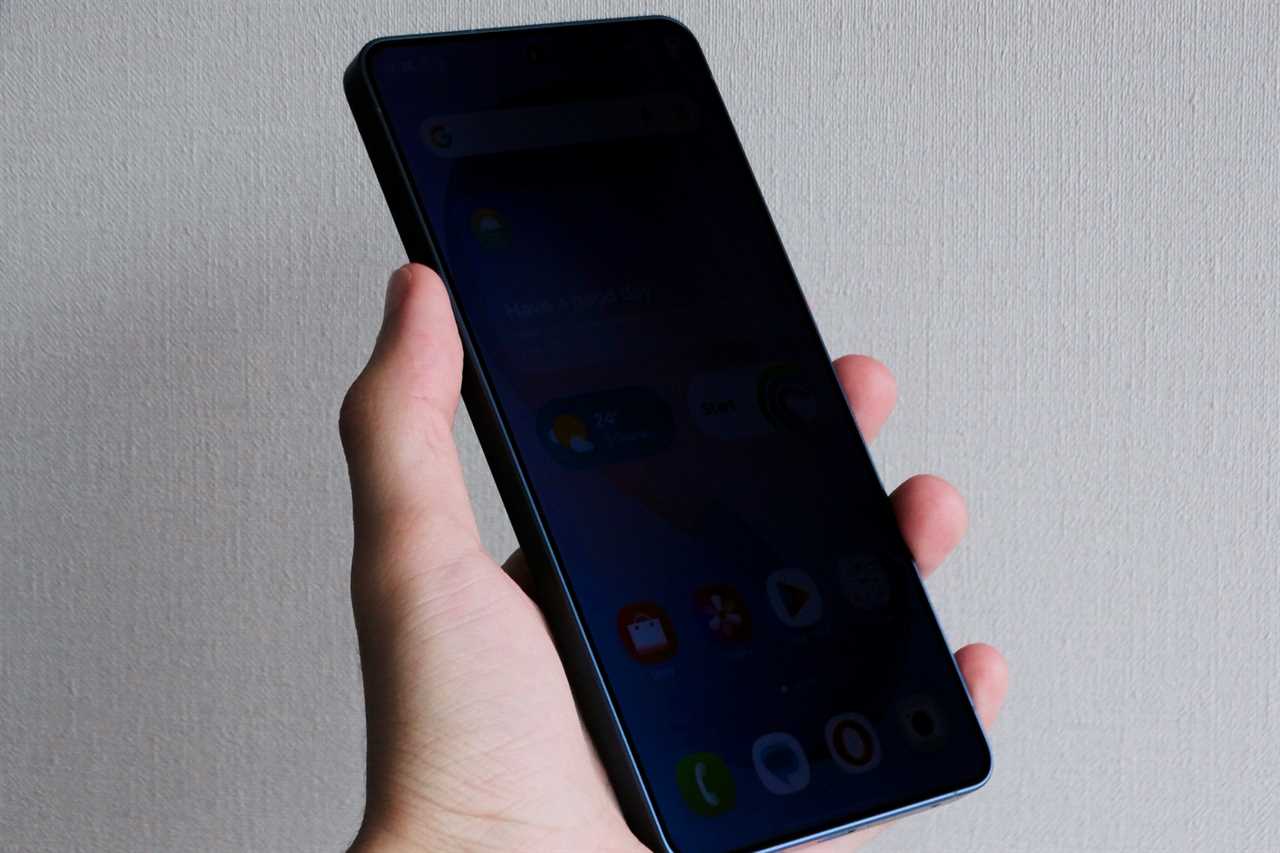
If you can believe it, the Galaxy S26 Ultra’s screen is on in this pic. You just can’t see it from this angle.
Foundry
Essentially, the technology works at the hardware level. The display has both narrow-angle and wide-angle pixels to show the full image. When Privacy Display is turned on, the wide-angle pixels are turned off, and only the narrow-angle pixels are used, which focuses the light in a straight line.
The result is that you have to look directly at the screen to see the content, while people next to you will see a much darker screen.
Some may question the usefulness of this feature, since there are cheap screen protectors that offer similar functionality. But Privacy Display is superior for a number of reasons. For one, most people won’t bother to use one. And the people who do are stuck with a permanent film on their display, with no way to turn it on and off as needed.
With Privacy Display on the S26 Ultra, you can do exactly that. For example, I can set Privacy Display to turn on automatically when I open a specific app, such as my banking app or 1Password, and can even be set to hide only specific parts of the screen, such as notification banners.
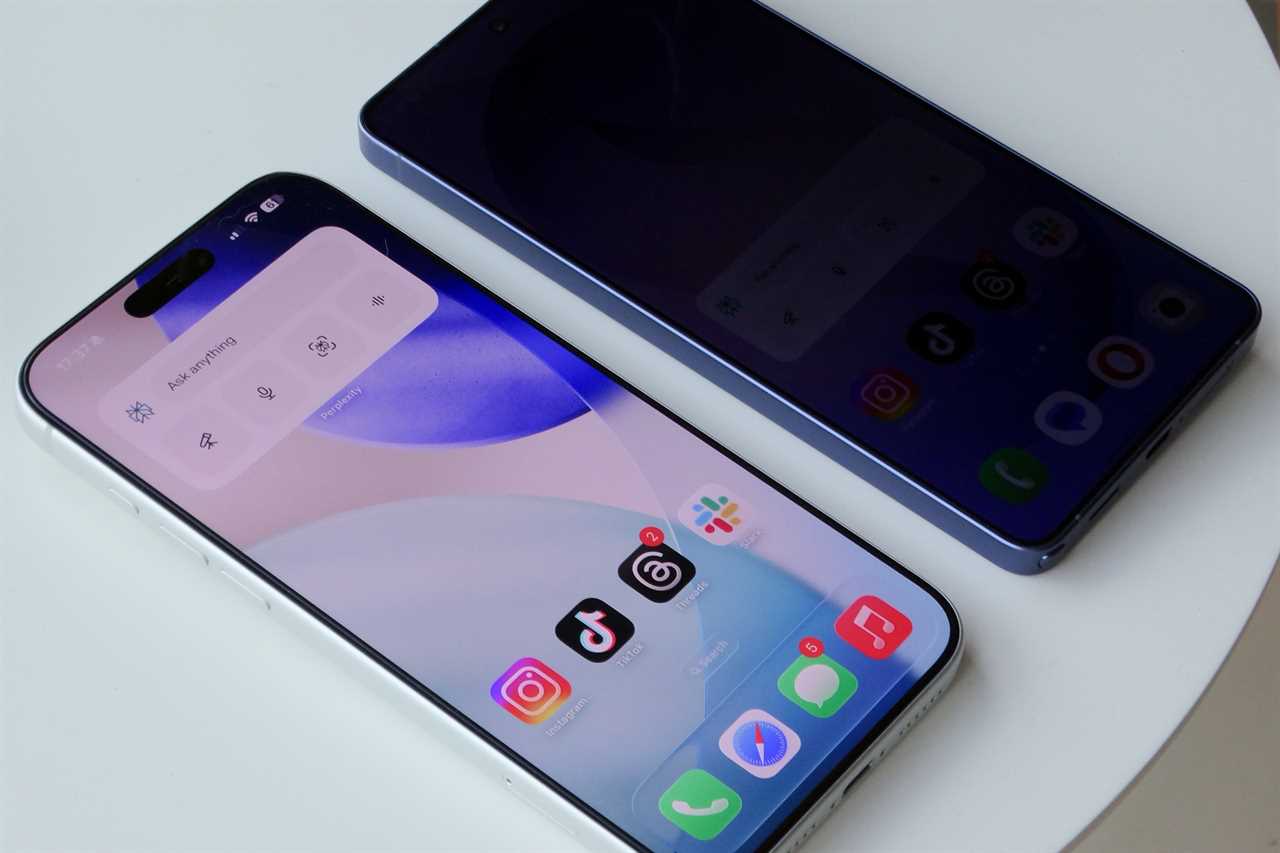
Samsung’s Privacy Display hides your screen from prying eyes while the iPhone lets anyone see it.
Foundry
Yes, the feature does come with some trade-offs. You’ll definitely notice the lower resolution when Privacy Display is turned on. But it’s something I’m totally okay with in exchange for better privacy in certain situations. And when the feature isn’t in use, I can still benefit from the full resolution and brightness the display has to offer.
I’ve gotten so used to turning on Privacy Display when I’m at the gym or on the bus that I immediately miss it when I go back to using my iPhone. It’s the kind of feature I’ve come to expect from Apple, but it’s only on the S26.
Mind-blowing battery life
Another aspect of the S26 Ultra that really caught my attention is its battery life. Samsung’s smartphone is powered by a 5,000mAh battery. That’s pretty much the same battery capacity as the iPhone 17 Pro Max. However, there’s a huge difference between the two.
In my tests, the S26 Ultra lasts significantly longer than the iPhone 17 Pro Max. In one of the tests, I unplugged both phones at the same time (around noon) and tried using them with the same apps and wireless networks. By around 10 p.m., my iPhone had 43 percent battery remaining, while the Galaxy had 69 percent. That’s a big gap.
Here, I believe Apple could be doing a better job of optimizing iOS for lower power consumption, which has been a point of criticism since the introduction of iOS 26 and its Liquid Glass interface, which requires significantly more hardware resources to render all the effects.
More and better cameras
When it comes to cameras, the S26 Ultra doesn’t disappoint either, with four rear lenses compared to the iPhone 17 Pro’s three. The main camera boasts an incredible 200 megapixels, while the phone also features a 50MP 5x zoom lens and a 50MP ultra-wide lens. I also appreciate that Samsung has kept a 10MP 3x zoom lens as well.


I could spend a lot of time writing about the technical details of the cameras, but here’s the thing. They’re really good, especially for photos. Most of the pictures I’ve taken look just as good or even better than the ones from my iPhone, especially when it comes to zoom range.
Samsung’s image post-processing seems less aggressive than Apple’s, which tends to make images overly sharp in certain lighting conditions.
When it comes to videos, I still prefer the iPhone, but Samsung has done a great job with its Horizontal Lock feature, which keeps the video steady and at the same angle even if you turn the phone upside down. It’s pretty impressive and useful for action videos.

The stylus is a nice convenience
Finally, there’s the S Pen, the stylus that comes included with the S26 Ultra. This has been a key feature of Samsung’s flagship smartphones for a few years now, and while I think the S Pen is a gimmick, it’s a nice one.
I don’t really miss having a stylus to use with my iPhone, but having one on the S26 Ultra is certainly useful every now and then to write quick notes instead of typing on the on-screen keyboard. It feels like I’m writing in a small notepad.
You can store the S Pen inside the phone itself when it’s not in use, which is quite convenient. I know Steve Jobs famously disapproved of a stylus, but a tiny Apple Pencil on board Apple’s biggest phone wouldn’t be a terrible thing.
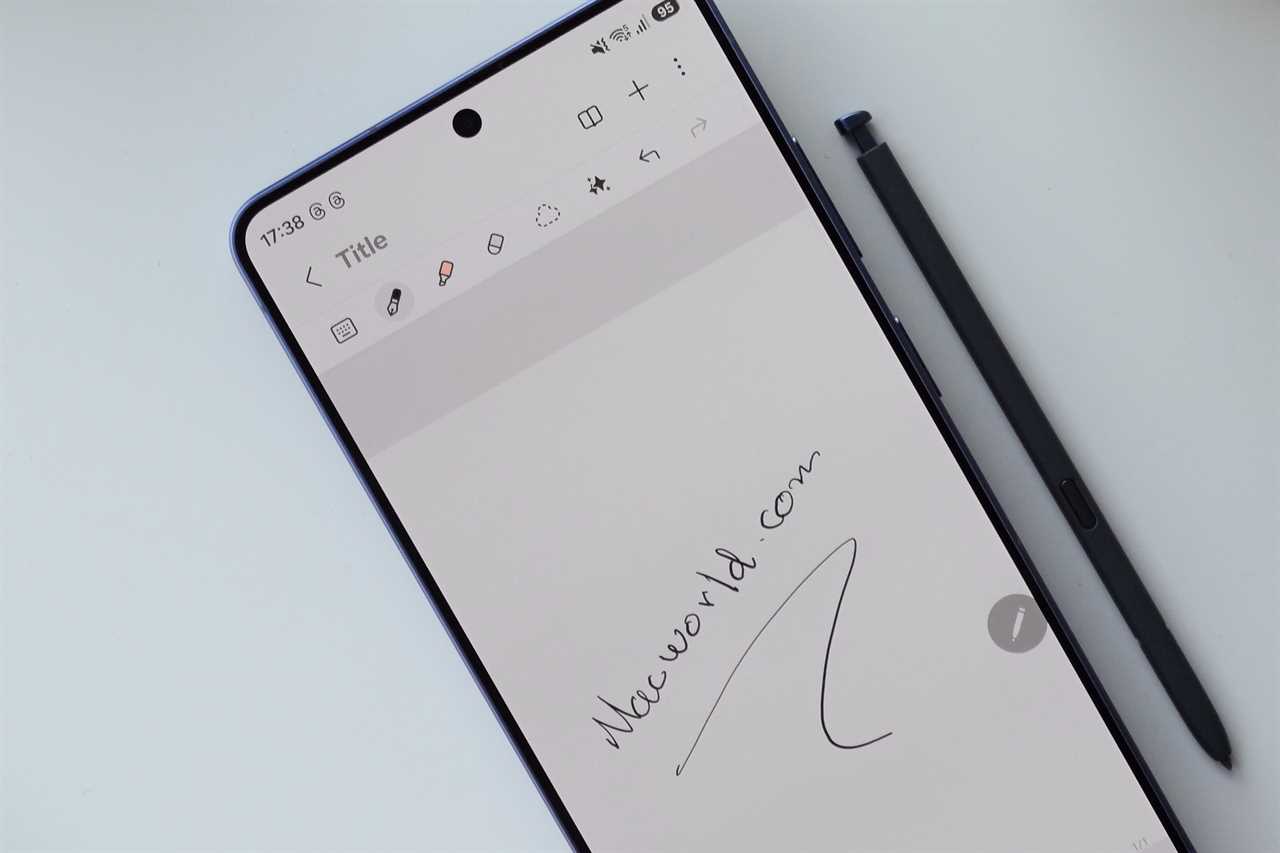
I wouldn’t mind a tiny Apple Pencil on board my iPhone 17 Pro Max, but it’s not necessary.
Foundry
It’s tempting, but I’m not leaving the iPhone
Okay, I’ve said a lot of good things about the Galaxy S26 Ultra. So why don’t I switch from the iPhone? While Apple and Google have made switching from iOS to Android (and vice versa) easier than ever, it’s still a difficult proposition. But even if I could snap my fingers and replace my iPhone with an S26, I still wouldn’t.
Apple has a robust ecosystem of products and services today. Along with my iPhone, I also have an Apple Watch, AirPods, a Mac, an Apple TV, and the list goes on. Plus, I subscribe to Apple One, and my entire life is on iCloud, not to mention my purchases from the App Store. I trust that’s the case for millions of iPhone users.
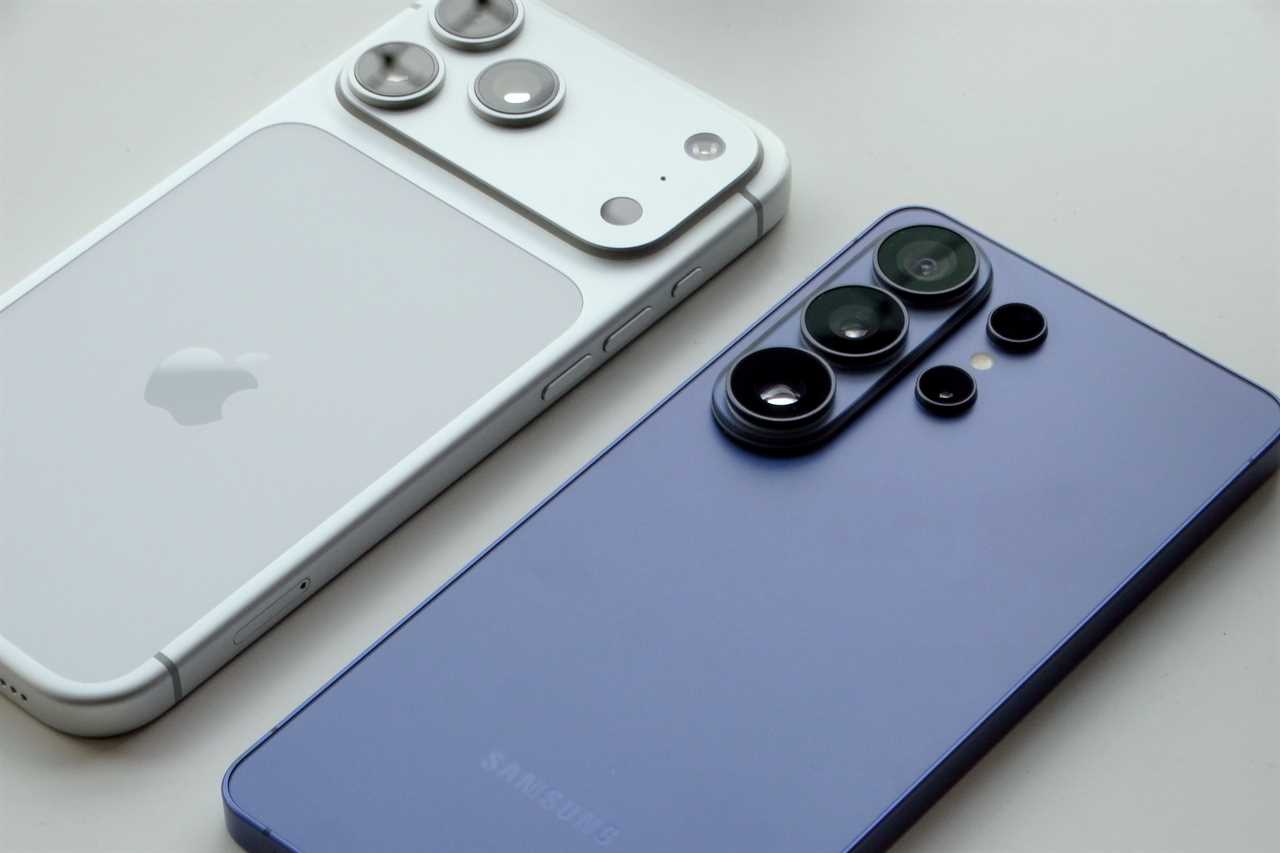
The Galaxy S26 Ultra, right, is every bit as premium as an iPhone 17 Pro Max.
Foundry
But more than the devices and apps, Apple’s ecosystem makes everything just work. I can shoot videos on my iPhone, and they immediately show up on my Mac. Then I can edit them on my computer and send them back to my iPhone with just a click using AirDrop. There are many features that have become essential to my workflow, such as iPhone Mirroring, Handoff, and Universal Copy and Paste. Some of these are available in Galaxy land, but none of them work as seamlessly as they do on the iPhone.
But even if I just owned an iPhone, it would still be hard to leave Apple’s garden. Using both phones helped me appreciate how iOS apps look more polished than their Android counterparts, even after all these years. On top of that, iOS has a lot of great, exclusive apps that I love, such as Halide and Flighty. I really miss those apps when I’m using the S26 Ultra. It’s safe to say that developers put more effort into developing apps for iOS.
The Galaxy S26 Ultra is an excellent smartphone, with some specs that even outshine the iPhone. But the Apple experience and integrated ecosystem can’t be beat, and that means much more than some fancy pixels.
Read More
Title: The Galaxy S26 Ultra is better than the iPhone. Here’s why it still can’t win
Sourced From: www.macworld.com/article/3108008/the-galaxy-s26-ultra-is-better-than-the-iphone-heres-why-it-still-cant-win.html
Published Date: Wed, 15 Apr 2026 11:15:00 +0000