.png)
When the covid-19 pandemic started, Jennifer Phillips thought about the songs of the sparrows.
They were easier to hear, because the world had suddenly become quieter. Car traffic plummeted as people sheltered at home and shifted to remote work. Air travel collapsed. Cities—normally filled with the honking, screeching, engine-gunning riot of transportation—became as silent as tombs.
For years, Phillips has studied how animals react to “anthropogenic noise,” or the racket created by human activity. Most animals really don’t like it, she and her colleagues have learned. Animals constantly listen to the world around them: They’re on the alert for the rustle of approaching predators, or a mating call from a member of their species. As human society has expanded—with sprawling cities, industrial mines, and roads crisscrossing the world—it has gotten noisier too, and animals have trouble hearing one another.
Noise is invisible; there’s no billowing smokestack, no soiled waterway. We just got used to it as it vibrated in the background.
Phillips and her colleagues had spent time in the 2010s in San Francisco recording the sound of white-crowned sparrows in the Presidio. It’s a park that is half peaceful nature and half automobile noise, since it’s filled with thick clumps of trees and grassy fields but also has two highways that slice through it, feeding onto the Golden Gate Bridge. In past recordings, starting in the 1950s, sparrows had sung with complex and lower-pitched melodies and three major “dialects.” But by the 2010s, traffic in the Presidio had exploded, and the hubbub was so loud that the birds began to sing with faster trills—and at a higher pitch—so their fellows could hear them. The two quietest dialects were either dead or on their way to extinction.
They’re “screaming at the top of their lungs,” says Phillips. “They really can’t hear the lower frequencies when the traffic noise is present.” Urban noise can even change birds’ bodies; they get thinner and more stressed out. Their mating calls aren’t as effective, because female birds, as researchers have found, generally don’t enjoy high-pitched, high-volume shouting. (It makes them wonder if the males are unhealthy.) The noise can increase bird-on-bird conflict, because when birds can’t hear warning cries they accidentally stumble into enemy territory. Perhaps worst of all, in situations like these biodiversity takes a hit: Entire species that can’t handle urban clamor simply head out of town and never come back.
But as the sudden, eerie silence of the pandemic descended, Phillips sat at home thinking, It’s really quiet. And then she wondered: Would the Presidio birds now be able to hear each other better?
She raced over to the park and started recording. Sure enough, the park was seven decibels quieter—a huge drop. (That’s like the difference between the noise of the average home and whispering.)
And remarkably, the researchers found that the songs of the white-crowned sparrows had transformed. They were singing more quietly, with a richer range of frequencies. A bird could be heard twice as far as before. And the mating calls had gotten more sultry.
“They could sing a higher performance, basically a sexier song, but not have to scream it so loud,” Phillips says.
It was as if time had been reversed and all the damage abruptly repaired. And it proved what Phillips and her peers have been increasingly documenting: that anthropogenic noise is the newest form of pollution we need to tackle. The noise of our relentlessly on-the-move industrial society affects all life on Earth, wildlife and humans, in ways we’re just beginning to grasp. Yet strategies such as electrification and clever urban design could help. As the Presidio showed, noise can vanish overnight—once we figure out how to shut up.
Hidden impacts
Many forms of pollution are obvious to us humans. Dumping toxic goo into lakes? Sure, that’s bad. Coal smokestacks pumping soot and carbon dioxide, plastic bags and sea nets choking whales—we now understand that these, too, are problems. Even an idea as gauzy as light pollution has penetrated the public consciousness to some extent, since it’s why city dwellers can’t see many stars, and we’ve heard it confuses migratory birds.
But noise, mostly from transportation, took longer to hit our radar. This is partly because it’s invisible; there’s no billowing smokestack, no soiled waterway. We just got used to it as it vibrated in the background.
GETTY IMAGES
MDF/WIKIMEDIA COMMONS
There were a few studies in the ’70s and ’80s showing that animals were upset by our noise. But the field really began to take off in the ’00s, in part because digital technology made it easier to record long swathes of sound out in nature and analyze them. One early salvo came from the biologist Hans Slabbekoorn, who was studying doves in the city of Leiden and irritatedly noticed that he could rarely get a clean recording because of the background noise. Sometimes he’d see the doves’ throats moving as they cooed but couldn’t hear them. “If I’m having difficulty hearing them,” he thought, “what about them?”
So he and a colleague started recording ambient sound levels in different parts of Leiden. Some were quiet residential areas, which registered a soothing 42 decibels, and others were noisy intersections or areas near highways, which reached 63 decibels, about as loud as background music. Sure enough, he found that birds in the noisy areas were singing at a higher pitch.
Over the next two decades, research in the field bloomed. Noise, the scientists found, has a few common ill effects on animals. It disrupts communication, certainly. But it also generally stresses them, reducing everything from their body weight to their receptivity to mating calls. If an animal nests closer to a road, its reproduction rates can go down; eastern bluebirds, for example, produce fewer fledglings. Truly cacophonous noise—like planes taking off at a nearby airport—can cause hearing loss in birds. And animals can wind up becoming less aware of threats from predators. They’ll wander closer to danger, because they can’t hear it coming. (And sometimes they’ll do the opposite: They’ll develop a rageaholic hair-trigger temper, because they’re constantly on high alert and regard everything as a threat.)
Even in deep rural areas, where things are normally pretty quiet, highways can disrupt wildlife—the noise carries far into the fields nearby. Fraser Shilling, a biologist at the University of California, Davis, has stood up to half a mile from rural highways and recorded sound as loud as 60 decibels, which is at least 20 decibels higher than you’d typically find in the wilderness. “The motorcycles and the 18-wheelers are really the ones that project a lot of noise,” he told me.
Above 55 decibels, many skittish animals get into a fight-or-flight panic. The prevalence of bobcats—an endangered species famously rattled by noise—“starts dropping off the cliff,” says Shilling. Above 65, “you’re really starting to exclude almost all wildlife.”
And that’s not even the upper limit of what wildlife is exposed to. There are roughly a half-million natural-gas wells around the US, and piercingly loud compressors are used to shoot water down into most of them. Up close, the compressors can kick out 95 decibels, a sound as loud as a subway train; at one Wyoming gas well the sound still registered around 48 decibels nearly a quarter-mile away.
Historically, it wasn’t always easy to prove that noise was causing whatever problems the animals were experiencing. Maybe it was other factors; maybe animal populations reduce near a road because some are hit by vehicles?
But several clever experiments have proved that noise—and noise alone—can disrupt wildlife. One was the “phantom road” experiment by the conservation scientist Jesse Barber and his team, then at Boise State University. They went out to a quiet, uninhabited area of the Boise foothills in Idaho, far away from any roads. In this valley in the mountains, thousands of migratory birds stop on their way south each year; they’ll gorge themselves on cherry bushes, gaining weight for the next days of flying. The researchers strapped 15 pairs of speakers to Douglas fir trees, in a half-kilometer line. Then they blasted recordings of highway noise. They played the noise for four days and then turned it off for four days. Then they observed thousands of birds, capturing many to measure their body mass.
The noise truly rattled the birds. When the sound was turned on, nearly a third left the area. Those that stuck around ate less: While birds should be heavier after a day of foraging, these ones didn’t gain much. The noise seemed to have so interrupted their feeding that they weren’t packing on the weight needed for their migratory trip.
Other, similarly nifty A/B tests followed. One was led by David Luther, a biologist at George Mason University (who also worked with Phillips on the covid-19 study in San Francisco). In 2015, these researchers took 17 white-crowned sparrows at birth and raised them in a lab. To teach them their species’ songs, they played the nestlings recordings of adult sparrows singing, at low and high pitches. Six of the nestlings heard the songs without any interference; with the other half, the researchers played the sounds of city noise at the same time.
The results were stark. The lucky birds that were spared the traffic noise learned to perform the quieter, sweeter, more complex songs. But the birds that had traffic noise blasted learned only the higher, faster, more stressed-out songs. From the cradle, noise changed the way they communicated.
Humans hate noise too
You can’t pull the same experiment with humans, raising them in a lab to see how noise affects them. (Not ethically, anyway.) But if we could, we’d likely find the same thing. We, too, are animals—and it appears that we suffer in similar ways from anthropogenic noise, even though we’re the ones creating it.
The sound of traffic is correlated with lousy sleep, higher blood pressure, more heart disease, and higher stress.
Stacks of research in the last few decades have found that noise—most often, as with wildlife, the sound of traffic—is correlated with lousy sleep, higher blood pressure, more heart disease, and higher stress. A Danish study followed almost 25,000 nurses for years and found that an additional 10 decibels hit them hard; over a 23-year period they had an 8% higher rate of death, plus higher rates of nearly every bad thing that could happen to you: cancers, psychiatric problems, strokes. (They controlled for other malign health influences.) As you’d probably predict by now, children fare badly too. When Barcelona researchers followed almost 3,000 elementary school kids for a year, they found that those in noisier schools performed worse on assessments of working memory and ability to pay attention.
“We think of ourselves as being ‘used to it,’” says Gail Patricelli, a professor of evolution and ecology at the University of California, Davis. “We’re not as used to it as we think we are.”
It’s also true that there’s a trade-off. Many people understand that noise from cities and highways is aggravating, but we tolerate it because we get benefits along with the hassles. Cities are crammed with jobs and connections and dating opportunities; cars and trucks bring us the things we need and increase our personal mobility.
It turns out that animals make a similar calculus. Some species appear to benefit in certain ways from proximity to noise, so they move toward it.
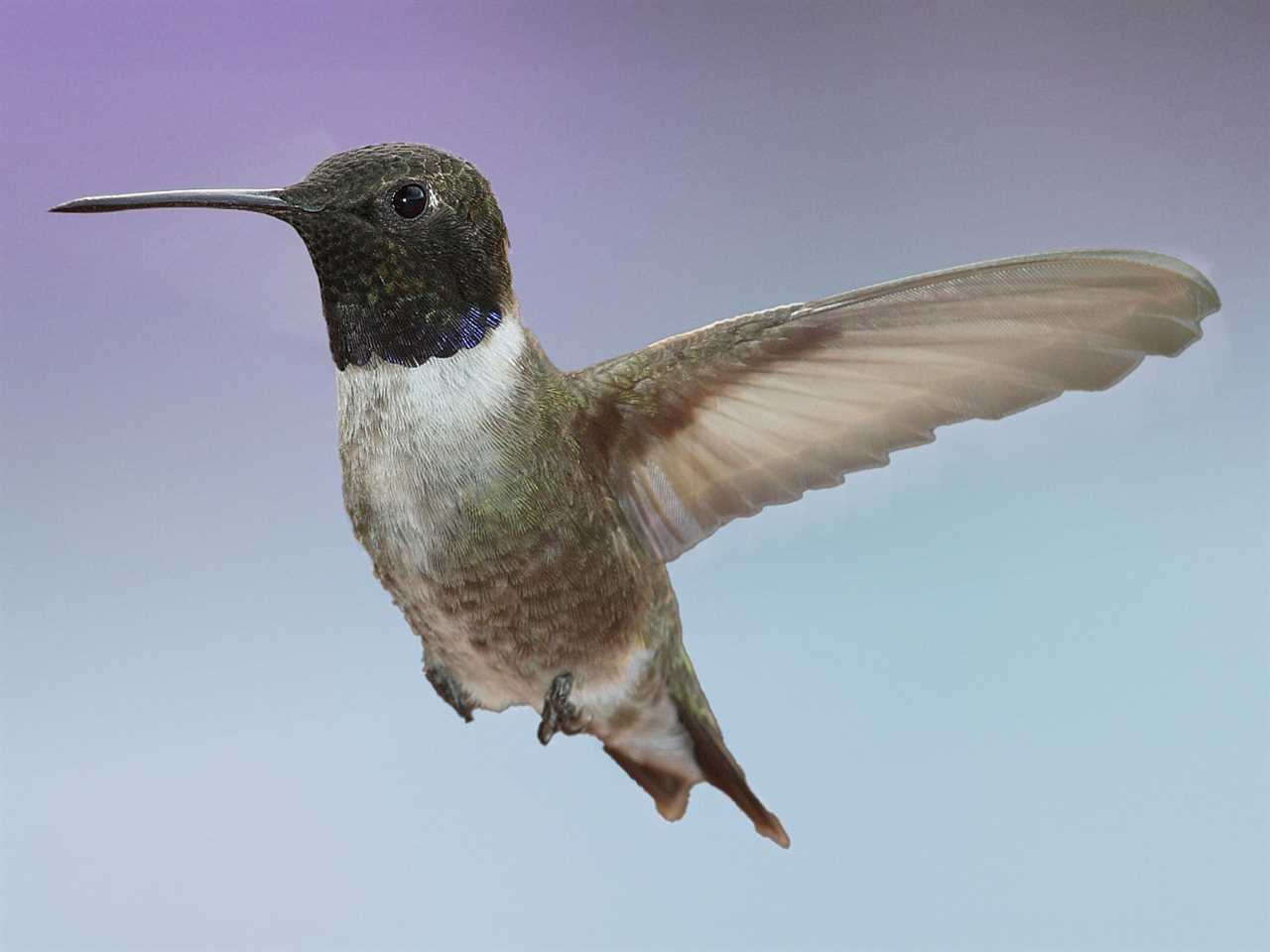
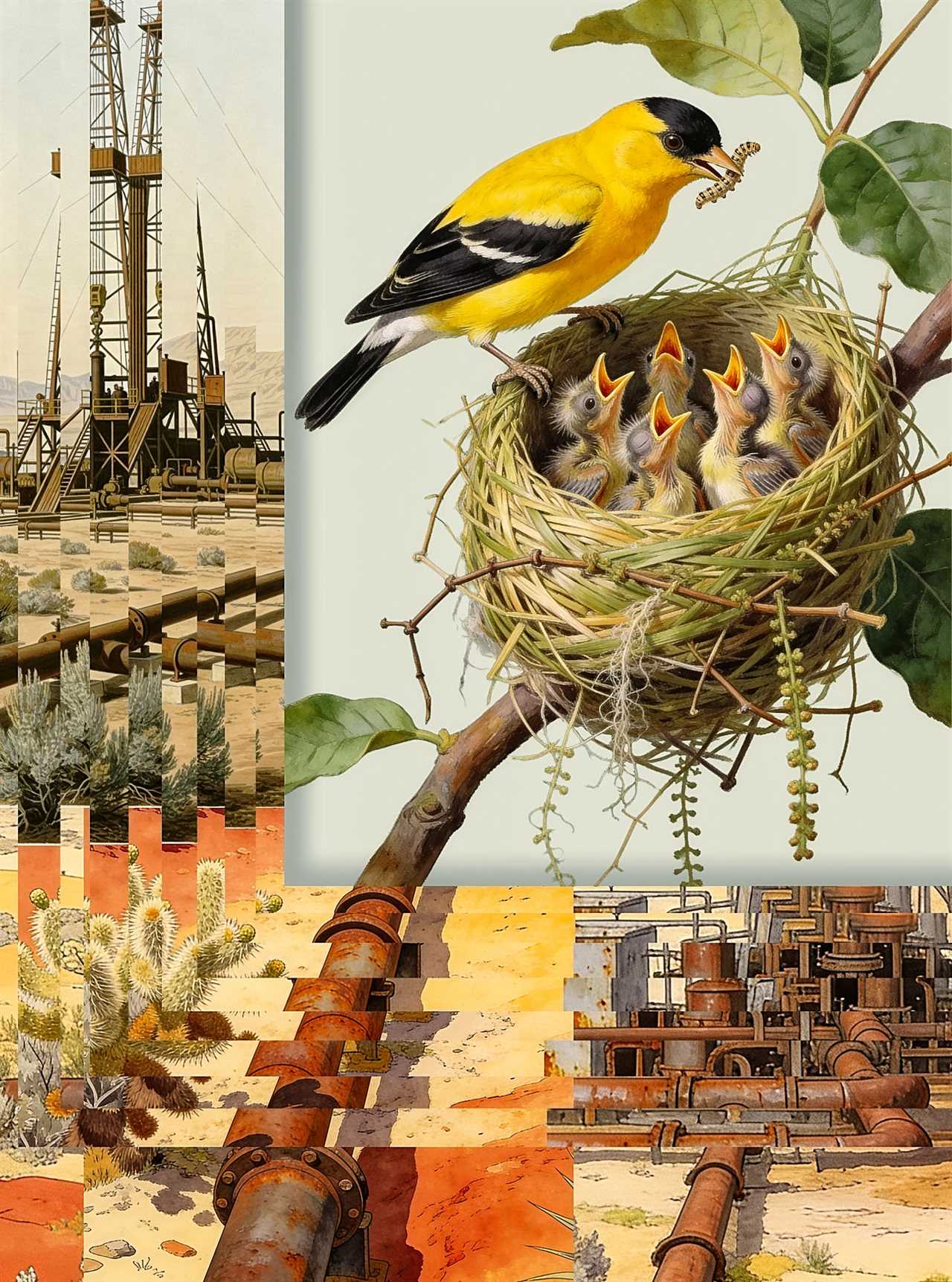
Clinton Francis, a biologist at California Polytechnic State University, and a team studied bird populations near noisy gas wells in rural New Mexico. Most species avoided the riot of the well pumps. But Francis was surprised to find that some hummingbirds and finches preferred it, and by one important measure they thrived: They were nesting more in the noisy areas than in the quieter areas. Additionally, several species had more success at fledging chicks in noisier locations.
What was going on? It’s likely that the noise makes it harder for predators to hear the birds and hunt down their nests. “It’s essentially a predator shield,” Francis says. Since his research found that predators can cause as much as 76% of failures of eggs to produce healthy offspring, that’s a significant survival advantage.
Cities can offer the same protections to certain species. Consider the case of Flaco, a Eurasian eagle-owl that escaped from the Central Park Zoo in February of 2023 and found he was in a terrific place to hunt. The incessant traffic ought to have caused him trouble. “An owl like this is among the most vulnerable species to intrusions from noise pollution. They’re listening for extremely faint signals or cues that their prey provide,” Francis notes. But New York has its compensations, because prey animals abound. They’re also naïve and unguarded, never expecting an owl with a six-foot wingspan to swoop down and devour them.
EDDIE GUY
Granted, these upsides don’t cancel out the negatives. Human noise may shield some birds from predators, but in other ways it leaves them faintly miserable, with high levels of stress hormones and lower weight.
Worse, the species that manage to thrive in cities or near highways are often the same ones all over the country. And they represent only a minority of species; most are driven further away, with less and less land to live on as civilization spreads ever outward.
“Overall, it’s kind of a nightmare for diversity,” says Luther.
How to silence the world
In the early ’00s, the village of Alverna in the Netherlands began to get louder. A major intercity road cut straight through the town, and traffic had gone up by two-thirds in the previous decade. Facing complaints about the din, the town offered to put up some 13-foot walls on either side of the route. Residents hated the idea. Who wants to look out the window at massive walls?
So instead town planners redesigned the road in subtle ways. They lowered it by half a meter, slightly blocking the tire sounds. They built wedges that rise up three feet on either side, and surfaced them with attractive antique stone; that blocked even more sound. They planted sound-absorbing trees. And as a final coup de grâce, they reduced the speed limit from about 50 to 30 miles per hour. When a car is moving slowly, the engine is producing most of the roar—but once it’s going 45 mph or faster, the rumble of tires on the pavement takes over and is much louder. Each intervention had only a small effect, but cumulatively they made the road a blessed 10 decibels quieter.
This tale illustrates one curious upside of noise. Compared with other forms of pollution, it can be ended quickly. Toxic pollutants or CO2 can hang around for tens of thousands of years; the microplastics in your pancreas are probably never coming out. But with noise, the instant you reduce the source, the benefits are immediate.
Plus, most of what works is “not rocket science,” Shilling says. A tall wall at the side of a highway will cut noise by 10 decibels; fill a double-sided wall with rubble and it’s even better. That could cut the traffic noise to below 55 decibels, he notes, which would help particularly skittish forms of wildlife. Walls can block animal movement, though, so in animal-heavy areas it’s better to build berms—small hills on either side of a highway. Areas of high ecological importance could be prioritized to keep costs down.
“If there’s a great chunk of wetland habitat and it’s the only one around for 50 miles in any direction? Well, then we should build noise walls around it,” he says. We should also build overpasses and underpasses to help animals get around. And to quiet the din of gas wells out in the countryside, states could require companies to build walls around them. (They’ll likely only do that, though, when human neighbors complain or launch lawsuits; animals don’t have lawyers.)
Cities, too, can learn to shut up, as Alverna proved. At the most ambitious, some have buried noisy highways that once cut through the downtown core. Boston put a massive elevated highway underground in its “Big Dig”; in Slabbekoorn’s hometown of Amstelveen—a suburb of Amsterdam—they’re currently enclosing the A9 highway in a tunnel and turning the surface into a verdant park with new buildings. “That’s amazing, getting back a lot of the space as well,” he says.
Granted, this sort of reengineering can be brutally expensive, which is why politicians blanch when they’re asked to reduce road noise. The Big Dig cost $15 billion, and with interest up to $24 billion. When I mentioned cost to Shilling, he sighed. “It’s not as expensive as a B-1 bomber or tax cuts for rich people,” he says. “Environmental stuff is considered expensive just because our expectations are low, not because we can’t afford to do it.”
There are cheaper and more politically palatable fixes, though. Reducing urban speed limits is one; Paris recently cut the top speed on its ring roads from 70 to 50 kilometers per hour (43 to 31 mph), and noise at night went down by an average 2.7 decibels—a noticeable drop. Planting more trees and vegetation all around roads and cities can cut a few decibels more, and residents love it.
Growing adoption of electricity would also bring down the volume. “Electric vehicles of all kinds have the potential to make a big difference,” Patricelli says; when the light turns green and an EV next to you accelerates away, it’s up to 13 decibels quieter than a comparable gas-powered vehicle. These benefits won’t be felt as much on highways, because EVs still make tire noise at high speeds. But in the slower stop-and-go traffic of urban life, they are far more pleasant to the ears, both animal and human. Indeed, the electrification of everything that currently uses a gas-powered motor will make urban life quieter. Cities like Alameda, California, and Alexandria, Virginia, are increasingly banning gas-powered leaf blowers and lawn mowers, which operate at hair-raising volume while electric ones whisper along.
We’ve engineered a civilization that roars, but the next phase is making it purr. The animals will thank us.
Clive Thompson is a science and technology journalist based in New York City.
------------Read More
By: Clive Thompson
Title: The noise we make is hurting animals. Can we learn to shut up?
Sourced From: www.technologyreview.com/2026/04/16/1135179/anthropogenic-noise-hurting-animals/
Published Date: Thu, 16 Apr 2026 10:00:00 +0000
Did you miss our previous article...
https://trendinginbusiness.business/technology/apple-still-doesnt-get-ipad-pros