.png)
Artificial intelligence has reshaped nearly every part of digital marketing, but its influence on paid media is astronomical. As budgets tighten and competition for attention grows, marketers need more than manual optimization. They need precision. And AI has become that precision.
In 2025, using AI in digital advertising isn’t experimental anymore; it’s expected. Machine learning models predict engagement, personalize creatives, and automate bidding faster than human teams can. Marketers who embrace paid media AI strategies are finding new ways to reduce wasted spend while improving reach and conversion quality.
Below are key takeaways from how AI is changing paid media right now.
Quick Takeaways
- Predictive AI helps forecast campaign outcomes and allocate budgets automatically.
- Generative AI adapts creative assets in real time based on audience behavior.
- Automated bidding models drive better ROI with less manual effort.
- Cross-channel attribution improves when AI links data from multiple platforms.
- Smart testing and optimization make campaigns more efficient and scalable.
How AI Is Changing Paid Media Campaigns
AI doesn’t just support marketers anymore – it drives their decision-making. From data analysis to creative testing, automation now influences nearly every step of the paid media process. What used to take hours of manual adjustments now happens in seconds.
Modern ad platforms use AI to evaluate hundreds of signals – location, timing, user history, engagement trends – and determine who sees what ad at what time. This predictive power lets campaigns adapt continuously, spending less on low-quality impressions and focusing more on conversions.
In short, AI has turned paid media from a guessing game into a measurable system of continual improvement.
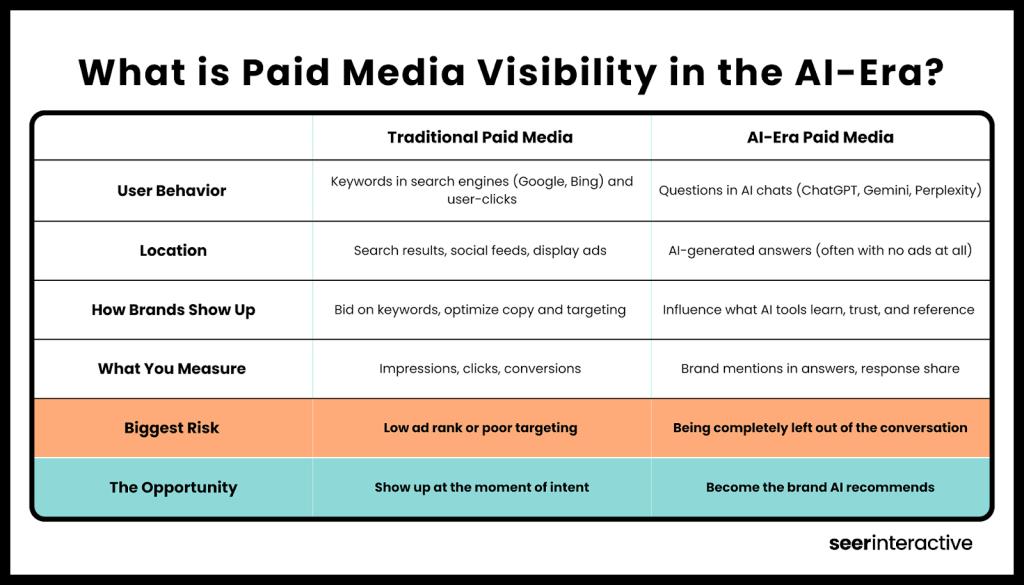
Image source
Predictive Budget Allocation
Traditional budgeting depends on last quarter’s performance, but AI systems work differently. Predictive algorithms analyze trends in audience engagement, seasonality, and platform performance to forecast how each dollar will perform before it’s spent.
Instead of manually distributing spend, AI automatically shifts budgets toward high-performing channels. For example, if LinkedIn starts outperforming Google Ads for a specific audience segment, the system reallocates funds instantly – no spreadsheet required.
These predictive insights are especially valuable for B2B marketers managing long sales cycles. Every dollar spent can be tied more closely to pipeline growth rather than just traffic volume.
Real-Time Creative Optimization
AI doesn’t just analyze data – it learns what kind of content performs best. In 2025, creative optimization has become one of the most powerful paid media AI strategies.
Generative AI models adjust ad variations automatically, testing different headlines, calls to action, and visuals. When users respond to a specific message or layout, the system scales that version across campaigns.
This kind of adaptive creative testing means marketers no longer rely on static A/B experiments. Ads evolve with the audience, staying relevant even as interests shift.
The result: higher click-through rates, lower acquisition costs, and campaigns that stay effective longer.
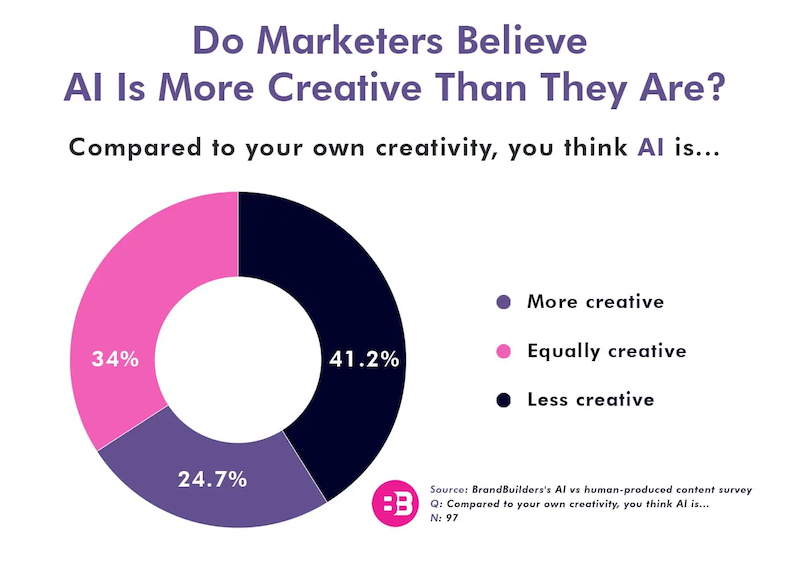
Image source
Smarter Bidding and Ad Placement
Manual bidding is disappearing fast. AI-powered bidding systems track real-time data like user intent, device type, and engagement likelihood to set optimal bid prices instantly. These models reduce overspending and compete strategically across auctions without human input.
For advertisers managing multiple campaigns, AI-driven bidding can balance priorities across platforms – search, social, and programmatic – based on unified performance data.
This shift doesn’t remove human strategy. It simply allows marketers to focus on messaging, segmentation, and creative planning instead of spending hours inside ad dashboards tweaking bids.
Better Attribution and Cross-Channel Insights
Accurate attribution is one of marketing’s biggest challenges. AI helps solve it.
Through machine learning, systems connect signals from multiple channels – paid search, organic, email, and social – to map a customer’s full journey. AI-based attribution models reveal which ads actually influence conversions and which platforms underperform.
Instead of guessing where ROI comes from, teams get a clear breakdown of what works. That transparency allows better budget decisions and supports more confident scaling.
AI attribution tools also improve collaboration between marketing and sales. Shared visibility into performance data makes it easier to align messaging, qualify leads, and close deals faster.
Automated A/B Testing and Optimization
A/B testing used to be manual and slow. Marketers had to design, schedule, and monitor each experiment. AI changes that entirely.
AI-driven testing platforms run continuous experiments on ad elements like copy, visuals, and audience targeting. They automatically pause underperforming variations and double down on what works.
This process creates an ongoing optimization loop that never stops improving results. Campaigns become more efficient over time, generating better returns without constant human intervention.
For large-scale B2B or enterprise campaigns, this is especially valuable. When you’re managing dozens of audiences and platforms, continuous optimization keeps your message consistent while adapting to audience feedback in real time.
Personalization at Scale
Modern buyers expect relevance. Generic ads are ignored almost instantly. AI personalization solves this by combining audience data with content adaptation.
Ad systems now tailor messages to users based on their past behavior, search intent, and stage in the buyer’s journey. For instance, an executive researching automation tools might see a different ad than a marketing specialist exploring case studies.
Generative AI can even personalize images or headlines dynamically, creating versions of ads that better fit regional, demographic, or behavioral patterns.
Personalization at this scale would be impossible without AI – and it’s quickly becoming standard practice across paid media strategies.
AI and Privacy
AI-driven advertising relies heavily on data, and that raises understandable privacy concerns. In response, platforms and marketers are adopting privacy-first practices – such as first-party data strategies, anonymized tracking, and model training without direct user identifiers.
AI makes these adjustments easier by learning to predict user intent from contextual signals rather than personal data. For example, instead of tracking cookies, AI may analyze page content or engagement behavior to determine relevance.
This balance between personalization and privacy keeps campaigns compliant with evolving regulations while maintaining audience trust.
Integrating AI into an Existing Paid Media Strategy
Adding AI to an existing digital advertising plan doesn’t require a complete overhaul. Many organizations begin by integrating smaller AI-powered tools – like automated bid managers or predictive analytics – into their workflows.
The next step is centralizing data across platforms. When performance data from Google Ads, Meta, and LinkedIn is unified, AI can make stronger recommendations and automate more effectively.
Finally, human oversight remains essential. AI can optimize spend and creative delivery, but marketers still guide messaging strategy, ethical standards, and brand voice. The best results come when both human insight and automation work together.
Measuring AI Impact on Paid Media Performance
Tracking success with AI involves more than just conversions. Teams should evaluate how automation improves cost efficiency, campaign speed, and decision-making quality.
Key metrics include:
- Cost per acquisition (CPA) reduction after AI integration
- Increased return on ad spend (ROAS)
- Faster campaign launch and iteration cycles
- Time saved through automation
- Improvement in lead quality and conversion rates
These metrics help demonstrate AI’s tangible impact while justifying continued investment in automation tools.
What’s Next for Paid Media AI Strategies?
AI’s influence on paid media will keep expanding in 2025 and beyond. Expect greater adoption of generative content tools, more transparent attribution models, and real-time optimization that connects directly to business outcomes.
Marketers who embrace these systems early will not only save on ad spend but also create stronger, more consistent brand experiences.
Smart paid media isn’t about replacing human marketers – it’s about amplifying them. When AI handles repetitive tasks, creative and strategic thinking become the true competitive advantage.
Video source
You Can (and Should) Build Smarter Paid Media Strategies with AI
Paid media has evolved from manual adjustments to intelligent automation. AI helps marketers refine every dollar spent, predict performance, and personalize engagement without sacrificing privacy or control.
For organizations aiming to scale campaigns efficiently in 2025, AI-powered paid media strategies are no longer optional – they’re foundational. Teams that adopt these tools now will shape how audiences experience digital advertising in the years ahead.
If your paid media efforts just aren’t landing, check out our Content Builder Service. Set up a quick consultation, and we’ll help you grow a client base that keeps coming back.
Read More
By: Lauren Basiura
Title: Smart Paid Media: How AI Is Optimizing Ad Spend in 2025
Sourced From: marketinginsidergroup.com/uncategorized/smart-paid-media-how-ai-is-optimizing-ad-spend-in-2025/
Published Date: Wed, 18 Feb 2026 11:00:24 +0000